
Veterinary clinic consolidation is often framed as a financing or footprint story. For suppliers, distributors, and multi-site operators, the more durable change happens after the announcement: a network has to make everyday products, equipment support, replenishment rules, and vendor relationships work consistently across locations.
That is why the July 2026 merger of Bond Vet and Small Door is useful beyond the headline. The companies said their combined organization would have more than 55 clinics, over 1,000 team members, and more than 170 veterinarians, while retaining their separate brands in the near term and working toward a more unified experience over time. The financial terms were not disclosed. Those facts do not predict the outcome of every veterinary merger, but they illustrate the operating challenge that follows any multi-site combination: scale creates a stronger need for controlled standards, not merely more purchasing volume.
For overseas manufacturers, animal-health distributors, clinic-equipment companies, and retail-adjacent pet suppliers, this is a different buyer brief. A clinic group may still value local relationships and professional judgment, yet it increasingly needs suppliers that can help make approved products, documentation, training, replenishment, and support dependable across a growing footprint.

A Merger Is an Operating Change
Two clinics can agree on a strategic rationale long before their practical operating systems align. One site may have a familiar local distributor, a particular equipment-service routine, and a small range of preferred consumables. Another may use different pack sizes, reorder points, product records, staff training materials, or field-service contacts. None of those differences is necessarily wrong. They become harder to manage once leaders need visibility across dozens of locations.
The supplier question is therefore not simply, “Can you offer a group discount?” It is whether a product and service partner can support a controlled operating model. The network needs to know what has been approved, where it is used, which versions are in circulation, how a substitute is evaluated, who trains the team, and what happens when a delivery or equipment-support issue affects multiple clinics.
This is similar to the shift specialty retailers face when they move from isolated stores to connected operating systems. Our analysis of pet-store operating systems makes the same broader point: the useful unit is not a single transaction or store, but the repeatable process behind it. Veterinary clinics have a different duty of care and a more regulated environment, but the operational lesson is comparable.
Standardization Is More Than a Shorter Vendor List
Supplier consolidation is often described as reducing the number of vendors. That can be an outcome, but it is not the main objective. A well-designed standardization program gives the group a reliable way to compare products, maintain product information, coordinate service, and plan replenishment. It also keeps exceptions visible rather than letting them become undocumented local habits.
For categories such as non-medicated consumables, clinic furniture, handling accessories, cleaning and hygiene systems, basic diagnostic hardware, storage, and selected client-retail items, a group may want common specifications without forcing every clinic into identical physical layouts. The practical standard could be a core approved range, a defined substitute list, and a documented process for bringing in a local alternative when the clinic has a valid operational reason.
That distinction matters. Good standardization controls the conditions around a product decision; it should not attempt to replace professional clinical judgment. Suppliers should avoid implying that a procurement program determines medical decisions. Their contribution is to make the commercial, technical, logistical, and training layers dependable so qualified clinic teams can work with fewer avoidable interruptions.
The Supplier Capability That Becomes Visible at Scale
When a customer operates one clinic, a supplier can sometimes solve problems through individual relationships. At network level, informal knowledge does not travel far enough. The supplier must be able to package information and support in a way that works for procurement, regional operations, local managers, and the staff actually using the product.
Product information that can travel. Item data needs to be clear enough for a central team to compare specifications, pack formats, materials, compatibility, storage requirements, country of origin where relevant, and change notices. Vague brochures are a weak substitute for controlled product files.
A defined onboarding path. A new approved product may need sample evaluation, technical documentation, cleaning or maintenance guidance where relevant, team familiarization, and a named route for field questions. The faster a supplier can provide these consistently, the less likely a rollout becomes a series of local workarounds.
Supply continuity without false certainty. Networks need realistic lead times, order quantities, replenishment logic, and early notice of material, packaging, or manufacturing changes. A supplier cannot eliminate every disruption, but it can make risk visible early enough for the buyer to respond.
Support beyond the initial sale. For equipment and service-heavy categories, the buyer will notice installation capability, spare-parts availability, repair escalation, and staff handover just as much as the product specification. That is one reason a multi-site network may divide a category between a broadline distributor and a specialist partner rather than give everything to one vendor.
From Local Buying to Category Governance
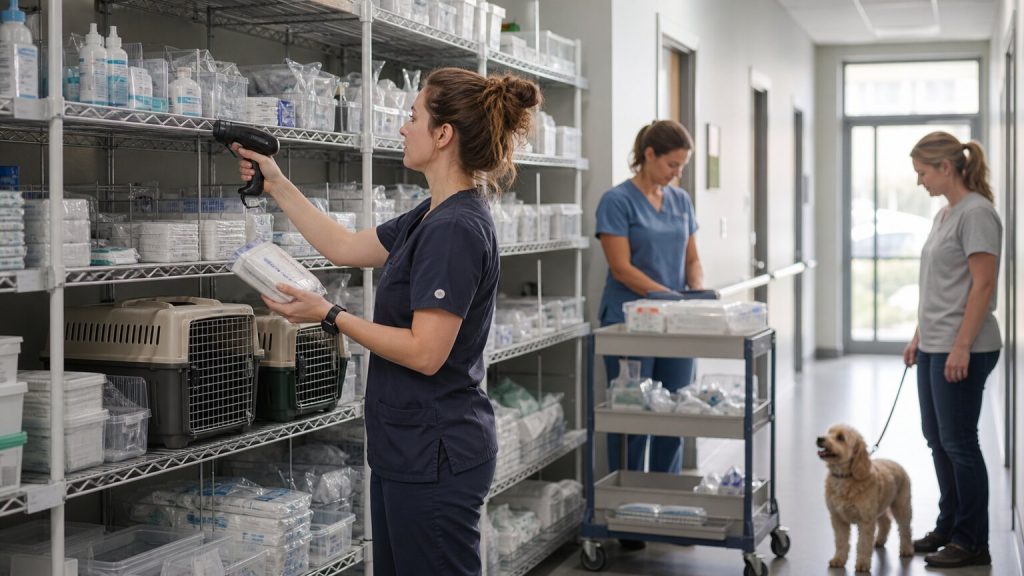
The difficult part of consolidation is not writing an approved-supplier list. It is deciding how that list is governed as clinics join, products evolve, and exceptions occur. A credible operating model normally assigns clear ownership for category decisions, supplier records, local feedback, and review timing.
For buyers, the most useful early work is often a baseline rather than an immediate conversion. Map what each clinic is using, identify duplicate products and unusual pack sizes, note equipment-service dependencies, and separate clinically driven variation from legacy purchasing variation. The goal is to understand where common standards will reduce friction and where a local exception has a legitimate reason to remain.
For suppliers, that exercise is a chance to earn trust through discipline. A proposed conversion should show what changes, what stays the same, which staff need support, and how the customer can measure whether the new process is holding. It should not be a catalogue swap disguised as an integration plan.
The same mindset applies to traceability and supplier qualification in pet food. In our review of pet food co-manufacturing governance, the central concern was not factory capacity alone but the ability to manage controlled change, records, release, and accountability. The veterinary setting has its own professional and regulatory boundaries, yet multi-site clinic buyers also benefit when supplier changes are explicit, documented, and reviewable.
Roll Out in Phases, Not in a Single Purchase Order
An acquisition or merger creates pressure to show quick progress. That can make a single nationwide or network-wide conversion look attractive. In practice, a phased rollout is often better for categories that affect routines, service calls, storage, or staff familiarity.
An initial pilot can test whether the proposed pack sizes fit the actual space, whether instructions are usable, whether replenishment timing is realistic, and whether a supplier’s support response works outside a head-office presentation. The rollout group should include local users as well as a central buyer; the people working at the point of use will identify friction that a spreadsheet cannot show.
After a pilot, the buyer can decide whether to extend the program, adjust the specification, add a secondary supplier, or retain a local exception. That makes standardization a learning process rather than a one-way mandate. It also gives a supplier a more credible reference point than claiming it can support a network merely because it has shipped to multiple addresses.

What a Strong Supplier Brief Should Ask For
Clinic groups do not need every supplier to offer the same depth of service. They do need to know which capabilities are material for the category. A useful request for proposal or supplier review can ask for the following evidence:
Specification and change control: current product sheets, material or component information where relevant, version control, and a process for notifying the buyer before a meaningful change.
Operational fit: pack sizes, storage needs, delivery pattern, minimum order quantities, substitution rules, and the ability to supply multiple clinics without creating avoidable local inventory problems.
Implementation support: sample or pilot process, staff-facing instructions, training format, installation or commissioning support when relevant, and named escalation contacts.
Service resilience: warranty position, repair or replacement pathway, spare-parts availability for equipment, response-time commitments where offered, and a clear division of responsibilities between manufacturer, distributor, and clinic group.
Commercial transparency: pricing structure, freight assumptions, review periods, rebates only when they are properly understood, and the conditions that could change supply cost or availability.
This is not a medical protocol and should never be treated as one. It is a commercial and operating framework that lets a veterinary network evaluate whether a supplier is prepared for controlled, repeatable delivery.
Why This Matters to Manufacturers and Distributors
The near-term prize in consolidation is often obvious: fewer buying centers may create a larger contract opportunity. The longer-term opportunity is more demanding. A partner that can make central approval easier while helping each clinic adopt the product responsibly can become part of the customer’s operating infrastructure.
That requires investment in documentation, field support, inventory visibility, and a realistic channel model. It may also require distributors to clarify where they add value: local stockholding, training, service dispatch, credit, returns, or technical communication. Manufacturers that send a product overseas without a credible support path can struggle once a group buyer asks how the same offer will work at every site.
The broader pet-health infrastructure story is still developing. As we noted in our coverage of pet blood-bank infrastructure, care networks rely on more than visible consumer brands. They depend on systems, suppliers, records, and logistics that can maintain confidence under operational pressure. Clinic procurement belongs in that conversation even when the product category is less dramatic than a major piece of medical technology.
Our View
Veterinary consolidation should not be read as a simple forecast that every clinic group will buy from fewer suppliers or impose one identical product list. Local practice realities, clinician preferences, regional distribution, and category-specific service needs will continue to matter. The stronger conclusion is narrower and more useful: as clinic networks become larger and more connected, the suppliers that stand out will be those that turn a product offer into a dependable operating standard.
For buyers, that means evaluating suppliers on implementation and evidence, not just unit price. For manufacturers and distributors, it means preparing for a conversation about onboarding, change control, training, replenishment, and accountability. The supplier relationship becomes more valuable when it helps the clinic network become more consistent without becoming less practical.
Sources and Reading
Bond Vet and Small Door veterinary merger announcement, PR Newswire, July 9, 2026
Original Chinese market commentary used as an editorial lead, Sohu
Follow Pet Industry Insights on Facebook for more global pet-industry analysis.