
Private-label pet food can look deceptively simple. A brand finds a factory with the right format, approves a sample, chooses a bag, and launches. But once a product moves from sample to repeat production, the relationship becomes a governed supply chain. Ingredients, product specifications, packaging, batch release, label approvals, change requests, complaints, and recalls all need a named owner and a defensible record.
That is the lesson worth taking from a recent Chinese rule on contract manufacturing for human food. It is not a new pet-food regulation. China’s State Administration for Market Regulation says its Food Contract Manufacturing Supervision and Administration Measures apply to food and food additives and take effect on December 1, 2026. Pet food sits under a separate feed-management framework in China, so buyers and brands should not describe the human-food measure as directly governing pet food. The useful signal is operational: a brand that outsources production cannot outsource its responsibility to understand, control, and verify the product it puts into market.
For global buyers, distributors, private-label owners, and pet food manufacturers, that distinction matters. Compliance requirements differ by country and product type, but the commercial problem is the same everywhere. A capable factory is necessary. It is not sufficient. Reliable co-manufacturing requires a shared system for deciding what may change, what must be checked, which documents prove release, and what happens when product performance falls outside the agreed specification.
Start With the Regulatory Boundary
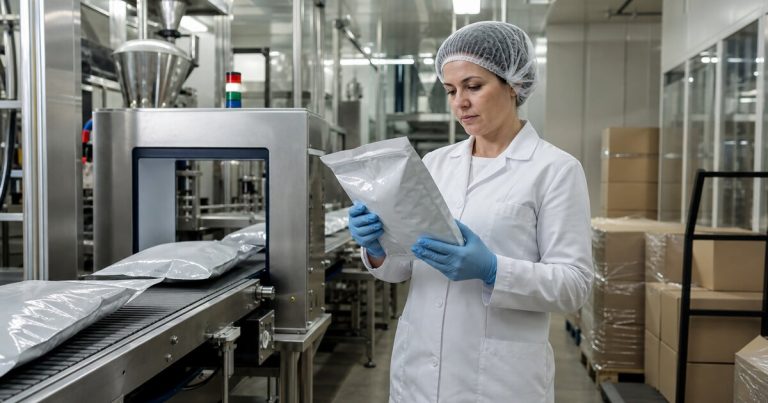
The Chinese human-food measure is a useful editorial prompt precisely because its boundary is clear. The published rule defines food contract manufacturing, assigns responsibilities to both the commissioning party and manufacturer, and describes written contracts, qualification checks, records, label review, supervision, inspection, and recall-related controls. Its official implementation Q&A also uses OEM and ODM examples and explains that a retailer’s private-label food arrangement may fall within the rule’s scope.
Those details should not be copied across jurisdictions or applied automatically to pet food. China regulates pet food through its feed system, including production licensing and pet-feed labeling requirements. In the United States, FDA’s animal-food framework focuses on current good manufacturing practice, hazard analysis, risk-based preventive controls, supplier programs where relevant, and records. In the European Union, feed hygiene rules place responsibilities on feed business operators for contamination control and record-keeping. The legal routes differ, and an importer should always obtain market-specific advice before selling.
The management principle is more portable than any single rule: production may be contracted, but accountability must be designed. A private-label owner that cannot explain who approved the formula, who owns the raw-material specification, who authorized a packaging change, or which batch was released has a governance problem before it has a legal problem.
Co-Manufacturing Is a Shared Operating Model
FDA describes co-manufacturing as an arrangement in which a brand owner has another party manufacture or process human or animal food on its behalf. That definition is commercially useful because it removes a common false distinction. The brand may own the trademark and customer relationship, while the factory owns the equipment and daily process. Neither fact alone resolves who controls the safety-critical decisions.
The most fragile relationships are built around only two documents: a product brief and a price sheet. They may identify protein source, pack weight, and minimum order quantity, but leave the real operational questions untested. Can the factory replace an approved ingredient when a supplier runs short? Is a different bag film acceptable? Which party approves a new production line or an alternative test method? What documentation travels with each batch? Who can stop shipment if the product is technically within a broad specification but inconsistent with the approved sample?
Those questions are not an attempt to turn a brand into a factory operator. They give both parties a way to move quickly without improvising decisions that should have been agreed in advance. Our guide to pet factory tours makes the same point from a buyer-audit perspective: the useful evidence is the connection between an approved sample, the production process, and the finished batch, not the appearance of the facility alone.
The Contract Must Become an Operating Specification
A contract is essential, but it should not be the only place where responsibility exists. The productive companion is an operating specification: a controlled document set that is detailed enough for purchasing, quality, production, packaging, and logistics teams to use without interpreting a marketing deck.
At minimum, the specification should establish the approved product formula or composition, ingredient and supplier requirements, physical and analytical parameters, processing and handling limits where relevant, packaging materials, pack weight tolerances, coding and shelf-life rules, label-artwork approval, testing and release requirements, storage and transport conditions, and a documented change-control process. It should also state which records the brand can review and how long they will be retained.
The level of detail should match the product. Dry kibble, canned food, freeze-dried treats, fresh or chilled products, supplements, and dental chews do not create the same process risks. A factory that makes excellent dry food may not be an appropriate partner for a high-moisture treat or a supplement with a sensitive active ingredient. Buyers should assess the category and process, not merely a factory’s overall reputation.
This is closely related to the question raised in our analysis of functional pet-food ingredients. A promising ingredient is not a finished product strategy until the formula, processing conditions, stability, evidence boundaries, and label language have all been controlled through commercial production.
Four Controls a Brand Cannot Delegate Away
Change control. The factory needs a formal route for proposing and documenting changes to raw materials, suppliers, processing parameters, packaging, manufacturing site, or test methods. The brand needs a written rule for which changes require notice, review, samples, stability work, label reassessment, or a fresh approval. The central question is not whether change is permitted. It is whether a change can reach market without the people responsible for the brand understanding its impact.
Supplier and ingredient verification. A supplier list is not a substitute for an approval process. Where a brand specifies an ingredient supplier, it should understand the associated hazard, quality, traceability, and lead-time implications. Where the factory buys ingredients, the quality agreement should say how the factory qualifies suppliers and communicates changes. FDA’s co-manufacturer guidance addresses this shared-control problem when hazards must be controlled in the supply chain: a brand and co-manufacturer need clarity on who approves suppliers, who performs verification, and who reviews the evidence.
Batch records and release. Each production run should be traceable to the relevant formula version, ingredients, packaging, production date, test results, deviations, rework where allowed, and shipment. This is not a request for every buyer to collect every factory record. It is a requirement to agree what evidence supports release and how it can be retrieved when a complaint, customs question, or recall requires it.
Nonconformance and recall readiness. A complaint should lead to a defined investigation path, not a debate about whose customer reported it. The parties should pre-agree how samples are retained, who opens a corrective-action record, how affected lots are identified, who communicates with distributors and retailers, and who has authority to stop a shipment. A recall plan is more useful when it has never been needed, because it means the contact list and lot logic are already known.
The Audit Should Follow the Product, Not a Generic Checklist
Factory audits still matter, but a generic audit can miss the exact failure mode a product is likely to face. A buyer evaluating a freeze-dried product should pay attention to raw-material segregation, moisture control, pathogen-control logic, packaging barrier performance, and how the factory validates the finished product. A buyer evaluating a heavy litter or wet-food format will care more about filling accuracy, sealing, carton performance, and transport durability. A brand moving from a small pilot to a regional launch should test whether the traceability system and raw-material approval process scale with volume.
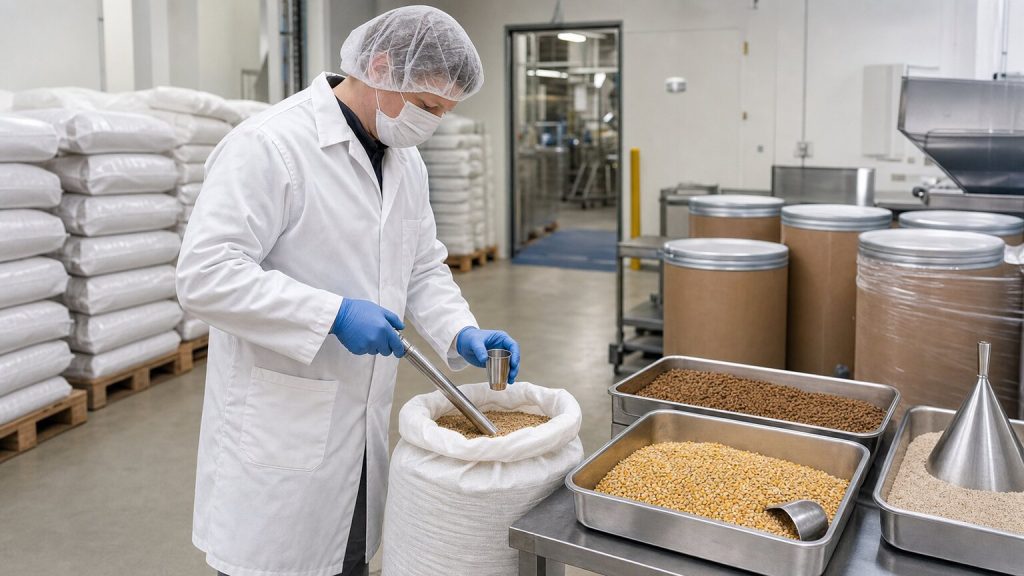
The strongest audits examine the actual route from receiving to dispatch. Can staff show the approved product specification? Can they explain what happens when a raw material fails acceptance? Does the batch record identify the ingredient lot and packaging lot? Is there a controlled way to handle rework? How are label revisions removed from use? What evidence is available before a shipment is released? A polished showroom does not answer those questions.
In our look at pet food quality and traceability, we noted that digital tools have value only when they make a real control easier to verify. The same standard applies here. A portal, dashboard, or QR code is not a quality system by itself. It is useful when it shortens the path from a finished pack back to an approved input, process record, and release decision.
Private Label Creates a Different Factory Relationship
An off-the-shelf product sold under a distributor label may be commercially straightforward, but it still needs a clear identity and label path. A more customized private-label project creates a deeper relationship. The brand may influence formula, ingredient sourcing, format, package artwork, claims, market selection, and forecast planning. Each additional choice increases differentiation, but also increases the number of decisions that need explicit ownership.
That is why an experienced co-manufacturer should be assessed for collaboration, not only capacity. Can it handle controlled product-development trials? Does it distinguish a customer sample from an approved commercial specification? Can it tell a buyer when a requested claim, ingredient, or format creates a regulatory or process risk? Does it have a routine for creating and approving the final product dossier before the first production run?
For cross-border projects, this becomes even more important. The product may need market-specific labeling, local importer information, language versions, registration or notification steps, permitted ingredients, and documentation for customs or retailers. A brand should not assume that a product legally made for one market can simply receive a translated label and enter another. The right co-manufacturing partner will identify those boundaries early, while the product brief can still be changed economically.

Keep Commercial Pressure From Bypassing Quality Decisions
The point of governance is not to slow every decision. It is to separate ordinary commercial flexibility from changes that can alter product compliance, quality, safety, or customer expectations. A buyer may reasonably negotiate price, forecast, delivery schedule, and assortment. Those negotiations should not create pressure to use a non-approved raw material, skip a release check, or quietly substitute packaging that performs differently in transit.
The warning signs are familiar. A factory offers a price that depends on an undefined alternative ingredient. A brand receives a revised label only after cartons have been printed. A product is moved to another line without an agreed assessment. A batch is released because a retailer deadline is close even though an investigation is unfinished. None of these situations proves bad faith. They do show why the relationship needs a clear escalation route before commercial pressure rises.
Brands that create recurring demand should be particularly disciplined. Our analysis of pet subscriptions found that a refill promise depends on stable products, reliable availability, and transparent exception handling. Those same conditions begin inside the co-manufacturing relationship. A formula or packaging change that is poorly controlled can become visible to thousands of repeat customers at once.
Build the System Before the First Large Purchase Order
The practical starting point is not a massive quality manual. It is a small number of decisions written clearly enough to survive staff changes and production pressure. Before a first large order, the brand and factory should agree the master product specification, approved formula and ingredients, packaging and artwork version, test and release rule, retained-sample practice, batch-record access, notification thresholds for change, and corrective-action contacts.
The buyer should then test the system with realistic scenarios. What happens if a named ingredient is delayed? If a carton fails transit testing? If an analytical result is outside the expected range? If a retailer reports a suspected defect? If the next market requires a different label? A competent partner does not need to promise that nothing will go wrong. It needs to show how the problem will be identified, contained, documented, and resolved.
Our View
The next stage of pet-food private label is not simply finding more production capacity. It is building relationships in which the brand, factory, and supply chain can prove what was made, why it was made that way, and who approved the decisions that mattered.
The new Chinese human-food contract manufacturing measure is not a pet-food rule, and it should not be presented as one. Its relevance is the discipline it makes visible: qualifications, contracts, supervision, records, label review, inspection, and response to nonconformance. Those are not administrative extras. For serious pet-food brands, they are the operating foundation that turns a factory order into a reliable product program.
Readers who follow pet retail, sourcing, manufacturing, and market-structure analysis can also follow Pet Industry Insights on Facebook.
References
China State Administration for Market Regulation: implementation Q&A
U.S. FDA: co-manufacturer supplier approval and verification guidance
U.S. FDA: preventive controls for animal food
EUR-Lex: Regulation (EC) No 183/2005 on feed hygiene
Chongyejia on Sohu: human-food contract manufacturing rules and pet food co-manufacturing