
A pet subscription looks simple from the customer side: choose a food, litter, treat, or care product; select a delivery cadence; and let the next order arrive before the household runs out. From the operator side, it is a much harder promise. The business is no longer selling a product once. It is committing to put the right item, in the right condition, at the right doorstep, on a repeatable schedule.
That is why pet subscriptions should be treated as a supply-chain model, not a marketing add-on. Discounts may encourage a first enrollment, but they cannot compensate for an out-of-stock staple, an unannounced formula change, a damaged parcel, a badly timed delivery, or a cancellation journey that damages trust.
The scale of the model is visible in the United States. In its fiscal 2025 results, Chewy reported $10.50 billion in Autoship customer sales, equal to 83.3% of net sales. Chewy’s Autoship offer is built around customer-selected delivery schedules, reminders, order management, add-ons, and inventory prioritization for recurring orders. That is not evidence that every pet retailer should imitate Chewy. It is evidence that recurring pet commerce becomes important only when retail, inventory, service, and delivery operate as one system.

The Product Has to Earn a Refill Relationship
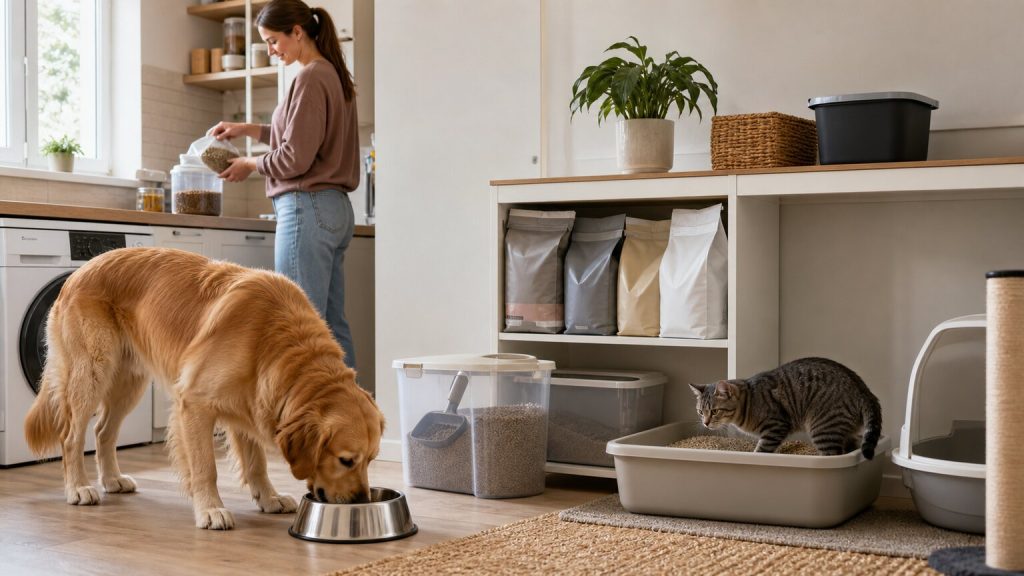
Not every pet product belongs in a subscription program. The strongest candidates are predictable consumables: dry and wet food, cat litter, treats with stable usage, pee pads, grooming refills, dental chews, waste bags, and selected health-support products where local rules allow recurring fulfilment.
The key word is predictable. A dog food subscription works when the pack size, feeding rate, household routine, and shelf life make the next order reasonably easy to forecast. Cat litter can work when the weight, usage rate, odor-control performance, and storage footprint are understood. A new fashion accessory, a seasonal toy, or an expensive smart device may be useful to cross-sell, but it is not usually a subscription anchor.
For buyers and private-label teams, this changes the product brief. Instead of asking only whether a product is attractive at first purchase, ask whether it will create a dependable replenishment pattern. Is the pack size sensible for a 28-day, 35-day, or 42-day cadence? Will the customer still want the same SKU on the third order? Does the product remain stable in the chosen distribution environment? Can the packaging survive repeated parcel delivery without becoming a source of returns?
Our analysis of pet food storage, feeding, and hygiene products reached a similar conclusion from a category perspective: convenience has commercial value only when the underlying daily routine is genuinely improved. Subscription makes that test even stricter.
The Real Unit of Work Is the Next Shipment
In a traditional ecommerce transaction, a retailer can regard each order as a fresh demand signal. A subscription changes the planning question. Future orders are expected demand with a date attached.
That makes inventory availability more important than a broad catalogue. When a consumer has enrolled in a recurring delivery, an out-of-stock item is not merely a missed conversion. It is a broken routine. The retailer must decide whether to delay the order, split the shipment, recommend an alternative, issue a credit, or cancel. Each option has a cost in margin, customer service, and trust.
For a brand or distributor, the operating requirements become concrete:
Reliable SKU masters. Pack size, formulation, flavor, barcode, country-specific label, and outer carton must be controlled. A seemingly minor packaging or recipe change can make a recurring customer feel that the product has been switched without consent.
Demand visibility. Subscription order forecasts should inform purchasing, production reservations, and stock allocation. They are not perfect forecasts, because households skip, cancel, add products, or change pets’ needs. They are still more actionable than a purely promotional sales forecast.
Substitution rules. The business needs a clear policy before the shortage happens. Can a customer-approved alternative be offered? Can a different pack size be used? Is a substituted product safe for the intended life stage or dietary need? The answer cannot be improvised by a warehouse team.
Exception handling. Failed payment, damaged delivery, address changes, product recalls, and temperature-sensitive deliveries all need a defined owner and response time. Subscription economics deteriorate quickly when every exception becomes a manual escalation.
This is why the subscription conversation belongs in supply-chain planning, not only in marketing calendars.
Product Stability Matters More Than Acquisition Cost
Subscription offers often begin with a first-order incentive. That may be necessary, particularly in crowded online markets. But the economics depend on what happens after the promotion.
An operator needs to know whether the product’s normal gross margin can support repeat delivery, payment processing, pick-and-pack labor, packaging, customer-service contact, and occasional recovery shipments. It also needs to know whether the customer can easily change the cadence rather than cancel entirely when demand changes.
Chewy’s own Autoship materials emphasize flexible schedule management, advance reminders, one-time add-ons, and the ability to change or cancel. Those details matter because they give the household a way to manage real life without abandoning the service. A rigid subscription can create short-term order volume but long-term resentment.
For suppliers, product consistency is just as important. A brand cannot build a recurring relationship around a food or litter SKU if the factory changes a core material, pack weight, product texture, or packaging barrier without a disciplined change-control process. The subscriber may not know why the experience changed. They will simply stop trusting the product.
The same logic is visible in our cat litter sourcing analysis. Dust, absorption, breakage, odor performance, weight accuracy, and transit durability can all affect repeat purchase. Subscription makes those small operational inconsistencies visible more often, not less.
A Subscription Needs a Different Fulfilment Promise
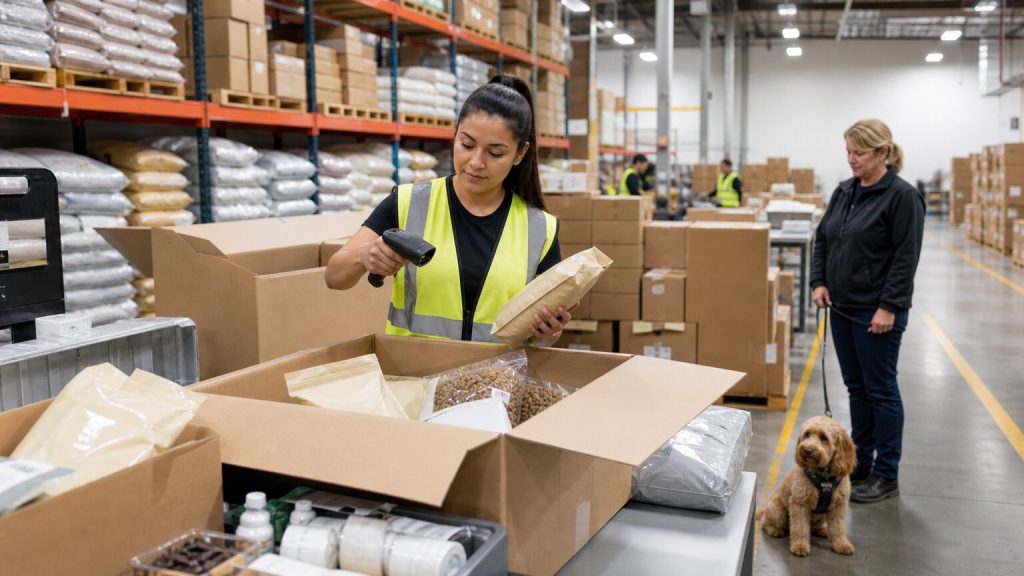
The most successful recurring-order programs make fulfilment feel uneventful. That is the point. The product arrives before it becomes urgent, the shipment is complete, the delivery is understandable, and the customer can adjust it without calling support.
To create that experience, operators should design fulfilment around the scheduled shipment rather than treat it as ordinary order traffic. A practical program needs cut-off times, stock reservation logic, address and payment checks, packaging standards, carrier service rules, and clear communication when an exception occurs.
Pet products create specific complications. Food and treats need shelf-life discipline. Heavy litter and bulky pads need strong cartons and sensible shipping economics. Liquids and grooming refills need leak control. Multi-pet households may need mixed baskets with different replenishment cycles. Premium products may require a delivery experience that does not undermine the brand’s positioning.
For cross-border operators, the planning horizon is longer. Lead time, customs clearance, local warehousing, language labeling, and importer responsibilities all need to work before a recurring delivery can be promised. A subscription flow should never be used to hide an unresolved market-entry or product-compliance problem.
Data Is Useful Only When It Changes an Operating Decision
Subscription programs generate useful signals: cadence changes, skipped orders, churn timing, add-on behavior, product pairings, delivery failures, and recurring product complaints. But more data is not automatically better.
The valuable question is whether a signal changes a decision. If many customers delay a 30-day litter refill to 40 days, the program may have a pack-size or cadence problem. If a food subscription has unusually high cancellations after the second delivery, the issue may be product acceptance, price, messaging, or delivery performance. If customers repeatedly add treats but never add grooming products, the merchandising logic may need revision.
This is where subscription can help a supplier as well as a retailer. Recurring data can show whether a proposed pack size is wrong, whether a formulation change causes churn, or whether a product is being damaged in the delivery network. That feedback is more useful than a generic claim that a SKU has “good repeat purchase.”
It also gives brands a reason to build product and operations teams together. A category manager may see a cancellation trend first. A supply planner may see a rising substitution rate. A factory may see higher complaint codes after changing a film supplier. The best subscription businesses connect those signals before a customer is lost.
The B2B Version Is Still a Subscription Model
Subscription does not need to mean a consumer-facing monthly box. Distributors and specialty retailers can use the same logic for scheduled replenishment programs, standing orders, clinic supply routines, or agreed reorder calendars.
For example, a retailer may want a regular replenishment model for its core food, litter, pads, and treat assortment while retaining open-to-buy capacity for novelty products. A grooming chain may schedule regular orders of shampoo, wipes, towels, and consumables. A veterinary-facing business may plan recurring non-prescription support products while keeping regulated products on separate workflows.
The operating principle is unchanged: the buyer gives the supplier a more visible demand pattern, and the supplier earns that predictability by protecting availability, product consistency, and delivery performance. Neither side benefits if the standing order merely transfers inventory risk to the other party.
This creates a useful sourcing question: does the supplier have the documentation and production discipline to support a stable core range over time? In our guide to pet factory tours, we argued that buyers should follow the link between approved samples and repeat production. That link is especially important when the same product will be shipped again and again on a promised schedule.
How to Start Without Creating a Costly Program
The safest approach is to begin with a narrow, proven range. Choose a small group of high-frequency, operationally stable products; define the target cadence; map the required service level; and test the full customer journey from enrollment through a skip, address change, stock exception, and cancellation.
Do not begin with every SKU. A broad launch creates too many combinations of pack size, stock status, shelf life, shipping class, and customer expectations. It becomes difficult to understand whether poor performance comes from the product, the offer, the delivery, or the program design.
Before launch, operators should be able to answer a few unglamorous questions. Which items will be reserved for recurring orders? What happens when a product is unavailable? Who approves any substitution? Which cartons are suitable for the shipment? How will the customer be notified before processing? What is the acceptable delivery window? How can a customer pause or cancel? Which team owns a recurring quality complaint?
These questions are not barriers to innovation. They are the conditions that make a repeat-order promise credible.
Our View
Pet subscriptions can create more predictable demand, better product feedback, and a stronger relationship with the customer. But that value does not come from recurring billing alone. It comes from making recurring fulfilment more reliable than the alternative of placing each order manually.
For suppliers, the opportunity is to provide stable, subscription-ready products: appropriate pack sizes, controlled formulation and materials, dependable shelf life, strong shipping packaging, and a documented process for changes. For brands and retailers, the opportunity is to build a service that respects the customer’s routine while remaining flexible when that routine changes.
The best pet subscription programs do not ask customers to take a leap of faith. They remove one small source of uncertainty from caring for an animal. The supply chain has to keep that promise every time.
Readers who follow pet retail, sourcing, manufacturing, and market-structure analysis can also follow Pet Industry Insights on Facebook.
References
Chewy: fiscal fourth quarter and full year 2025 results
Chewy: Autoship and Save program details
Chongyejia on Sohu: why pet subscriptions differ across markets