
Cat litter is one of the most practical products in the pet supplies market. It is not as visually exciting as smart devices, not as emotional as pet food, and not as giftable as toys or apparel. But for cat-owning households, it is part of daily life.
That makes cat litter a category worth watching for overseas buyers, distributors, private-label brands, ecommerce operators, and sourcing teams. It is heavy, recurring, behavior-sensitive, packaging-sensitive, and easy to review harshly when it fails.
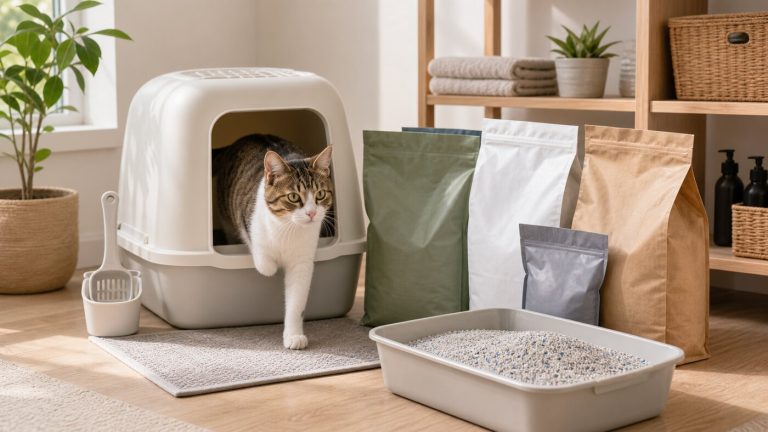
The American Pet Products Association reported that U.S. pet industry spending reached $158 billion in 2024, with supplies, live animals, and OTC medicine accounting for $34.4 billion. Cat litter sits inside the broader supplies logic: it is not a one-time accessory, but a repeat-purchase product that shapes store traffic, delivery economics, and brand trust.
The Pet Industry Insights editorial view is that cat litter should not be treated as a simple commodity. The category is becoming a supply chain category. Materials, dust control, clumping, odor management, tracking, packaging, palletization, claims, and user education all affect whether the product can work in a real channel.
Why cat litter is different from ordinary pet accessories
Many pet accessories are discretionary. A toy, outfit, travel pouch, or extra bed may be bought because it looks good, fits a season, or solves an occasional use case.
Cat litter is different. It is tied to a routine the household cannot ignore.
That routine makes the category attractive. It creates repeat demand, subscription potential, private-label opportunity, and shelf importance for retailers. It also creates risk. If the litter is dusty, tracks across the floor, fails to clump, controls odor poorly, breaks in transit, or causes a cat to avoid the litter box, the customer notices quickly.
The ASPCA notes that litter-box problems can be connected to box cleanliness, box size, access, box type, litter depth, and litter preference or aversion. It also says most cats prefer clumping, unscented litter and a shallow bed of litter. For product buyers, this is a reminder that cat litter is not evaluated only by the person who pays. It is also evaluated by the cat’s willingness to use the box.
That makes buyer risk more complex than in many accessories. The product has to satisfy the owner, the cat, the home environment, and the channel economics.
Material choice defines the category position
The first major decision is material.
Bentonite clay remains a major format because it can clump strongly and is familiar to consumers. Its weaknesses are weight, dust concerns, mining perception, and shipping cost. Silica gel litter can offer high absorption and odor-control positioning, but it raises questions about texture acceptance, price, packaging, and consumer education. Plant-based litters, including tofu, corn, wood, paper, and other fiber-based options, can support lighter or sustainability-oriented positioning, but buyers need to test clumping, moisture sensitivity, odor control, shelf life, and breakage.
No material is automatically best. The right format depends on channel, region, price point, owner expectations, packaging, and brand promise.
For example, a supermarket private-label buyer may prioritize stable supply, predictable clumping, low price volatility, and durable bags. A premium DTC brand may prioritize low dust, odor control, lighter carry weight, packaging design, and subscription economics. A European specialty retailer may care more about sustainability claims, packaging materials, and local disposal expectations. An online marketplace seller may care most about review language: dust, tracking, odor, clump strength, broken bags, and delivery damage.
This is why cat litter belongs in a broader product-category strategy. In our analysis of China’s pet supplies market moving from volume growth to category upgrades, we argued that the next stage of pet supplies growth comes from more specialized spending per pet. Cat litter is one of the clearest examples of that shift.
Buyers should test the product like a household uses it
A supplier sample can look good in a bag and still fail in use.
Buyers should test clumping speed, clump strength, odor control, dust during pouring, tracking outside the box, granule breakdown, absorption, scoopability, moisture resistance, and how the product behaves after several days of use. They should also test packaging: drop resistance, seal integrity, handle strength, zipper performance, moisture barrier, pallet compression, carton durability, and leakage in parcel delivery.
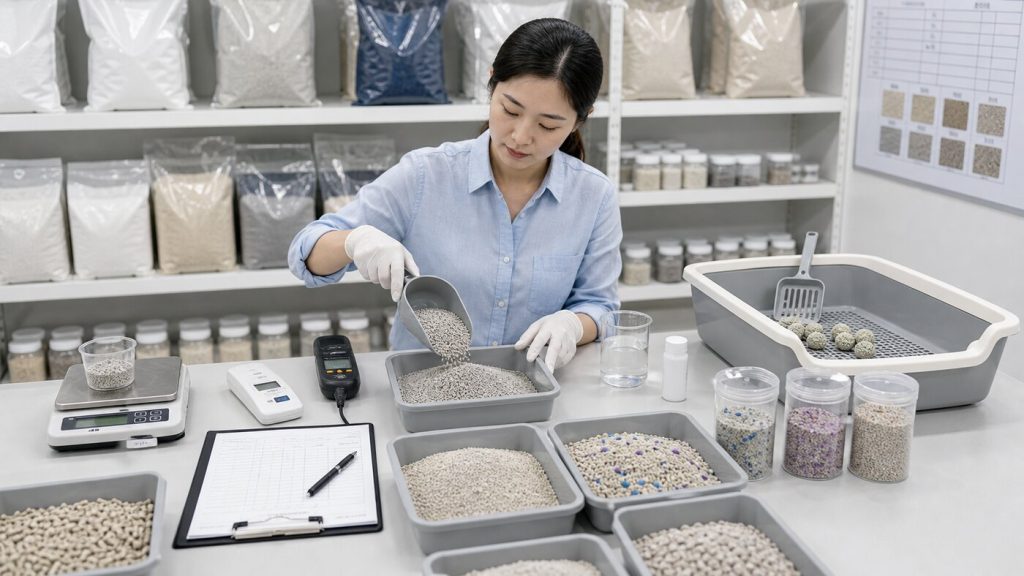
This is especially important for online channels. A bag that survives pallet freight may still fail in small-parcel delivery. A lightweight litter that looks attractive in marketing may create dust or tracking complaints. A plant-based litter may be vulnerable to humidity if packaging and storage are weak.
Sourcing teams should ask suppliers for more than a quotation. Useful supplier information includes material source, particle size range, moisture content, dust-control method, clumping performance, fragrance options, deodorizing additive, packaging structure, shelf-life expectation, storage requirements, and batch consistency.
The buyer should also request samples from multiple batches, not just one prepared sample. Cat litter quality can shift when raw material moisture, granule size, fragrance level, or packaging supplier changes.
Odor control is a promise, not a label
Odor control is one of the most important purchase drivers in cat litter. It is also one of the easiest claims to overstate.
For a buyer, odor control should be broken down into mechanisms. Is the product relying on clumping speed? Activated carbon? Baking soda? Zeolite? Plant fibers? Fragrance? Antibacterial claims? Moisture absorption? Each approach has different cost, claim, market, and user acceptance implications.
Fragrance is a good example. Some owners like scented litter because it feels fresher in the store or after opening the bag. But fragrance can also create complaints if it is too strong, artificial, or disliked by the cat. The ASPCA’s preference note around unscented clumping litter is a useful caution: owner preference and cat preference are not always the same.
This matters for private-label brands. A strong fragrance can make a product seem differentiated at first, but it can also narrow the audience. A more disciplined approach is to offer clear variants: unscented low-dust clumping, carbon odor control, lightweight plant-based, or multi-cat odor control, each with claims the product can support.
In this sense, cat litter resembles other recurring pet care categories. Our article on home pet grooming tools as a product system made a similar point: repeat-purchase categories need product fit, not only attractive packaging.
Packaging and logistics can decide profitability
Cat litter is one of the pet categories where packaging is not secondary. It can decide whether the product is profitable.
The product is heavy, often granular, sensitive to moisture, and prone to leaking if bags, seams, valves, zippers, or cartons are weak. If a bag breaks in transit, the customer experience is poor and the seller may lose the entire order margin. If pallet stacking is poor, warehouse handling can damage the product before it reaches the customer.
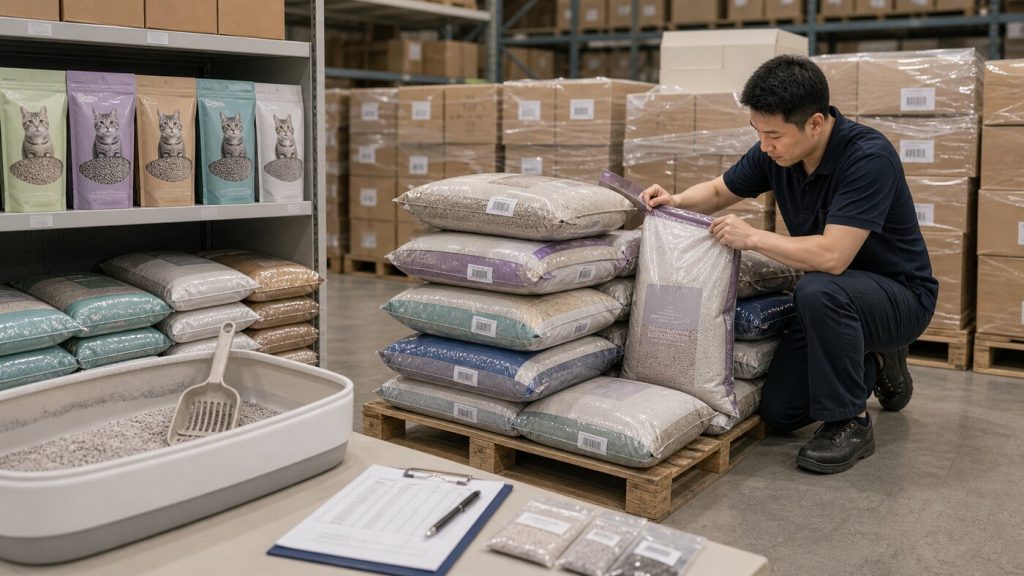
For ecommerce, packaging needs to be designed for parcel handling. That may mean stronger outer cartons, thicker film, better heat seals, corner protection, reinforced handles, smaller pack sizes, or multi-pack structures. For retail, shelf presentation and lifting comfort matter. For distributors, pallet density, cube efficiency, and damage rate matter.
This is where buyers should connect category strategy to logistics math. A low ex-factory price can disappear if the product is too heavy, too bulky, too fragile, or too likely to leak. A lighter plant-based litter may improve shipping economics, but only if it performs well enough to avoid complaints. A premium paper or tofu litter may support better pricing, but only if packaging protects against humidity and breakage.
The lesson from our article on low-ticket pet accessories and ad economics also applies here: unit price alone is not the business model. Basket value, repeat purchase, logistics cost, damage rate, and review quality determine whether the product works.
Claims need market discipline
Cat litter packaging often uses claims such as low dust, natural, eco-friendly, flushable, antibacterial, deodorizing, lightweight, long-lasting, fast clumping, compostable, or multi-cat.
These claims can help sell the product, but they also create risk.
“Low dust” should be supported by testing or at least a consistent internal method. “Flushable” can be sensitive because plumbing systems and local rules differ. “Compostable” may depend on material, contamination, local waste rules, and how consumers interpret the claim. “Antibacterial” or health-related language may raise additional regulatory questions. “Natural” and “eco” language can become vague if material sourcing and packaging do not support it.
For overseas buyers, the practical approach is to separate product attributes from marketing language. The supplier can provide a material and performance profile. The buyer must decide which claims are safe, useful, and appropriate for the destination market.
This connects directly with our article on EU GPSR and pet product compliance. Cat litter may not always be managed under the same rules as toys or devices, and pet food/feed categories have their own frameworks. But the broader principle still matters: product information, traceability, safety language, and market-specific labeling cannot be improvised after production.
Channel strategy should match product format
Different cat litter formats fit different channels.
Heavy clay litter can work well in grocery, club, and local retail where consumers already expect weight and can buy at scale. Online sellers need to manage delivery cost and breakage carefully. Lightweight litter can work better for ecommerce and subscription, but only if performance is credible. Premium plant-based or specialty litters may work well in pet specialty retail, DTC, or regional distributors that can explain the value.
Private-label brands should think in tiers. A basic clumping litter can anchor price. A low-dust or odor-control version can support mid-tier value. A plant-based, lightweight, or sustainability-positioned version can support premium positioning. Accessories such as scoops, mats, liners, deodorizer, and storage containers can raise basket value, but they should not distract from litter performance.
For distributors, the opportunity is to build a complete cat hygiene section, not just one bag. A strong program can include litter, litter boxes, scoops, mats, disposal bags, odor-control accessories, and shelf education.
For factories and suppliers, the opportunity is to move beyond “we can supply cat litter.” Buyers increasingly need product concepts, sample testing, packaging options, moisture control, private-label design support, claim guidance, and logistics-aware pack sizes.
Our view
Cat litter is not the most glamorous pet supplies category, but it is one of the most operationally important.
It sits close to daily pet ownership, household odor, cat behavior, retail repeat purchase, ecommerce logistics, and private-label economics. That makes it a strong category for buyers who understand the details and a difficult category for sellers who only chase low cost.
The strongest cat litter programs will not be built on one claim. They will be built on a fit between material, performance, packaging, channel, and customer expectation.
For buyers, the key is to test the product like a household uses it and ship it like the channel will handle it.
For suppliers, the key is to make performance visible: granule consistency, dust control, clump strength, odor strategy, packaging durability, moisture protection, and batch traceability.
Pet Industry Insights expects cat litter to remain a category where practical product development and supply-chain discipline matter more than trend language. In a market where many pet products compete for attention, cat litter wins or loses in the routine.