
Low-ticket pet accessories look like an easy opportunity from the outside. Pet owners buy apparel, toys, leashes, waste bags, grooming tools, and small impulse products all year round. The market is emotional, visual, and full of repeat-purchase potential.
But many independent pet stores lose money very quickly when they try to sell these products with paid traffic.
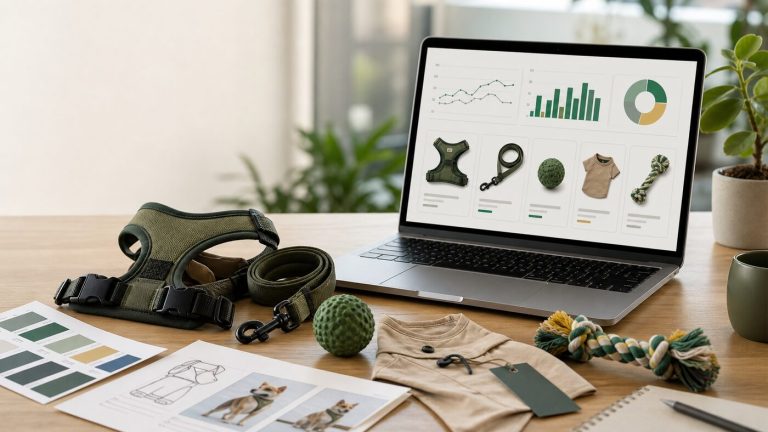
The problem is not that pet owners do not buy. The problem is that the economics of a $10 to $20 product are much less forgiving than many new sellers expect.
A dog shirt priced at $15 may already carry product cost, packaging cost, payment fees, warehouse handling, shipping support, returns, and customer service. If the store then pays $4 or $6 to acquire a buyer through Facebook, Instagram, TikTok, or Google, the order can become unprofitable before the seller has learned anything useful.
This is a common mistake in the pet accessories category: using a premium-product advertising mindset on a low-ticket SKU.
For pet brands, importers, cross-border sellers, and even factories supporting OEM/ODM customers, this matters because the winning product is not always the product with the best factory cost. The winning offer is usually the one with the right order value, the right content, and enough trust signals to make a first-time buyer comfortable.
The real issue is contribution margin, not product demand
Pet accessories are often treated as simple consumer goods. A seller sees a strong pet ownership culture in the U.S., Europe, or Australia and assumes that a lower price will be enough.
That is rarely true.
The first question should be: after product cost, shipping, packaging, payment fees, returns, and ad spend, how much margin is left on the first order?
For a single low-ticket SKU, the answer is often “not enough.”
This does not mean low-ticket pet accessories are a bad business. It means the business cannot be built around one isolated product page and a direct “buy now” ad. The category needs a different operating model.
The Pet Industry Insights editorial view is simple: low-ticket pet accessories should be managed as an offer system, not as separate cheap items.
Bundle the occasion, not just the product
One of the most practical ways to improve the economics is to raise average order value through bundles.
Instead of pushing one $15 dog shirt, a brand can build a $39 to $49 summer walking bundle: dog shirt, cooling vest, portable water bottle, leash accessory, and small outdoor toy.
Instead of selling one chew toy, the store can create a play box with a chew toy, rope toy, ball, and small surprise item.
Instead of selling one leash, it can position a walking kit with leash, waste bag holder, reflective patch, and travel pouch.
The point is not to randomly pack products together. The bundle should represent a real pet-owner occasion: summer walks, rainy days, puppy training, backyard play, travel, grooming, or holiday gifting.
This is where factories and suppliers can create more value for brand customers. A supplier that only quotes individual SKU prices is easy to replace. A supplier that can suggest sellable bundles, packaging formats, product naming, and photography scenes becomes much more useful.
Content-led ads usually fit pet accessories better than hard-selling ads
Low-ticket pet accessories are visual and emotional. Consumers often respond better to scenes than to product specifications.
A direct ad that says “buy this dog shirt now” has to overcome a trust barrier immediately. The buyer does not know the store, cannot touch the fabric, and may worry about sizing.
A content-led ad works differently. It shows the pet using the product in a believable setting: a dog running in the yard, a puppy playing with a toy, a raincoat being used during a real walk, or a simple before-and-after grooming moment.
For TikTok and Instagram Reels, the creative format matters as much as the product. Short vertical video, real pet movement, visible fit, simple captions, and a natural owner perspective often outperform polished catalog-style product images.
Pinterest can also be useful for some pet accessory categories because many buyers search by use case, season, color, breed, or home style. A single good pin for “small dog raincoat sizing” or “summer dog walking kit” can continue sending traffic for months.
The lesson for pet brands is clear: the ad should not only show what the product is. It should show why the product fits a real pet-owner moment.
Trust is built through visible use, not quality claims
Pet products have a special trust problem. The person who pays is usually the owner, but the user is the pet.
That means the owner has to judge comfort, safety, fit, durability, and fun indirectly. They look at other owners, other pets, reviews, videos, and usage scenes.
For low-ticket accessories, a store’s most valuable assets are often not product descriptions. They are user-generated photos and videos.
A real golden retriever wearing a raincoat in wet weather is more persuasive than a long paragraph about waterproof fabric. A short video of a pug playing with a toy in a backyard is more useful than a generic “premium quality” claim.
Brands should collect this material early, even before scaling ad spend. Small incentives, post-purchase email flows, hashtag campaigns, and pet-owner photo contests can help build a content library.
For manufacturers, this also changes the product development conversation. Buyers do not only need samples. They need sample kits that are easy to photograph, easy to explain, and easy to turn into social content.
A loss-leader can work, but only with a clear basket strategy
Some sellers use an extremely low-priced item as a traffic entry point. This can work, but it is dangerous if the store does not control basket economics.
A small bell, toy, or accessory sold near cost may attract buyers, but the store should not expect that item to generate profit by itself. It should lead into a free-shipping threshold, a bundle recommendation, a related product set, or a repeat-purchase path.
For example, a $1.99 accessory can make sense if the store has a clear $25 or $35 free-shipping threshold and the cart experience naturally recommends a walking kit, toy set, or seasonal bundle.
Without that structure, a loss-leader is just a loss.
This is where many new sellers misunderstand low-price strategy. Cheap traffic is not the goal. Profitable behavior after the click is the goal.
Localization is more than translating the product page
Pet-owner scenes differ by market.
In the U.S., backyard play, suburban walking, seasonal events, and large dog ownership may shape the creative direction. In Germany, outdoor walking, measurement accuracy, product durability, and clear sizing information may matter more. In Australia, beach, outdoor lifestyle, heat, water, and mixed measurement habits can affect both content and product presentation.
Localization also includes units, sizing, return expectations, shipping language, breed references, climate, and platform behavior.
For pet apparel especially, sizing mistakes can destroy margin. If U.S. buyers expect inches and pounds while German buyers expect centimeters and kilograms, the size chart cannot be treated as a minor detail. A few percentage points of avoidable returns can erase the profit of an entire low-ticket campaign.
For suppliers, this is another opportunity. A factory that understands market-specific size charts, packaging language, photography style, and compliance notes is more valuable than a factory that only says “we can make any design.”
What pet brands and suppliers should take from this
The low-ticket pet accessory category is not a dead end. But it rewards operators who understand the math.
The product must be easy to bundle. The content must make the use case visible. The first-order margin must be protected. The trust material must be collected early. The market localization must be specific enough to reduce confusion, returns, and wasted ad spend.
For pet brands, this means product selection should start with the offer structure, not just the factory price.
For importers and distributors, it means a supplier’s merchandising ideas can be as important as the product itself.
For OEM/ODM factories, it means the best customers may need more than production capacity. They may need bundle concepts, packaging options, sample sets, and content-friendly product details that help them sell in their target market.
Our view is that low-ticket pet accessories will remain attractive because the demand is real and visual content can travel quickly. But the category is not forgiving. Sellers who only push single cheap SKUs into paid ads will keep burning budget. Sellers who build bundles, scenes, trust, and localized shopping logic have a much better chance of turning low-ticket items into a repeatable business.