
Pet-friendly travel is no longer only about whether a passenger can bring a dog or cat onto a flight. The next stage is infrastructure: where the pet waits, how stress is reduced before boarding, what products are available in the terminal, who answers travel-rule questions, and how airports, airlines, retailers, service providers, and product brands work together around the same journey.
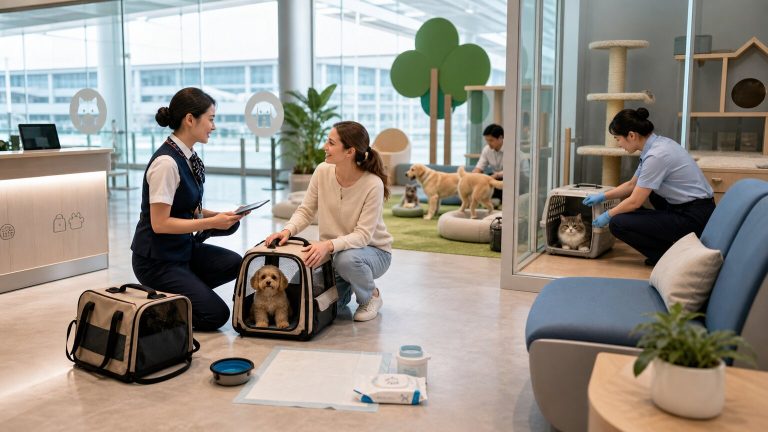
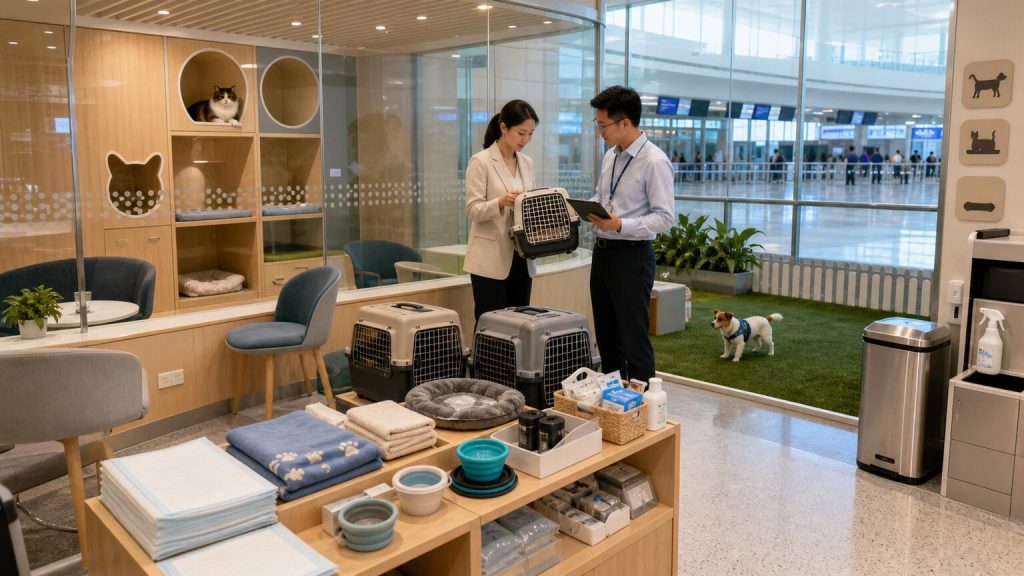
That is why a new pet lounge at Shanghai Hongqiao International Airport is worth watching. A recent Sohu pet-industry report described the new dedicated pet waiting room at Hongqiao Airport’s Terminal 2 as a nearly 100-square-meter independent space with separate cat and dog areas, short-term pet care, travel consultation, cleaning supplies, owner seating, charging points, and other support services.
The same core facts are also confirmed by Shanghai’s official English portal. According to the city’s International Services Shanghai report, the pet-friendly departure lounge began operations on June 18, 2026, spans nearly 100 square meters in Terminal 2, and can be used free of charge after registration with a valid same-day boarding pass. A related Shanghai government video page also describes separate areas for dogs and cats, pet amenities, travel assistance, and short-term pet boarding.
For overseas pet industry readers, the point is not only that one airport added a pet room. The larger signal is that pet travel is becoming a service system, and service systems create new product, retail, logistics, insurance, and operating opportunities.
The Missing Link In Pet Air Travel
Most pet travel discussions focus on airline rules or carriers. Those are important, but they leave out the airport experience. A pet may spend time in a taxi, queue, check-in area, security process, public waiting zone, aircraft cabin, baggage process, or cargo workflow. Each step can affect stress, cleanliness, safety, owner confidence, and service quality.
Before airports build dedicated spaces, many passengers with pets wait in ordinary public areas. That creates predictable friction. Dogs may become restless around crowds. Cats may be stressed by noise and movement. Owners may need water, waste bags, wipes, or a quiet place to reorganize the carrier. Other travelers may be uncomfortable around animals. Airport staff may need clearer procedures for questions, check-in timing, or temporary holding.
A dedicated pet lounge addresses that gap. It does not replace airline rules, veterinary documents, or carrier requirements. It gives the airport a controlled place to manage a journey that was previously handled in informal corners of the terminal.
That is why this topic is different from our earlier article on pet transport safety as service infrastructure. Transport safety focuses on vehicles, handover, temperature, accountability, and chain of custody. Airport pet lounges focus on the passenger-facing environment before departure. Both are infrastructure layers, but they solve different parts of the travel journey.
Pet Lounges Create Product Touchpoints
An airport pet lounge is also a product environment. It makes certain categories more visible, more necessary, and easier to bundle into travel services.
The obvious products are airline-compliant soft carriers, hard carriers, absorbent pads, disposable water bowls, collapsible bowls, cleaning wipes, waste bags, odor-control products, ID tags, comfort blankets, cooling mats, and low-noise grooming or cleaning tools. In a well-designed space, these are not random accessories. They are part of the service workflow.
For example, absorbent pads are not just a household hygiene SKU when used in an airport. They become part of carrier preparation, lounge cleanliness, and passenger reassurance. A portable bowl is not just a travel add-on; it supports hydration during a high-stress trip. Wipes and waste bags help the airport keep the public area acceptable for both pet owners and non-pet travelers.
This connects naturally with our analysis of pet travel carriers and car safety products. Travel gear should be treated as a safety-adjacent category with real use conditions. Airport lounges add another use case: products need to fit airline size limits, airport hygiene expectations, passenger handling, and retail display.
The Design Challenge: Cats And Dogs Are Not The Same Traveler
One useful detail in the Hongqiao example is the separation of cat and dog zones. That matters more than it may seem.
Dogs may need short activity, owner interaction, water access, and a controlled toilet or cleaning setup. Cats often need quiet, enclosure, visual shielding, and lower stimulation. Putting both species into one busy room can reduce the value of the facility. A pet-friendly airport space has to be species-aware, not just animal-themed.
For facility operators, that means washable flooring, air purification, odor control, separate storage, quiet zones, clear signage, clean handwashing, and controlled entry rules. For product suppliers, it means the same lounge can create demand for different product sets: dog activity mats, cat cubbies, carrier covers, disposable liners, litter solutions, wipes, waste handling, and calming textiles.
The sourcing implication is direct. Buyers should not treat “pet travel” as one SKU cluster. The airport environment separates needs by species, trip length, carrier type, stress level, and staff workflow.
Airports Need Rules, Not Just Rooms
A pet lounge can look friendly, but the operational rules determine whether it works.
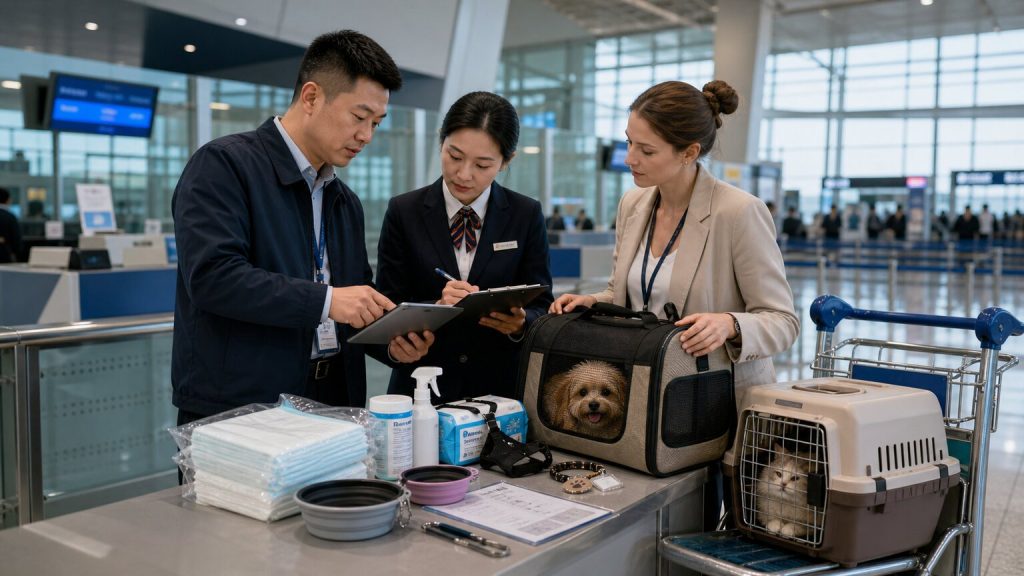
The Shanghai official report says passengers can enter the Hongqiao lounge free of charge by registering with a valid same-day boarding pass, and that each passenger may bring one pet. The Sohu report adds that the facility is positioned as a public convenience service rather than a paid commercial lounge. Those details matter because they define user flow, staffing, capacity, and expectations.
If a lounge is free and near the departure process, the airport must manage entry, cleaning frequency, maximum occupancy, species separation, short-term holding, emergency response, and passenger questions. If a lounge is paid or bundled with premium service, the operating model changes. It may include reservation, grooming, veterinary document checks, transport coordination, retail products, or partner services.
For B2B operators, this is where the airport pet lounge becomes a business model question. Is the space a public amenity, a retail channel, a service counter, a premium add-on, a logistics node, or a marketing partnership? The best answer may differ by airport type, passenger mix, airline policy, and local pet ownership culture.
Airline Rules Still Control The Journey
Airport infrastructure cannot override airline and destination rules. This is a critical point for product brands and service providers.
IATA’s Traveler’s Pet Corner reminds passengers to check with the airline in advance, confirm whether pets are accepted on the selected day and flight, prepare the appropriate container, consider size and weight rules, manage health certificates where required, and understand that animals may become stressed during air travel. IATA also notes that only small dogs and cats can go in the cabin with some airlines, while other pets may need to travel in the hold or as freight depending on airline rules.
That means an airport lounge should not create unrealistic expectations. A lounge can make the terminal experience smoother, but passengers still need the right carrier, documentation, airline approval, check-in timing, and destination compliance. Product packaging and service copy should avoid vague promises such as “airline approved everywhere” or “accepted by all airports.”
For sourcing teams, this is a key label and claim issue. A carrier may be suitable for many cabin travel situations, but exact acceptance depends on airline dimensions, aircraft type, pet weight, route, and local rules. A responsible product line should help users check rules rather than implying universal approval.
Product Opportunities Around The Lounge
Airport pet lounges can support several product and service lanes.
The first is carrier systems. Soft-sided carriers, collapsible crates, carrier covers, washable liners, and trolley-compatible designs all become more valuable when airports give passengers a place to reorganize before boarding. Better carrier design can reduce stress, spills, odor, and staff friction.
The second is hygiene and cleaning. Absorbent pads, wipes, odor-control bags, disposable bowls, hand-cleaning products, small litter solutions, and waterproof mats are practical products for lounge use. These categories are not glamorous, but they matter in public infrastructure because cleanliness affects whether airports continue supporting pet access.
The third is comfort and stress management. Calming blankets, familiar-smell mats, quieter carrier covers, cooling products, hydration support, and pre-travel preparation content can all fit the journey. Our article on pet cooling and hydration products is relevant here because airport and vehicle environments can expose pets to heat, waiting time, and hydration gaps.
The fourth is service packaging. Travel consultation, short-term holding, check-in guidance, insurance, veterinary document review, and airline-rule content can become a service layer around the physical lounge. This is where airports, airlines, pet retailers, insurers, and service platforms may find partnership opportunities.
What Buyers Should Watch
For overseas buyers and distributors, the Hongqiao example is useful because it shows how infrastructure can change product demand.
When travel is informal, pet travel products are often sold as lifestyle accessories. When travel becomes more structured, products must support real workflows. A carrier needs dimensions, ventilation, cleaning, stability, and clear instructions. A pad needs absorbency and leak control. A bowl needs packability and hygiene. A calming product needs responsible claims. A sensor or tracker needs battery, connectivity, privacy, and airline safety review.
Retailers can also rethink merchandising. Instead of selling isolated travel SKUs, they can build airport-travel kits: carrier plus pad plus bowl plus wipes plus ID tag plus rule-check content. Distributors serving airports or travel-service partners can prepare B2B packs for lounges, airline counters, pet hotels, relocation companies, and premium travel programs.
This also connects with our broader article on pet business opportunity lanes for entrepreneurs and B2B operators. Some pet opportunities are not single products; they are service ecosystems. Pet-friendly travel is one of those ecosystems.
The Airport As A Trust Signal
An airport pet lounge can also change consumer expectations. If a major transport hub offers a dedicated pet area, passengers may begin to expect better pet handling from hotels, malls, train stations, rideshare services, and travel retailers. That can accelerate pet-friendly infrastructure beyond aviation.
For brands, the trust signal matters. A product that performs well in an airport context can look more credible than a decorative travel accessory. A service provider that understands airport rules can build stronger partnerships. A retailer that helps owners prepare for actual travel steps can move beyond seasonal impulse sales.
The risk is over-commercialization without operational discipline. A pet-friendly space that becomes crowded, poorly cleaned, noisy, or unclear in its rules can damage trust. The category depends on behavior, design, and staff training as much as on products.
The Bigger Industry Signal
Hongqiao Airport’s pet lounge should be read as part of a wider shift: pets are being included in mainstream public infrastructure rather than treated as exceptions.
For pet product buyers, this creates demand for more serious travel products. For service operators, it creates new touchpoints around consultation, holding, cleaning, and passenger guidance. For airports and transport hubs, it creates a way to reduce conflict in public areas while serving a growing traveler segment. For brands, it creates a new context for trust-building.
The next phase of pet travel will not be defined only by whether pets are allowed. It will be defined by how well the journey is managed from home to airport, from waiting area to aircraft, and from arrival to final destination.
That makes pet-friendly airport lounges more than a convenience feature. They are an early sign that pet travel is becoming infrastructure.