
Pet transport is often marketed with comforting language: dedicated vehicle, personal escort, full monitoring, one-to-one service, insured route, door-to-door delivery. But the operational reality behind those promises can vary dramatically. That gap is now becoming a serious industry issue, especially as pet ownership grows and owners treat dogs and cats as family members rather than movable goods.
A recent Sohu pet-industry report used a fatal highway incident in China as the starting point for a broader critique of pet transport. The article described owner concerns about promised service levels, vehicle conditions, subcontracting, insurance, delayed information, and weak accountability after the incident. We will not dwell on the accident itself. The more useful industry question is what it reveals: pet transport cannot be treated as ordinary freight with nicer marketing language.
For overseas pet businesses, logistics providers, service platforms, insurers, retailers, and product buyers, pet transport safety is becoming a service infrastructure problem. It is about standards, vehicles, containers, documentation, chain of custody, staff training, route planning, monitoring, and emergency response.
The Problem Is Not Only The Carrier
Many pet transport discussions focus on the travel crate. That matters, but it is only one layer. A good carrier cannot compensate for a bad operating model.
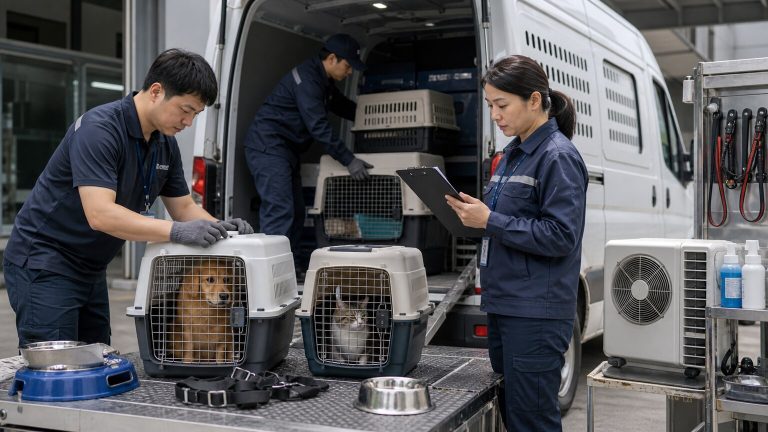
The deeper problem is fragmentation. Some operators own vehicles, train staff, manage routes, and handle animals directly. Others are mostly sales intermediaries. They advertise a service, collect the order, then subcontract transport to another vehicle, another driver, another local handler, or another informal network. When nothing goes wrong, the customer may never notice. When something does go wrong, responsibility becomes hard to trace.
This is why pet transport should be evaluated as a system. The critical questions are not only “what crate is used?” but also “who owns the route?”, “who handles the animal at each step?”, “what vehicle is used?”, “what temperature and ventilation controls exist?”, “what documents are checked?”, “what happens during delay?”, and “who is accountable if the promised service is not delivered?”
That is the key difference from our earlier article on pet travel carriers and car safety products. Carriers, harnesses, and restraints are product categories. Pet transport safety is a service architecture.
Why Standards Are Moving Into The Center
Live animal transport is already treated as a specialized process in global aviation. IATA’s Live Animals Regulations describe live animal transport as a complex, high-touch process involving shippers, freight forwarders, airline staff, and handlers. IATA also warns that inappropriate container use or misunderstanding carrier or government rules can have serious consequences.
That language matters because it frames live animal movement as a chain of responsibilities. It is not a single product sale or a simple delivery order.
Road transport is now facing a similar need for structure. China’s National Public Service Platform for Standards lists a national standards plan, 20262193-T-326, Companion Animal Technical Specification for Road Transportation of Dogs and Cats. The platform shows the plan was issued on April 28, 2026, has a 15-month project cycle, and is under the National Companion Animal Standardization Technical Committee.
The standard is still in drafting, so businesses should not present it as a finished rule. But its existence is a market signal. Pet road transport is moving from informal service claims toward written requirements around process, safety, and animal welfare.
The Service Layers Buyers Should Examine
For retailers, pet service platforms, insurers, relocation companies, breeders, shelters, and distributors that work with transport partners, the evaluation should move beyond price and geographic coverage.
The first layer is operator identity. Does the company operate its own fleet, use vetted contractors, or simply resell orders? If contractors are used, what audit process exists? Are vehicle owners, drivers, and handlers registered in a way that can be checked after the trip?
The second layer is vehicle suitability. A vehicle that can move parcels is not automatically suitable for dogs and cats. Pet transport needs ventilation, temperature management, secure crate placement, cleaning protocols, noise control, safe loading, and space planning. Operators should be able to explain how animals are separated, how airflow is maintained, and how vehicle conditions are monitored during the route.
The third layer is container control. Travel containers should match animal size, route duration, carrier requirements, and species needs. The container should allow safe posture, ventilation, secure closure, identification, and cleaning. A weak container turns the entire service into a higher-risk activity.
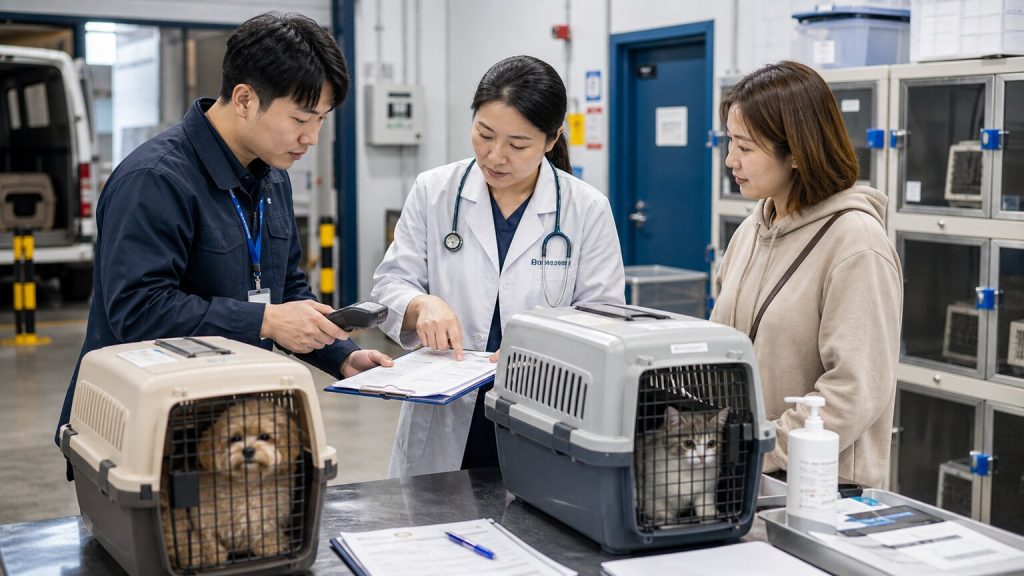
The fourth layer is documentation. Health certificates, vaccination records, identification, owner consent, route details, emergency contacts, insurance terms, and handover records all matter. For cross-border or airline-related movements, official rules can become much more complex. The USDA APHIS pet travel portal, for example, is built around destination-specific requirements for animals entering or leaving the United States.
The fifth layer is exception handling. Delays, heat, cold, road closures, missed handovers, illness, aggressive behavior, escape risk, and documentation gaps should not be improvised. A credible operator needs written procedures.
Temperature And Ventilation Are Commercial Issues
Temperature control is not only an animal-care concern. It is a commercial risk issue.
If a transport provider cannot manage heat, cold, ventilation, and vehicle downtime, the business is exposed to customer claims, reputational damage, insurer disputes, and regulatory attention. This is especially important in regions with extreme seasonal weather or long road distances.
For product buyers, this also changes how transport-adjacent products should be evaluated. Crates, cooling mats, absorbent pads, water bowls, sensor devices, fans, liners, cleaning products, and labels are not isolated SKUs. They are part of a transport system. A distributor selling these products to transport operators should understand the route conditions and service workflow.
There is a natural connection with our coverage of pet cooling and hydration products. In consumer retail, cooling products are often seasonal safety items. In pet transport, temperature and hydration control become operating requirements.
Tracking Should Reduce Risk, Not Just Reassure Customers
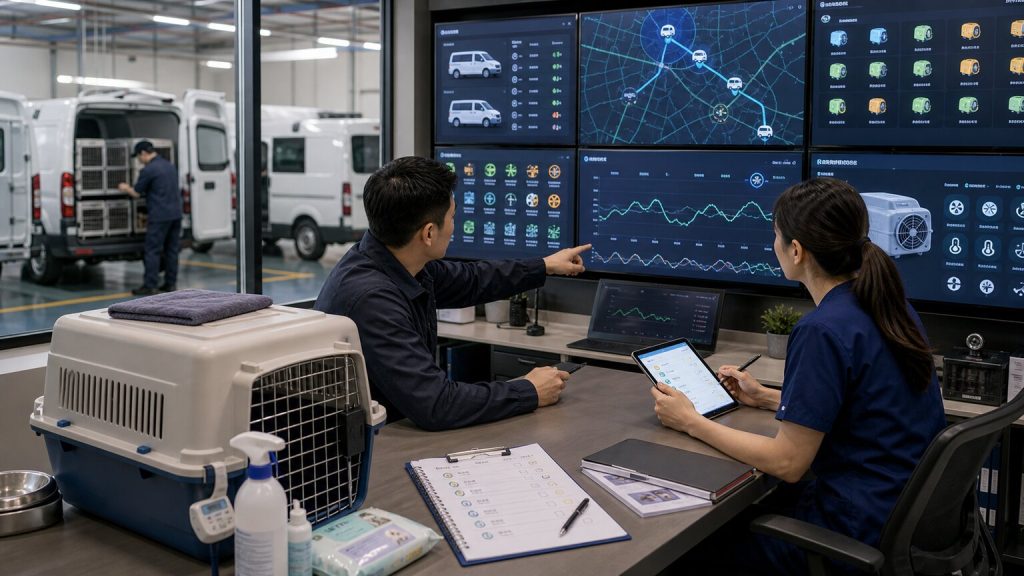
Many transport services promote “full tracking” or “monitoring.” But tracking can mean very different things. It may be a driver sending photos. It may be GPS location. It may be route updates. It may be crate-level sensors, temperature logs, camera access, or RFID-based handover records.
The industry should separate emotional reassurance from operational risk control.
A photo update may calm the customer, but it does not prove temperature stability, ventilation, route compliance, or proper handover. A stronger system records who handled the animal, when the crate was transferred, what vehicle was used, whether temperature limits were exceeded, and what response was taken.
That does not mean every service must be expensive or technology-heavy. It means the claims should match the capability. If a company says “real-time monitoring,” buyers should ask: monitoring what, by whom, how often, and with what response if the data is abnormal?
Insurance Cannot Replace Operating Discipline
Insurance is important, but it can create a false sense of safety if the underlying service is weak. Some customers may assume that “insured transport” means the operator has passed strong safety checks. That is not always true.
For B2B partners, the insurance questions should be specific. What is covered? What is excluded? Does coverage apply if a subcontractor handled the route? Does it cover delay, injury, death, escape, documentation error, or only limited property value? How is value assessed? How quickly must incidents be reported? What records are required?
This is a sensitive area because pets are emotionally valued far beyond their legal property value in many jurisdictions. A low compensation limit may be legally convenient but commercially damaging. Operators that rely on small payouts while marketing premium care will face trust problems.
Insurance should sit behind operating discipline, not substitute for it.
Product Opportunities Around Safer Transport
The shift toward transport standards creates product and service opportunities, but they are more operational than decorative.
Useful product areas include compliant travel crates, modular crate anchoring systems, washable liners, absorbent pads, disinfectants, portable water systems, temperature and humidity sensors, RFID or QR identification tags, tamper-evident seals, handover forms, GPS devices, vehicle ventilation equipment, and emergency kits.
For private-label brands and sourcing teams, the key is to avoid treating these as generic travel accessories. A crate for casual car travel and a crate for professional transport may need different requirements. A disposable pad for home use and a pad for long-distance transport may need different absorbency, odor control, leakage resistance, and packaging.
This also connects to the broader product-system logic we discussed in pet food storage, feeding, and hygiene products. Buyers increasingly need to think about routines and operating conditions, not just individual items.
How Platforms And Retailers Should Vet Partners
If a pet retailer, marketplace, relocation agency, or app platform recommends transport providers, it should not rely only on customer reviews and price.
A practical vetting process should ask for fleet information, driver and handler training, contractor policy, route coverage, container standards, cleaning protocols, temperature procedures, emergency response procedures, insurance terms, document handling, customer communication policy, and incident reporting process.
Platforms should also be careful with marketing language. If the service is shared transport, say so. If it is not a dedicated vehicle, do not imply that it is. If monitoring is photo-based rather than sensor-based, be clear. If insurance is capped, disclose that clearly before payment.
The most damaging failures often start before the trip begins, when expectations are sold beyond the operator’s actual capability.
The Industry Direction
Pet transport will not become risk-free. Moving live animals across distance will always require judgment, preparation, and contingency planning. But the category can become more professional.
The direction is clear: less vague promise, more documented process. Less unmanaged subcontracting, more chain-of-custody control. Less price-only comparison, more visible safety infrastructure. Less emotional marketing, more verifiable service levels.
For overseas buyers and pet industry operators, the lesson is direct. Pet transport is no longer a small after-service hidden behind product sales. It is becoming part of the trust infrastructure of the pet economy.
Companies that can prove their vehicle standards, documentation, monitoring, staff training, and emergency response will have a stronger position. Companies that only resell orders and outsource responsibility will face increasing pressure as standards, customer expectations, and platform accountability rise.
Pet transport safety is not just about moving animals from point A to point B. It is about whether the industry can build a service system worthy of the trust owners place in it.