
Pet furniture is moving beyond a separate pet corner. The strongest new concepts make a pet’s sleeping, feeding, climbing, storage, or litter routine part of the home’s furniture language: a TV console with a cat tower, a bedside cabinet with a dog den, an entry bench that doubles as a crate, or a laundry cabinet that discreetly houses a litter tray.
This creates a practical product-development opportunity for furniture brands, pet-product distributors, retailers, interior-focused ecommerce teams, and hospitality operators. Instead of adding a generic pet bed to an existing assortment, they can develop pet-friendly furniture that earns a place in the living room, bedroom, entryway, or utility room. The category sits at the intersection of home furniture, pet care, storage, and daily routine.
Pet Industry Insights is discussing and co-developing new pet furniture concepts with selected furniture factories in China. We welcome collaboration briefs from brands, buyers, distributors, and product teams looking to develop custom pet furniture, including dog crate furniture, cat cabinets, pet stairs, litter-box enclosures, feeding stations, and integrated storage. The aim is not to force every pet feature into a cabinet. It is to build useful, safe, manufacturable furniture that fits real rooms and real animal routines.
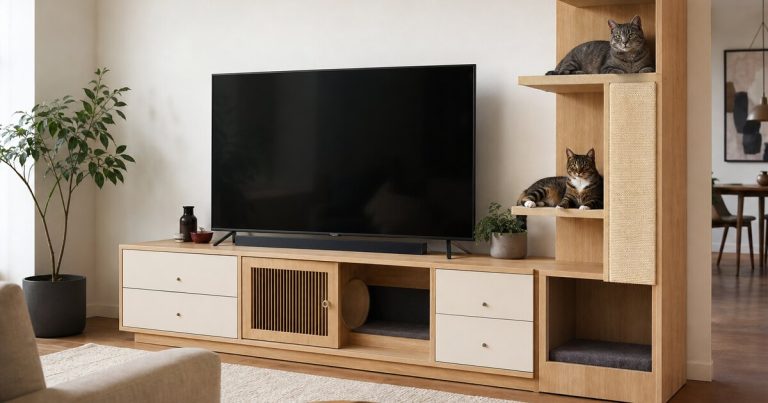
Why Pet-Friendly Furniture Is Becoming a Product Category
Pet owners increasingly expect products to work with the rest of the home. A visible wire crate, plastic litter tray, freestanding cat tower, and stack of pet supplies can make a room feel crowded, especially in apartments and smaller homes. Furniture that combines these functions can reduce visual clutter while giving the pet a defined place to rest, climb, eat, or use a litter tray.
For a buyer, the category is more than a styling exercise. It opens several product lanes: multifunctional living-room storage, bedroom furniture for small dogs and cats, entryway organization, laundry-room cabinetry, and compact furniture for apartments. Each lane has a different size, material, assembly, safety, and packaging brief. That variety gives retailers a reason to build a considered range rather than rely on one novelty SKU.
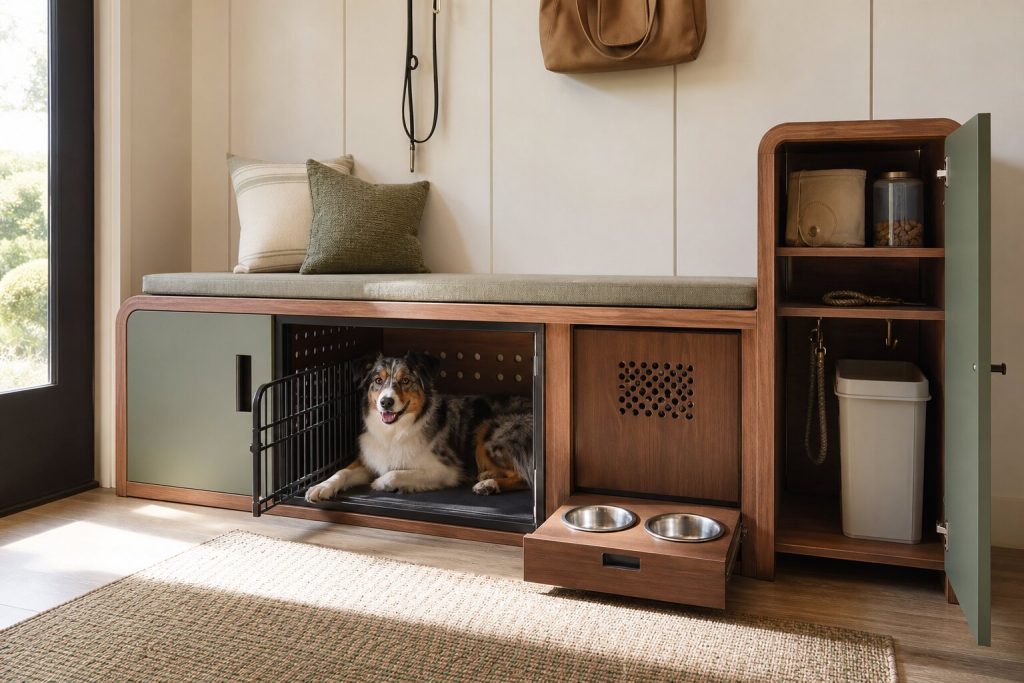
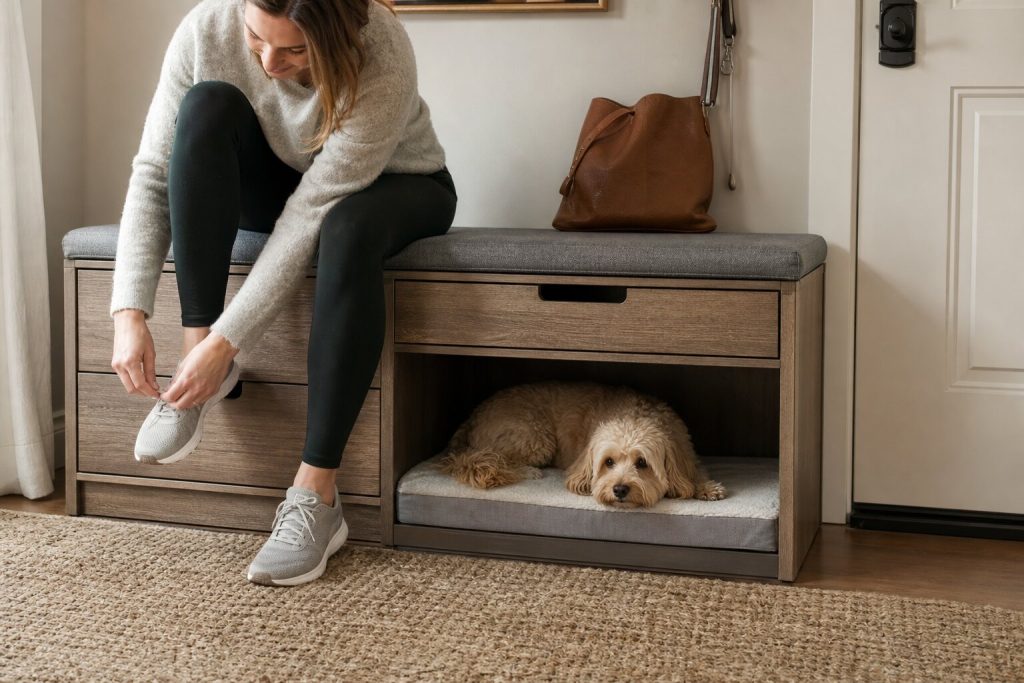
The commercial opportunity is strongest when the pet feature improves the furniture’s everyday use. A TV unit can add a cat perch and hide pet accessories without losing cable management or storage. A bedside unit can combine a small pet den with a charging surface and drawers. An entry bench can give a dog a quiet resting area while still functioning as seating for people. The product has to work for both occupants of the room.
Design for the Room First, Then the Pet Routine
The best custom pet furniture begins with a room and a routine, not a decorative pet silhouette. Start by asking where the product will sit, who will use it, what the pet needs to do there, and what the human expects the furniture to store or support.
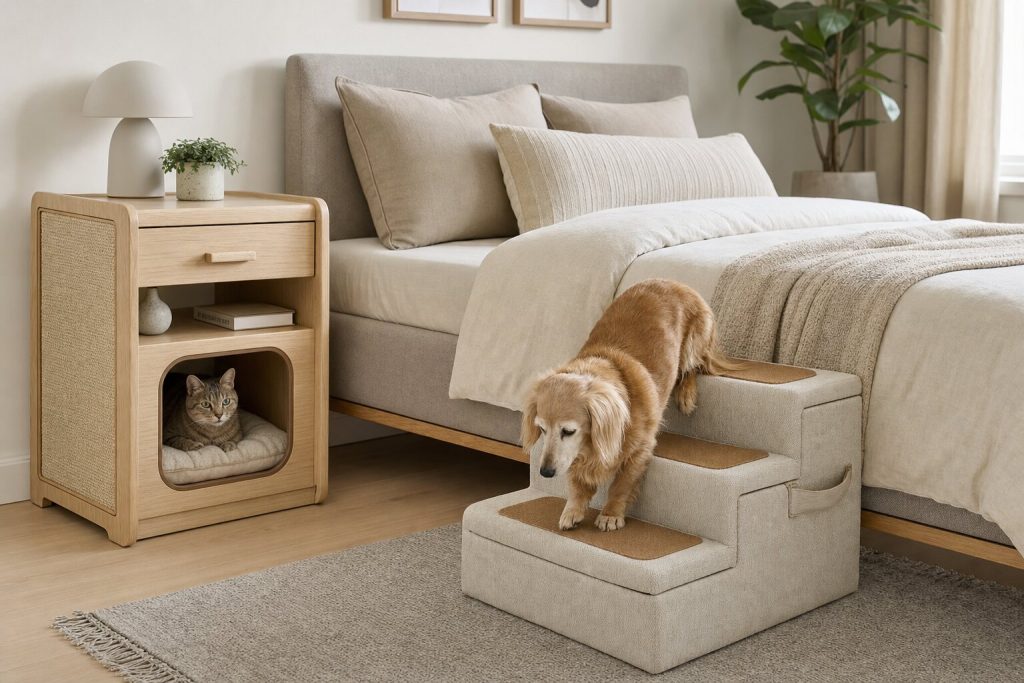
In bedrooms, a pet stair and a bedside den can help keep a small animal close to the household while avoiding a loose bed or a separate crate on the floor. The important design questions include step height, tread depth, surface grip, access opening, ventilation, cleanability, and the relationship between the pet space and the human storage space. For senior or small dogs, step geometry is a product decision, not an accessory detail.
Living rooms call for a different balance. A dog crate furniture sideboard may need a calm enclosed resting area, an easy-clean base, good airflow, and a door or access panel that does not rattle. At the same time, it needs to carry the visual weight of a credenza, fit a sofa or media wall, and survive normal household use. Design teams should decide early whether the pet enclosure is the primary function or a secondary module within a larger storage system.
Cat Cabinets and Litter-Box Enclosures Need Practical Details
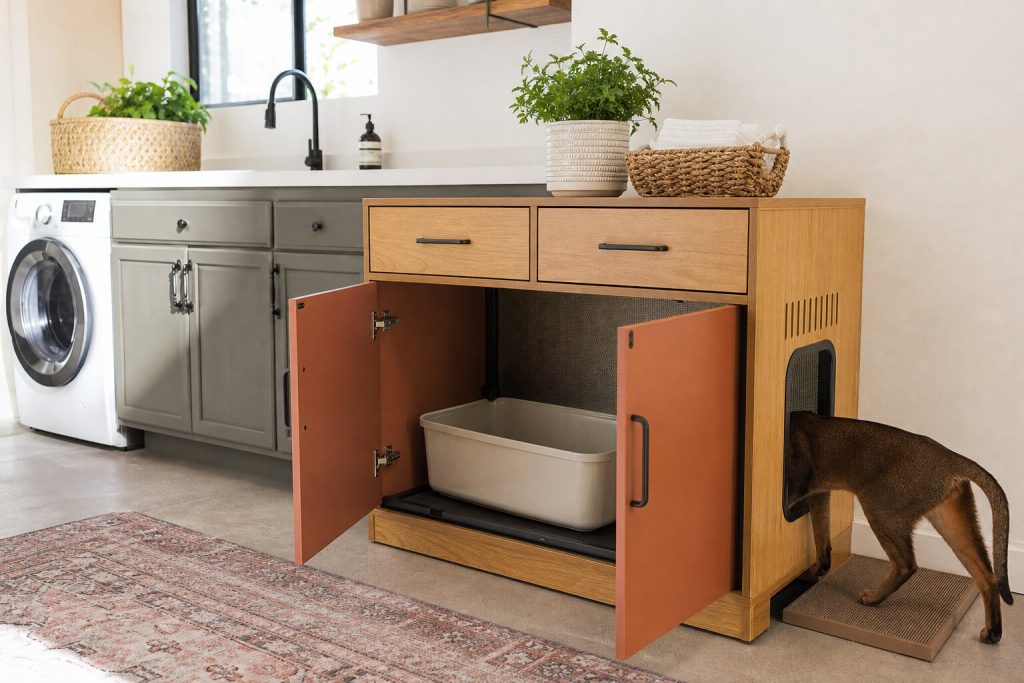
Cat furniture often faces a special design challenge: the owner wants it to disappear into the room, but the cat still needs easy, predictable access. A litter-box cabinet therefore needs an entrance large enough for the intended cat size, a removable or wipeable interior, stable panels, and ventilation that manages the enclosed space without making cleaning difficult.
Laundry rooms, utility spaces, and bathrooms are particularly useful settings because they already accommodate cleaning supplies and washable surfaces. A cabinet can conceal the litter area while adding countertop, drawer, or storage value. The product brief should consider litter-tracking control, cleaning access, moisture exposure, odor-management options, hardware durability, and the way a door opens in a confined room.
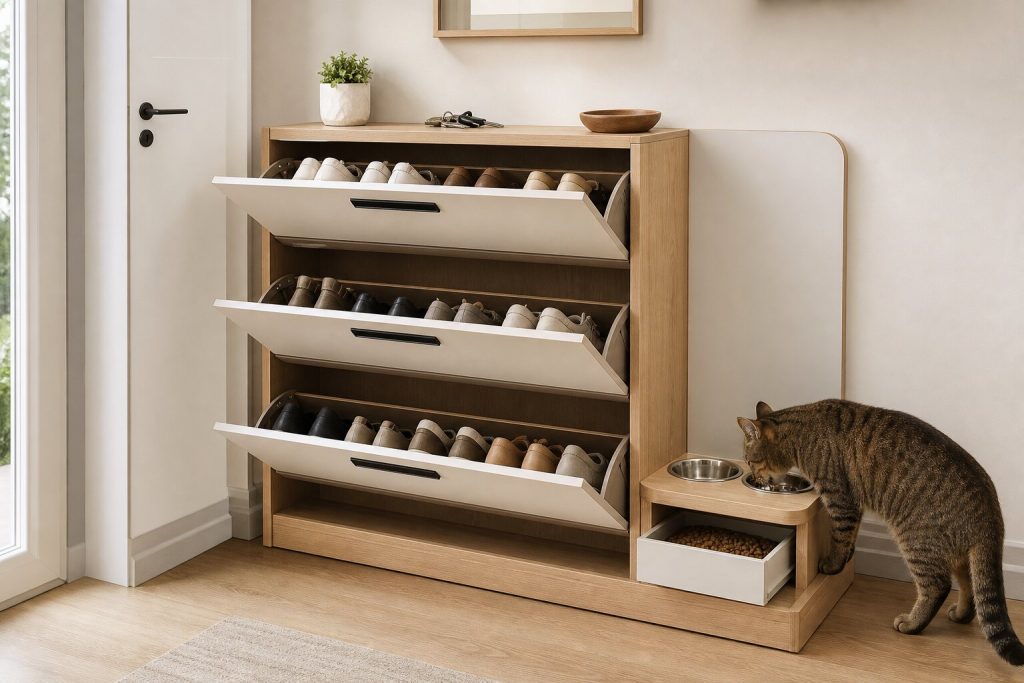
Cat-focused furniture can also improve high-traffic areas. A shoe-storage or hallway cabinet can incorporate a low feeding station, a small cat access opening, or an enclosed rest zone while preserving organized storage above. That kind of hybrid product is relevant to apartment retail, small-space collections, and brands that want a more residential alternative to standalone pet accessories.
What Can Be Customized for a Pet Furniture Collection
Customization should be structured, not open-ended. A reliable China pet furniture manufacturer needs a clear brief that turns a visual idea into materials, dimensions, components, packaging, and repeatable assembly.
Size and animal profile. Brands can develop furniture around a target dog weight range, cat size, breed profile, or household type. Interior enclosure dimensions, entrance size, bench height, stair rise, and load expectations should be set before tooling or sampling. A product designed for a toy-breed dog is not automatically safe or comfortable for a medium-size dog.
Furniture style and materials. Wood tone, panel material, veneer, paint color, rattan or perforated details, upholstery, metal hardware, and handles can be tailored to a collection’s home-furniture identity. The material selection must also reflect cleaning, scratch exposure, moisture, pet hair, and the contact points most likely to be used by an animal.
Functional configuration. A concept can combine a pet den with drawers, a TV stand, shoes, bowls, a litter area, a bench, a side table, a climbing route, or a storage module. The best configuration is usually the one that removes an existing household inconvenience rather than adding a feature list for its own sake.
Brand and market requirements. Factory teams can work from a buyer’s dimensions, finish boards, logo treatment, packaging direction, market label needs, assembly expectations, and target price architecture. A custom development program should also address carton size, freight efficiency, assembly hardware, spare parts, instructions, and realistic quality checks before production begins.
Build With a Furniture Factory, Not Just a Pet Accessory Supplier
Pet furniture combines product disciplines that are often separated. The pet feature needs animal-aware design and cleanability; the surrounding product needs furniture engineering, stable construction, finish quality, hardware selection, packaging, and efficient assembly. That is why furniture manufacturing capability matters from the first concept stage.
When evaluating a China furniture factory for pet furniture manufacturing, buyers should ask how the product will be built, not merely whether a similar image can be reproduced. Can the factory make and finish the specified panels consistently? Does it understand ventilation cutouts, door alignment, edge finishing, drawer clearances, and load-bearing surfaces? How will the product be packed to protect vulnerable corners, doors, and hardware? Can it produce a sample that reflects the intended production materials rather than a one-off prototype?
Our guide to pet factory tours and buyer due diligence explains why the link between sample approval and repeat production is critical. The same discipline applies to pet furniture: a beautiful sample is only the beginning. Buyers need to understand the bill of materials, construction sequence, inspection points, assembly process, and shipping carton before approving a scalable program.
Safety, Cleaning and Packaging Belong in the First Brief
Furniture that includes a pet space has to be practical after the product reaches a home. Access openings should not create sharp edges. Doors, lifts, drawers, and panels should not create obvious pinch points. Interior surfaces should be reachable for cleaning. Ventilation, hardware, fasteners, and any chew-exposed parts need an appropriate review for the intended animal and use case. A brand should define the intended animal size and use conditions rather than imply that one cabinet suits every pet.
Packaging also matters more than many first sketches suggest. Pet furniture can be bulky, assembled in multiple panels, and sensitive to corner damage. A design that looks compact in a room may become expensive or fragile in a flat-pack carton. Early collaboration with a furniture factory can help teams balance product dimensions, panel breakdown, protective materials, assembly sequence, and container utilization without diluting the design.
The wider pet-supplies market is already moving toward more category-specific products and better product briefs. Our analysis of China pet supplies market category upgrades looked at how function, materials, and product segmentation create room for more considered offerings. Pet furniture is a natural extension of that direction because it brings pet needs into one of the most established product categories in the home.
Start a Custom Pet Furniture Development Discussion
Pet Industry Insights is looking to explore new pet furniture concepts with China furniture factories and international product teams. We are particularly interested in projects that combine pet comfort with durable home-furniture construction: custom dog crate furniture, cat litter cabinets, cat towers integrated into storage, pet stair furniture, entry benches with pet dens, and pet-friendly TV consoles or sideboards.
If your business is developing a pet furniture collection, sourcing a custom design, adapting a concept for a new market, or looking for a manufacturing discussion around materials, dimensions, function, packaging, and production feasibility, use our Contact page. Include the intended pet type and size, room setting, target market, materials or finish direction, approximate dimensions, desired order quantity, and any reference drawings or images. That gives the initial concept discussion a practical starting point.
Our View
The most promising pet furniture does not ask homeowners to choose between a well-furnished room and a pet-friendly one. It makes the two ideas work together. For brands and buyers, the opportunity is to develop furniture that looks intentional, performs in daily life, and can be manufactured and shipped with the same discipline expected of any serious home-furniture collection.
For China furniture factories, this is also a product-development opportunity. The factories that can translate a pet-focused concept into strong construction, usable interior space, consistent finishes, practical packaging, and repeatable quality checks will be better positioned to help global customers build a category that is still open to innovation.