
Pet retail is becoming more attractive to companies that did not start as pet companies.
The latest signal comes from Taiwan. A Chongyejia report on Sohu noted that Uni-President Enterprises formally gained a board seat at Wonder Pets Enterprises after its 2025 strategic investment. MoneyDJ reported that Uni-President’s subsidiary Kai Yu Investment subscribed to 4,944,733 private-placement shares of Wonder Pets at NT$55.6 per share, for a total of NT$274,927,155, or roughly NT$275 million. After the transaction, Kai Yu Investment was expected to hold 10% of Wonder Pets and one board seat.
MoneyDJ also described Wonder Pets as Taiwan’s first listed pet retail company, with 130 stores, brands including Pet Park, Cat & Dog Captain, and Kaiduo Pet, plus online shopping services. It reported first-half consolidated revenue of NT$1.572 billion, up 12.69% year over year.
For overseas buyers, distributors, suppliers, and pet brands, the important point is not only the transaction. It is what the transaction says about the changing value of pet retail channels.
Pet retail is no longer only a store network
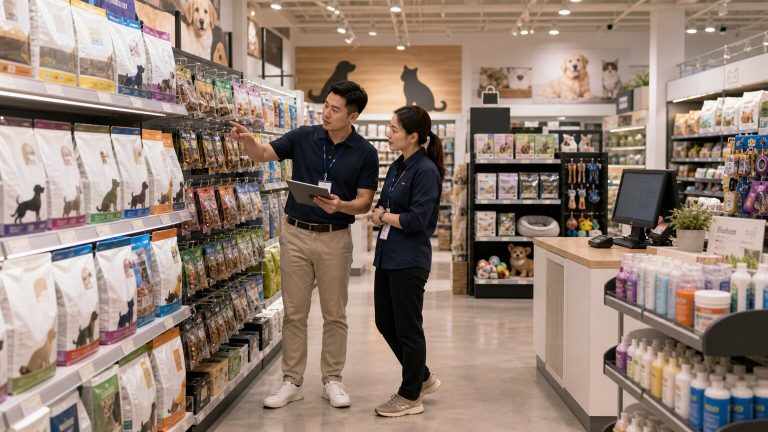
Pet retail used to be evaluated mainly by store count, location quality, and product range. Those still matter, but they are no longer the whole story.
A modern pet retail chain can combine physical stores, ecommerce, membership data, logistics, store pickup, subscription replenishment, grooming or service connections, private-label development, category management, and local community trust. That makes the channel useful to larger consumer goods companies that already understand distribution, store operations, food categories, logistics, and consumer loyalty.
This is why a consumer goods group may see pet retail differently from a financial investor. It is not only buying exposure to pet spending. It is buying a channel through which food, treats, supplies, wellness products, services, and future private-label lines can be tested and scaled.
The APPA estimates that U.S. pet spending reached $158 billion in the 2024 market and projects $165 billion in 2026 sales. Even though those numbers are U.S.-specific, they help explain the broader attraction: pet spending is large, recurring, and category-rich. Consumer goods companies understand recurring categories.
The real asset is channel control
For pet product suppliers, the key change is channel control.
When independent pet stores dominate a market, suppliers often build distribution through sales reps, wholesalers, and store-by-store relationships. When stronger chains emerge, buying decisions become more centralized. Assortment logic, promotion planning, rebate structures, shelf standards, category reviews, inventory rules, and private-label pressure become more formal.
That can be positive for capable suppliers. A chain with good data can show which SKUs move, which pack sizes work, which categories are underdeveloped, and which price bands convert. It can scale a winning product across many stores faster than a fragmented market can.
But it also raises the bar. Suppliers need stronger documentation, better fill rates, clearer packaging, more reliable lead times, and stronger category arguments. A product can no longer rely only on novelty or a friendly buyer relationship.
This is similar to the retail-channel logic we discussed in pet pharmacies and pet health retail. As channels become more professional, products need to survive more structured review.
Why consumer goods groups are interested
Consumer goods companies usually understand three things well: repeat purchase, shelf execution, and logistics.
Pet retail contains all three. Food, treats, litter, waste bags, grooming products, supplements, dental care, and hygiene items create repeat demand. Stores need strong shelf planning because pet categories are diverse and space is limited. Logistics matter because bulky items, temperature-sensitive products, fast-moving consumables, and online orders all strain operations.
For a group with experience in food, convenience retail, distribution, or household categories, pet retail can look like an adjacent living-consumption platform. The customer may buy pet food every month, litter every few weeks, treats often, and accessories seasonally. Over time, the retailer can build a data-rich view of household pet needs.
That data can support private label, exclusive distribution, better promotions, membership programs, and new service bundles. It also helps a consumer goods company understand whether pet food, treats, supplements, or lifestyle products should be developed internally, distributed through partners, or acquired.
Retail data changes supplier negotiations
As pet retail chains become more data-driven, supplier negotiations become less emotional and more operational.
Buyers can ask for sell-through by store type, basket attach rates, repeat purchase, margin by category, promotion lift, return rate, inventory turn, and ecommerce conversion. Suppliers that cannot explain their product in those terms may struggle.
This does not mean every supplier must be large. Smaller brands can still win if they bring clear category differentiation. But they need to show where they fit: premium nutrition, functional treats, oral care, cat products, small pet products, grooming, waste management, travel, or service-linked products.
For example, a low-ticket accessory supplier may need to show more than unit price. In our article on low-ticket pet accessories and ad economics, we noted that the commercial model depends on basket logic, acquisition cost, and repeat visibility. Chain retail applies the same discipline offline: products need a reason to earn space.

Logistics becomes a strategic issue
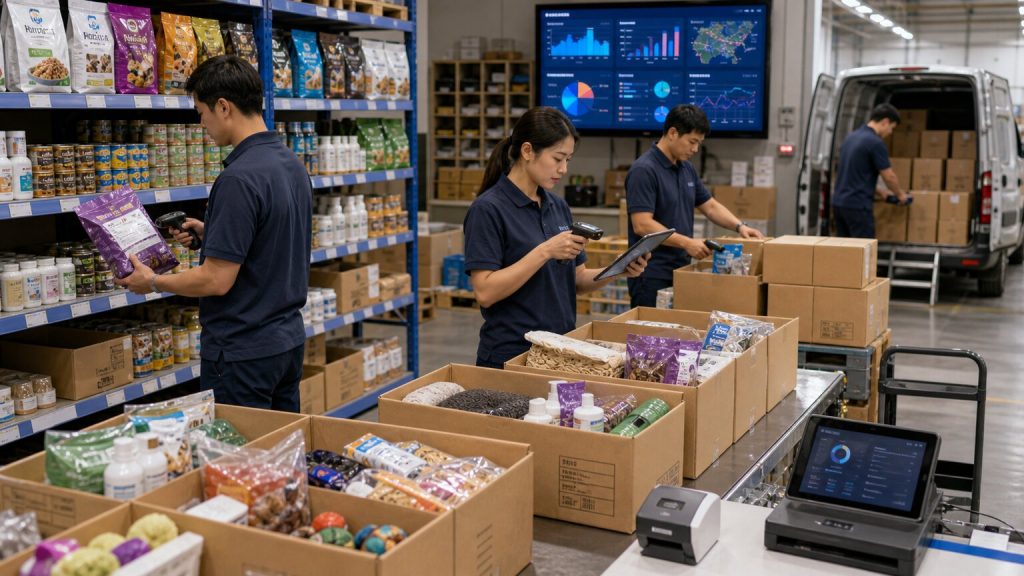
The MoneyDJ report noted that Wonder Pets expected to strengthen areas such as central warehouse construction, logistics distribution, store operation systems, and member services through cooperation with Uni-President’s retail experience.
That point is important. Pet retail is physically harder than many categories.
Dog food bags are heavy. Cat litter is bulky. Canned food is dense. Grooming liquids can leak. Fragile toys, beds, bowls, supplements, and accessories require different handling. Ecommerce orders may include mixed baskets that are expensive to pack. Store replenishment must avoid both out-of-stock risk and slow-moving inventory.
For suppliers, this means operational reliability becomes part of the sales pitch. Can the supplier support case packs that fit store replenishment? Are cartons strong enough? Are barcodes accurate? Are shelf-ready displays practical? Are lead times reliable? Can promotional volume be planned? Are online and offline SKUs consistent?
Retail investors care about these details because logistics efficiency directly affects margin.
Private label may become more important
When consumer goods companies invest in pet retail, private label usually becomes part of the long-term conversation.
A retailer with store traffic, member data, and category knowledge can identify gaps. It may see that a certain price band lacks reliable litter, treats, grooming products, waste bags, or small pet supplies. It may use private label to improve margin, fill assortment holes, or reduce dependence on national brands.
This does not mean all suppliers should fear private label. Some manufacturers benefit from it. Factories with strong quality control, packaging flexibility, and category insight may become preferred private-label partners. But brand owners should expect more pressure. Retailers with stronger ownership or strategic investors can compare branded and private-label economics more clearly.
This is why manufacturing capability also matters. As we covered in pet food lighthouse factory quality and traceability, buyers are increasingly interested in how suppliers manage complexity, traceability, defects, and SKU discipline. Private-label pet retail makes those questions even more practical.
What overseas suppliers should watch
Overseas suppliers looking at Asian pet retail channels should watch several signals.
First, is the retailer building a central warehouse or still relying on fragmented distribution? Second, does it operate only stores, or does it also have ecommerce, membership, delivery, and store pickup? Third, does it have category teams that can explain performance by SKU, price band, and customer segment? Fourth, is it open to imported brands, exclusive lines, private label, or joint product development? Fifth, does it pay on time and manage inventory professionally?
The strongest retail partners are not always the largest by store count. A smaller chain with better data, better category discipline, and better logistics may be more useful than a larger but less organized network.
For suppliers, the question should be: can this channel help build durable demand, or is it only another account to fill?
How distributors may be affected
Distributor roles may change as retail chains become stronger.
In fragmented markets, distributors often provide reach, sales relationships, warehousing, credit, and basic category education. In a more consolidated market, retailers may handle some of those functions themselves or demand more sophisticated distributor support.
Distributors may need to become category builders rather than simple importers. That means helping brands localize packaging, plan assortments, manage promotions, support training, forecast demand, handle returns, and coordinate online-offline launches. It also means understanding chain-level economics: margin, shelf productivity, promotional cadence, and inventory turn.
The same logic applies to emerging categories such as small pet and exotic pet supplies. Chain retailers can help educate the market, but only if distributors bring structured assortments and clear product logic.
Risks in channel consolidation
Retail-channel investment is not automatically good for every supplier.
As chains professionalize, listing requirements may rise. Payment terms may lengthen. Promotion fees may increase. Shelf space may become more competitive. Retailers may pressure suppliers on price, exclusivity, data sharing, and marketing support. Stronger private label can also reduce branded-supplier bargaining power.
There is also execution risk for the retailer. Integrating consumer goods systems with pet specialty retail is not simple. A pet retailer needs trust, species knowledge, service awareness, and category nuance. A large corporate investor may bring logistics and management discipline, but it still needs to respect the specialist nature of pet retail.
The best partnerships combine scale with category understanding. The worst partnerships apply generic retail logic to a category that requires expertise.
Our view
Consumer goods companies are moving into pet retail channels because pet retail is becoming a strategic platform. It offers repeat demand, category depth, member data, service connections, logistics challenges, and private-label potential.
For overseas buyers, suppliers, and distributors, this shift means the channel will become more professional and less forgiving. Products will need clearer category roles, stronger operational reliability, better packaging, more consistent supply, and better data support. Retailers will expect suppliers to help build categories, not just ship SKUs.
Our view is that pet retail investment is a sign of market maturity. As larger consumer groups enter or partner with pet retailers, the winners will be suppliers that can operate at chain-retail standards while still understanding the specialist needs of pet owners and pet-care categories.
References
Chongyejia on Sohu: Uni-President board seat after Wonder Pets investment
MoneyDJ: Wonder Pets private placement proceeds and share details
MoneyDJ: Uni-President investment in Wonder Pets and retail channel cooperation