
The EU General Product Safety Regulation is not a pet industry regulation by name. But for many pet supplies sold to European consumers, it changes the way buyers, importers, online sellers, and suppliers need to think about product safety.
The regulation has applied from 13 December 2024. Its core idea is broad: economic operators should place or make available only safe consumer products on the EU market. For pet product companies, that can include many non-food consumer products such as toys, leashes, harnesses, beds, bowls, grooming tools, carriers, apparel, and some connected pet devices.

This article is not legal advice. It is an industry reading of what the regulation means for pet product sourcing and channel operations. The practical point is simple: EU product safety is becoming less of a back-office legal detail and more of a buyer-side sourcing question.
If a distributor, importer, private-label brand, or marketplace seller cannot connect the product, supplier, batch, documentation, label, responsible party, and online listing information, the commercial risk is no longer only a product defect. It is a market access problem.
Why this matters for pet supplies
Pet supplies often look low risk because they are familiar products. A rope toy, nylon leash, pet bed, collapsible bowl, grooming brush, or cat tunnel may not feel like a regulated category in the same way as electronics, food, or medicine.
That assumption is too casual.
The GPSR asks companies to think about product safety through product characteristics, composition, packaging, instructions, warnings, foreseeable use, and the categories of consumers who may interact with the product. Pet products create several special safety questions because the buyer is usually a human consumer, while the product is used by an animal and often handled around children, homes, cars, food areas, and outdoor spaces.
A dog toy can create choking or ingestion risk. A leash clip can fail under pulling force. A pet bowl may raise material and food-contact questions. A textile bed may involve dye, fiber, odor, flammability, and washing concerns. A grooming tool can cut or pinch. A connected feeder or camera can also bring electrical, software, privacy, or cybersecurity-related issues that sit alongside other EU rules.
This does not mean every pet product needs the same documentation package. It means buyers should stop treating “general pet supplies” as one simple risk class.
Online sales make the issue more visible
One important GPSR point is that products offered online or through distance sales can be treated as made available on the EU market when the offer targets consumers in the Union. In practical terms, a seller does not need a physical European store for EU-facing obligations to matter.
For pet brands and sellers, this is especially relevant because many categories are sold through Amazon, marketplace listings, social commerce, direct-to-consumer sites, and distributor portals. A product that ships to EU consumers, uses EU languages, accepts EU payment or currency, or otherwise targets EU markets can move the compliance question from theoretical to immediate.
This is also why sourcing and listing teams need to work together. A supplier may provide a sample that looks acceptable, but the online offer may still be weak if it lacks manufacturer information, responsible person information where required, product identification, warnings, safety information, or language support.
We have already seen in other pet categories that listing economics can fail when sellers treat the product as just a cheap SKU. Our article on why low-ticket pet accessories stores lose money on ads focused on margin and conversion. GPSR adds another layer: a listing also needs to be operationally defensible.
The buyer should ask for traceability before price negotiation ends
For overseas buyers, the most useful shift is to move traceability questions earlier in the sourcing process.
Before placing a serious order, buyers should know whether the supplier can support batch or serial identification, product specification records, materials information, test reports where relevant, label artwork, warning language, instruction sheets, packaging files, and a procedure for handling complaints or safety incidents.
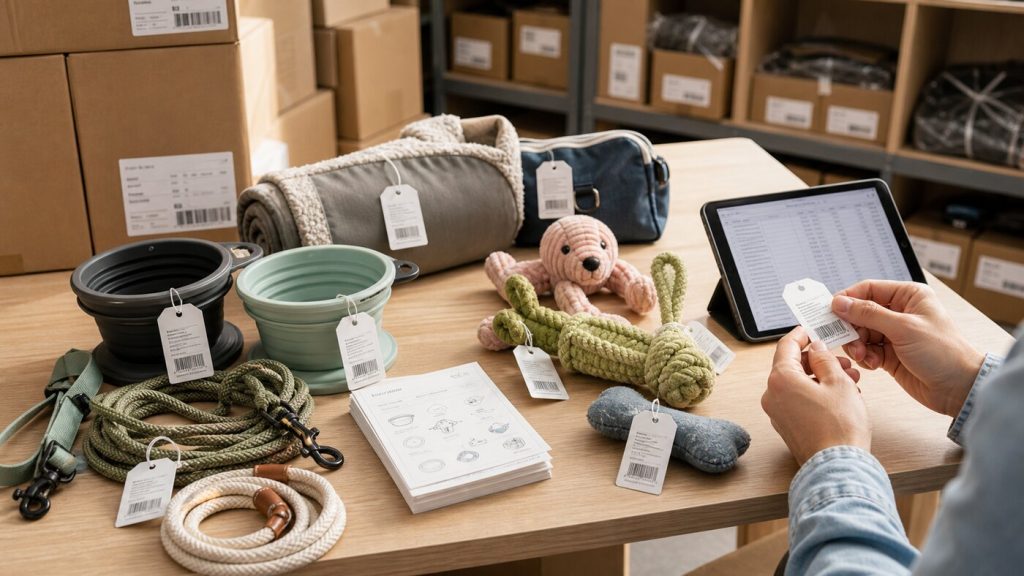
Under the GPSR, manufacturers are expected to carry out internal risk analysis and draw up technical documentation before placing products on the market. The regulation also refers to keeping that documentation available for market surveillance authorities for 10 years after the product has been placed on the market.
For buyers, that changes the supplier conversation. A supplier that can only quote product cost may be weaker than a supplier that can explain material choices, identify batches, provide test history, maintain documentation, and update labels when the destination market changes.
This is where the broader pet supplies market is heading. In our analysis of China’s pet supplies market moving from volume growth to category upgrades, we argued that global buyers increasingly need category judgment, not only factory access. Compliance and traceability are part of that category judgment.
Responsible person information is not a formality
One of the most important practical points is the responsible person requirement for products placed on the EU market. The GPSR links this to the EU market surveillance framework and says covered products should not be placed on the Union market unless there is an economic operator established in the Union responsible for relevant tasks.
For non-EU pet product suppliers, this matters because many export models depend on an importer, distributor, marketplace seller, fulfillment operator, or appointed EU responsible person. The arrangement should be clear before the product is shipped or listed.
The name and contact details of the responsible economic operator are not just internal paperwork. The regulation indicates that this information should be available on the product, packaging, parcel, or an accompanying document, depending on the situation.
For a pet product buyer, this raises practical questions. Who is the EU importer of record? Who holds the technical file? Who can respond to a market surveillance request? Who updates warnings if a product changes? Who handles recall communication if a safety problem appears? Who controls the batch records that connect a complaint to a shipment?
If nobody can answer these questions, the product may look commercially ready but operationally incomplete.
The product page now carries more responsibility
The GPSR also matters at the listing level. For distance sales, the product offer should clearly and visibly provide information such as the manufacturer’s name and contact address, responsible person details when the manufacturer is not established in the Union, product identification information, and warnings or safety information where required.
For pet supplies, this can change how listing teams work.
An Amazon listing for a dog harness, a Shopify page for a pet bed, or a marketplace page for a chew toy should not rely only on lifestyle photos, size charts, and promotional claims. It may also need safety warnings, material descriptions, age or use limitations where relevant, clear product identification, and consistency with the physical label and packaging.

This is not only a compliance issue. It is also a trust issue. A buyer who can show clear packaging, responsible contacts, product identifiers, and consistent safety information will look more credible to distributors, retail accounts, and platforms.
For online operators, the GPSR also reinforces the value of watching Safety Gate, the EU rapid alert system for dangerous non-food products. A sourcing team should monitor the kinds of pet and household product risks appearing in market surveillance alerts, even when a specific product is not affected. The pattern of alerts can reveal what authorities are likely to notice: chemical risks, small parts, misleading presentation, electrical safety, labeling gaps, or missing traceability.
Not every pet category has the same risk profile
Pet supplies should be segmented before applying a documentation workflow.
Soft goods such as beds, mats, blankets, apparel, and carriers often raise textile, dye, odor, washing, flammability, and durability questions. Leashes, collars, harnesses, and crates raise mechanical strength and failure-mode questions. Toys raise chemical, physical, ingestion, and small-part questions. Bowls, feeders, and treat containers can raise food-contact and material questions under separate rules. Smart feeders, fountains, cameras, trackers, and connected litter devices can bring electrical and digital safety questions in addition to general product safety.
Pet food and feed products are not the same category as non-food pet supplies. They sit under their own food and feed rules. Buyers should not treat a pet bowl, a chew toy, a supplement, and a smart feeder as if one generic “pet product compliance” checklist is enough.
This category-by-category thinking also helps when evaluating suppliers. A factory that is strong in sewn pet beds may not understand food-contact documentation for bowls. A toy supplier may understand EN toy-like testing better than a leash factory. A smart device supplier may need a much broader compliance stack than a simple grooming brush supplier.
The same logic appeared in our article on dog camping beds and outdoor pet gear. Once a product moves into a specific use scene, the risk profile changes. Waterproof coatings, packed size, anti-slip base, and outdoor wear become part of the product brief. GPSR pushes buyers to make those assumptions explicit.
What buyers should build into supplier evaluation
The best response is not panic. It is process.
A buyer sourcing pet supplies for the EU should ask suppliers to provide a product specification sheet, bill of materials or material declaration where relevant, risk assessment summary, applicable test reports, label and packaging artwork, warning and instruction language, batch or lot identification plan, responsible person or importer information, and a corrective-action workflow for complaints or safety incidents.
The buyer should also check whether the supplier can maintain consistency across production batches. A first sample may pass a test, but a later production run can change fabric, coating, glue, clip, dye, stuffing, packaging, or electronic component. Under a modern product safety regime, undocumented substitutions are not a small detail.
For distributors, the same issue affects vendor onboarding. A distributor that imports pet products into Europe should know which supplier can support documentation quickly, which categories need additional testing, and which SKUs are too weak to justify the risk.
For private-label brands, compliance should be part of product development, not an afterthought after the logo is printed. Label space, warning language, batch coding, instruction inserts, packaging material, and online listing fields should be planned early.
Our view
The GPSR will not make every pet product complicated. Many simple products can still be sourced, labeled, and sold efficiently.
But the regulation raises the floor. It rewards buyers and suppliers who can connect product design, safety thinking, documentation, traceability, packaging, and online information. It punishes the habit of treating pet supplies as anonymous low-risk merchandise.
For overseas pet product buyers, the commercial lesson is clear: supplier capability is no longer only about price, MOQ, lead time, and sample quality. It is also about documentation discipline.
For suppliers, this is an opportunity. A factory or trading company that can help buyers prepare EU-ready product files, label information, risk notes, and consistent batch records becomes more valuable than a supplier that only says “we can make any design.”
Pet Industry Insights expects this to become a recurring theme across the pet supplies industry. As categories become more specialized and online channels become more regulated, the strongest operators will be those that treat product safety information as part of the product itself.
Reference
EUR-Lex text of Regulation (EU) 2023/988 on general product safety
European Commission Safety Gate rapid alert system for dangerous non-food products