
A recent Douyin video framed LOY-002, a dog longevity drug candidate from Loyal, as a turning point for the pet industry. The video’s core message was simple: if medicine can help dogs live healthier for longer, the business logic of pet healthcare could move from treating illness to managing aging earlier.
That is a powerful idea. It is also an area where wording matters.
Based on public information from Loyal and the U.S. Food and Drug Administration’s conditional approval framework, LOY-002 should not be treated as a broadly available “FDA-approved dog longevity pill” in ordinary commercial language. Loyal has announced important FDA technical milestones for LOY-002, including target animal safety and reasonable expectation of effectiveness, but the company has also described manufacturing quality as the remaining technical section before conditional approval can be completed.
For pet industry operators, the useful question is not whether one short video is too optimistic. The useful question is what the LOY-002 discussion reveals about the next market lane: senior-pet health, preventive care, veterinary trust, and evidence-backed category building.
What the video gets directionally right
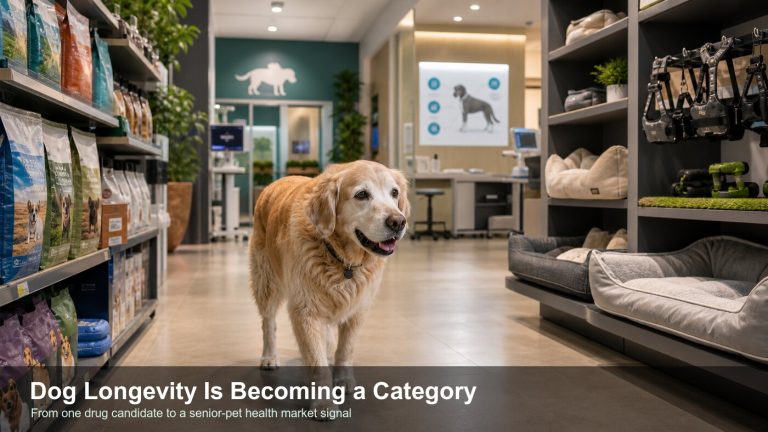
The video is right that pet longevity is becoming a serious business topic. Dogs are living in households as family members, owners are more willing to spend on healthcare, and senior-pet needs are becoming more visible across food, supplements, diagnostics, insurance, mobility products, monitoring devices, and veterinary services.
The video is also right that the category is not only about treating a single disease after symptoms appear. A longevity product, if approved and adopted through veterinary channels, would sit closer to preventive and chronic-care behavior: regular checkups, ongoing medication or monitoring, owner education, and long-term adherence.
That is a different commercial rhythm from seasonal accessories or impulse-driven pet products. It is closer to healthcare infrastructure.
This matters for entrepreneurs because the pet market is already full of crowded entry points. We previously argued that smaller operators should think in specific pet business opportunity lanes, not just broad categories. Senior-pet health is one of those lanes because the buyer pain point is clear, recurring, and emotionally strong.
What needs to be corrected
The video uses language that sounds like final approval has effectively happened. That is too loose for an overseas business audience.
Loyal says LOY-002 is designed for older dogs and is being developed as a daily pill intended to extend healthy lifespan. The company announced in March 2025 that the FDA had accepted the target animal safety section for LOY-002. In May 2025, Loyal said the FDA accepted the reasonable expectation of effectiveness technical section for LOY-002, which the company described as an important step toward conditional approval.
But those milestones are not the same thing as full commercial approval. Conditional approval itself still requires additional regulatory completion, including the manufacturing quality technical section. Full approval would require a higher evidentiary standard over time.
That distinction is not a technical footnote. It affects how brands, distributors, clinics, media sites, and product developers should talk about the category. In pet health, exaggerated claims can damage trust quickly.
Why this could still change the pet industry
Even with careful wording, the signal is significant.
If a drug aimed at healthy lifespan reaches conditional approval and then real-world adoption, it would make aging itself a more explicit pet health category. That could influence how clinics structure wellness plans, how retailers organize senior-pet shelves, how insurers think about preventive care, and how owners understand the cost of keeping an older dog healthy.
The broader opportunity is not “sell anti-aging claims.” The broader opportunity is to build credible systems around senior pets.
Those systems may include veterinary screening, nutrition programs, mobility support, weight management, diagnostics, medication adherence, wearable monitoring, insurance or wellness memberships, and data-driven follow-up. For many B2B companies, the best position may be supplying the ecosystem rather than trying to imitate a pharmaceutical product.
The B2B opportunity is around infrastructure, not hype
For overseas pet entrepreneurs and B2B operators, the most practical opportunities are likely to appear around four areas.
First, veterinary channel support. Longevity-related products need professional trust. Clinics may need owner education materials, follow-up workflows, compliance-friendly content, appointment systems, medication reminders, and senior-pet plan design.
Second, senior-pet diagnostics and monitoring. If owners are paying attention to healthy aging, they will also need ways to track mobility, weight, activity, hydration, pain signals, sleep, appetite, and behavior changes. This creates room for hardware, software, and clinic-integrated data services.
Third, functional nutrition and care products. Senior dogs often need joint support, digestive support, weight management, dental care, skin and coat support, mobility-friendly bedding, and safer home environments. These categories already exist, but longevity medicine could make the senior-pet shelf more organized and more evidence-aware.
Fourth, education and compliance. The companies that win in this lane will not be the ones shouting the biggest promise. They will be the ones that understand claims language, veterinary evidence, labeling, documentation, and customer expectations.

What startups should avoid
The most obvious mistake is to launch vague “pet anti-aging” products with medical-sounding promises and weak evidence. This may create short-term attention, but it is a fragile strategy.
A second mistake is to assume that consumer emotion alone will carry the category. Owners love their dogs, but recurring healthcare spending depends on trust, access, affordability, and professional recommendation.
A third mistake is to treat senior-pet health like low-ticket accessories. The unit economics and buyer psychology are different. In our analysis of why low-ticket pet accessories stores lose money on ads, the problem was often weak basket value and paid-traffic pressure. Senior-pet health has a different challenge: evidence, retention, veterinary trust, and responsible claims.
A practical market map for operators
For manufacturers, the opportunity may be export-ready senior-pet products with better documentation, packaging, and compliance discipline. Mobility products, functional treats, orthopedic beds, feeding aids, monitoring devices, and clinic support supplies can all sit around the longevity conversation without pretending to be medicine.
For distributors, the opportunity is category curation. A senior-pet health section should not be a random shelf of supplements. It can be organized around mobility, weight, digestion, dental care, monitoring, recovery, and veterinarian-recommended routines.
For clinics, the opportunity is structured follow-up. Senior-pet wellness plans can connect checkups, diagnostics, nutrition advice, mobility assessment, medication adherence, and owner education into a recurring service model.
For content and media operators, the opportunity is trust. Pet longevity will attract hype, and hype creates a need for clear explanations. Sites that can separate regulatory status, clinical evidence, commercial implications, and owner-facing claims will become more useful to readers.
This is also why Pet Industry Insights will treat the topic as an industry category, not as medical advice. We will continue publishing practical market notes on the site and on our Facebook page when there are meaningful updates.
Our view
LOY-002 is not just a product story. It is a signal that the pet health market is moving toward longer care cycles, more senior-pet segmentation, and more professionalized claims.
For B2B operators, the better question is not “Can we copy this trend?” It is “What part of the senior-pet health system can we serve credibly?”
That answer may be veterinary software, diagnostic tools, functional nutrition, clinic supplies, mobility products, adherence systems, education content, or distribution infrastructure. The common requirement is the same: proof before claims.
The pet longevity market will reward companies that can combine emotional demand with regulatory discipline. That is a much stronger business foundation than simply putting “anti-aging” on a label.
Reference
Original Douyin video used as the source inspiration
Loyal announcement on FDA acceptance of the LOY-002 target animal safety technical section