
The pet industry is no longer a simple story about selling food, toys, or accessories to pet owners. In many markets, pet ownership is becoming more emotional, more service-driven, more health-focused, and more connected to technology.
For entrepreneurs and B2B operators, that creates opportunity. It also creates a trap.
The trap is entering the broadest and most crowded category first, then trying to win with a cheaper product. That approach rarely works for smaller companies. The better question is not “Is the pet market growing?” It is “Which part of the pet market gives a smaller operator a clear entry point, a defensible position, and a path to repeat business?”
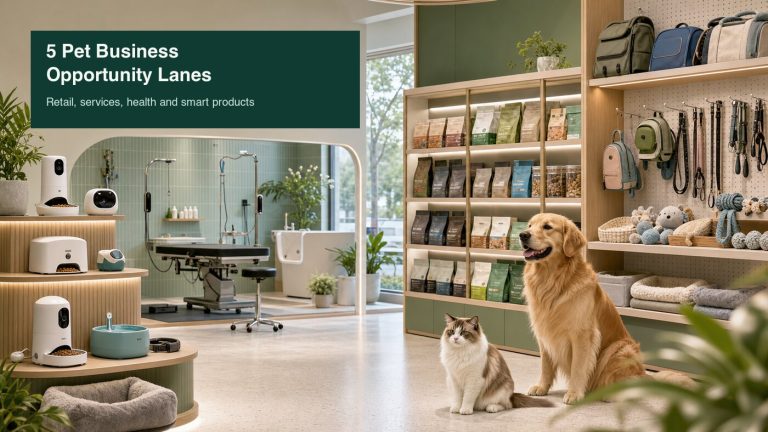
The Pet Industry Insights editorial view is that pet entrepreneurs should think in opportunity lanes, not just product categories. A lane combines customer pain point, channel fit, supply-chain capability, repeat-purchase potential, and the level of competition.
Based on the video source, current market signals, and our own category view, five lanes deserve attention: smart pet hardware, pet services, functional pet nutrition, veterinary support infrastructure, and specialized pet supplies.
1. Smart pet hardware: attractive, but only when the function is real
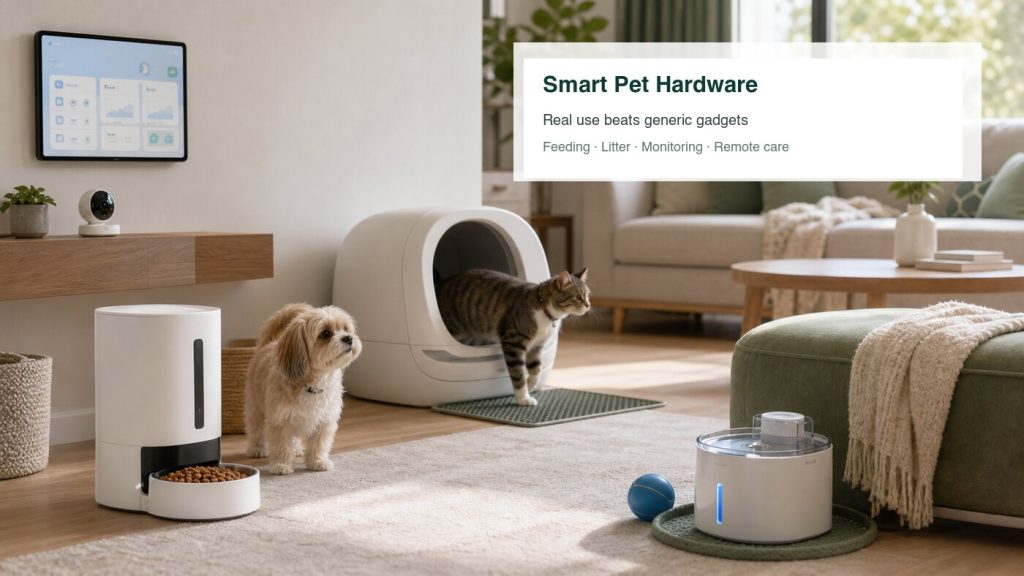
Smart feeders, smart water fountains, connected litter boxes, pet cameras, trackers, and health-monitoring devices are easy to understand because they solve visible problems. Owners worry about feeding routines, time away from home, behavior changes, hydration, waste cleaning, and early health signals.
That makes smart hardware one of the more interesting lanes for founders and suppliers. It also makes the category crowded.
The key is to avoid building another generic connected device with a weak app. A small company needs a sharper angle: health monitoring for senior pets, behavior alerts for anxious dogs, multi-pet feeding control, easy maintenance for rental apartments, or durable devices for grooming salons, clinics, boarding facilities, and pet stores.
For B2B operators, the opportunity is not only consumer sales. Pet shops, clinics, boarding operators, and grooming chains may need devices in bulk, with maintenance, replacement parts, training, and service support. That can create recurring revenue beyond the first device sale.
Suppliers should also think globally. Southeast Asia, Japan, the Middle East, and parts of Europe may not all want the same feature set. In some markets, compact size and price matter most. In others, app reliability, safety certification, and after-sales service are more important than the lowest factory cost.
2. Pet services: less glamorous, but often closer to real demand
Pet services can be a more practical entry point than physical products. Grooming, boarding, training, daycare, home visits, and community-based pet care all connect to repeated real-world needs.
For entrepreneurs, services offer two advantages. First, they can start locally and test demand quickly. Second, they can create trust before expanding into products, memberships, or private-label goods.
The service model is not always easy. Labor quality, training, store operations, scheduling, customer retention, and hygiene standards matter. But compared with building a national consumer product brand from day one, a neighborhood service operation can be more controlled.
There is also a B2B layer. Service businesses need booking systems, cleaning supplies, grooming tools, staff training, insurance support, store design, cage systems, monitoring equipment, and customer relationship tools. In other words, a founder does not have to run the pet service business directly. They can supply the operators who do.
This is a useful mindset for overseas entrepreneurs: sometimes the better business is not the visible storefront. It is the operating system behind the storefront.
3. Functional pet nutrition: focus beats a broad food brand
Pet food is large, but it is also difficult. Mainstream dry food and wet food are capital-intensive, regulated, trust-sensitive, and highly competitive. A small brand entering with a general “premium pet food” message will often struggle.
Functional nutrition is more interesting because it allows a narrower promise.
Examples include skin and coat support, digestive health, joint support, hairball control, allergy-sensitive formulas, freeze-dried toppers, functional treats, senior-pet formulas, and targeted supplements. Each can become its own niche if the product logic is clear and the claims are responsible.

The important point is specialization. Smaller brands should not try to fight every large pet food company at once. They need one audience, one functional problem, one product format, and one believable reason to exist.
For manufacturers, this creates demand for flexible formulation, smaller-batch production, transparent ingredient sourcing, packaging support, and documentation. For importers and distributors, functional nutrition is attractive only when compliance, labeling, and claims are handled carefully.
In overseas markets, this area also requires discipline. Health-related positioning can quickly cross into regulated claims. Brands should build trust through formulation clarity, testing, veterinarian-informed content, and responsible language, not exaggerated promises.
4. Veterinary support: the "sell tools to the industry" lane
Opening a veterinary hospital is not the right move for most entrepreneurs. It requires licenses, professional talent, equipment, real estate, trust, and operational depth. In many markets, clinic chains and established operators already have strong advantages.
But the growth of pet healthcare still creates opportunities around the clinic.
These include medical consumables, diagnostic devices, clinic software, appointment systems, remote consultation tools, staff training, preventive health packages, lab logistics, recovery products, and equipment maintenance.
This is the classic “sell tools to the industry” strategy. Instead of competing directly with large clinics, smaller companies can support the infrastructure that clinics, groomers, boarding facilities, and pet retailers need as the market professionalizes.
For B2B suppliers, this lane can be more stable than chasing viral consumer products. Clinic-related customers may buy repeatedly, require standardized supply, value reliability, and care about service continuity.
The challenge is that standards are higher. Product quality, documentation, regulatory fit, and after-sales support matter more than social media appeal.
5. Specialized pet supplies: still viable when the niche is narrow enough
Pet supplies are crowded, but that does not mean the category is closed. It means generic products are weak entry points.
Niche supplies can still work when they solve a specific problem or connect to a specific usage scene. Examples include plant-based litter, safer cleaning products, odor-control systems, durable enrichment toys, travel accessories, breed-specific apparel, apartment-friendly products, and premium grooming tools.
This is especially true for low-ticket accessories, where the economics can break quickly if a brand relies on one cheap SKU and paid traffic alone. We covered that problem in more detail in our analysis of why low-ticket pet accessories stores lose money on ads, and the same lesson applies here: niche supply opportunities need bundle logic, usage scenes, and repeat-purchase thinking.
The best opportunities often come from category upgrades. Litter moves from basic clay to tofu, plant fiber, mixed formulations, odor-control formats, and lighter packaging. Cleaning products move from generic household cleaners to pet-safe formulas. Toys move from simple play objects to enrichment, anxiety support, dental care, or training use.
For B2B operators, the opportunity is to help brands go deeper into one niche. That can mean material innovation, better packaging, product testing, export-ready documentation, design support, or localized product bundles.
The mistake is trying to offer everything. A smaller company is more likely to win by becoming excellent in one narrow category than by behaving like a mini marketplace.
A five-step entry logic for smaller operators
Across these five lanes, the pattern is consistent.
First, choose one narrow segment. A startup should not begin with “pet products.” It should begin with a specific problem, such as odor control for multi-cat homes, hydration monitoring for busy owners, or joint support for senior dogs.
Second, define the differentiation. The difference can be functional, audience-based, scenario-based, material-based, service-based, or channel-based. But it must be visible to the customer and useful to the buyer.
Third, test the channel before scaling. Consumer-facing brands may use TikTok, Instagram, YouTube Shorts, Pinterest, Amazon, Shopify, retail partners, or local communities. B2B operators may test through distributors, clinics, pet stores, trade shows, or professional networks.
Fourth, use supply-chain partnerships before over-investing. Many founders do not need to build a factory or clinic infrastructure immediately. They need the right OEM partner, testing workflow, packaging supplier, service process, or fulfillment model.
Fifth, consider cross-border expansion only after the model is clear. Export can improve margins, but it also adds compliance, logistics, localization, payment, and customer support complexity.
What overseas entrepreneurs should take from this
The pet industry is attractive because emotional demand is real. But emotion alone does not build a business.
For founders, the practical opportunity is to choose a narrow lane, test demand quickly, build trust, and avoid competing directly with large players on their strongest ground.
For factories and suppliers, the opportunity is to move beyond production quotes. Buyers increasingly need product concepts, bundle logic, market-specific packaging, functional positioning, compliance support, and content-friendly samples.
For distributors, clinics, service operators, and investors, the key is to look at the infrastructure behind pet ownership: health, convenience, care, data, service quality, and repeat-purchase behavior.
The next wave of pet business opportunities will not belong only to the companies with the cutest product. It will belong to operators that understand where the pain point is, who pays for the solution, how often the purchase repeats, and whether the business can scale beyond a single viral moment.