
Premium wet pet food is often discussed through flavors, ingredient stories, and brand positioning. The larger commercial decision sits behind the shelf: a wet-food programme requires a factory, packaging system, quality model, and distribution network that can work together over many years.
Nestlé Purina’s July 2026 announcement of a CHF 520 million integrated wet-pet-food plant and logistics platform in Mantova, Italy, makes that point unusually clearly. The company says the site will produce super-premium wet food for cats and dogs, begin operations in 2029, and support both Purina and other Nestlé brands through an integrated logistics platform. The European Commission had already approved EUR 60 million in Italian state aid for the construction of the wet-pet-food facility and production line in 2025.
This is not simply a large-brand news item. It is a useful case for private-label owners, manufacturers, packaging suppliers, distributors, and retail buyers: when a company puts serious capital behind wet food, it is usually investing in a complete operating system, not merely adding another SKU.
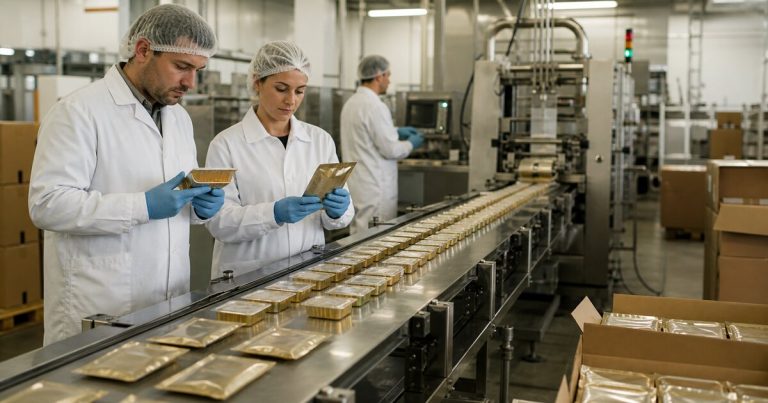
Wet Food Capacity Is Different From General Pet Food Capacity
Dry food, treats, freeze-dried products, and wet meals do not share the same production logic. A factory can be excellent in one format and still be an unsuitable partner for another. Wet recipes, especially premium products that seek a visible texture, sauce, mousse, pate, chunks, or layered serving experience, put the process, filling format, sealing, and thermal treatment under much closer scrutiny.
The exact controls belong to qualified manufacturers and the applicable market rules, not to a generic sourcing checklist. The commercial lesson is straightforward: a buyer should ask a wet-food supplier how the selected product format will be made and protected at scale, rather than assume that a successful dry-food line can be repurposed without consequence.
Nestlé’s Mantova project is designed around wet food for both cats and dogs, while its official announcement also highlights convenient single-serve formats as a growth driver. Those formats may command a different retail position, but they also create a more specific factory brief. The buyer is procuring a finished food, a package, an outer case, a production schedule, and a dependable flow to the retailer at the same time.
Single-Serve Formats Turn Packaging Into Product Architecture
For a premium wet-food launch, the choice of tray, pouch, cup, can, or other serving format affects much more than shelf appearance. It shapes filling-line compatibility, seal integrity, case configuration, secondary packaging, storage efficiency, unit economics, and consumer use.
That is why early packaging choices should not be left until after the recipe and branding have been approved. A pack may look distinctive in a concept presentation yet prove difficult to run consistently, inefficient to case-pack, fragile in the supply chain, or awkward for the target retailer’s replenishment model. Conversely, a familiar format can become a premium proposition when it supports a strong food texture, clear usability, appropriate portioning, and a reliable consumer experience.
For suppliers, the relevant evidence is practical: current material specification, food-contact documentation as applicable, sealing and pack-performance validation, agreed artwork control, case dimensions, pallet pattern, and a clear process for making changes. For brand owners, it means treating packaging as a development workstream rather than a late-stage purchase order.
The same logic appears in our review of pet food co-manufacturing governance. A product may begin with a compelling commercial concept, but durable scale depends on controlled specifications, transparent change management, batch records, and a supplier relationship that makes responsibilities explicit.
Texture Claims Need a Process and a Supply Chain Behind Them
Premium wet food is often sold through the sensory promise of the product: a particular texture, visible inclusions, a sauce-to-solid balance, or a carefully portioned serving. These claims are not just creative language. They can place requirements on ingredient preparation, processing consistency, filling behaviour, packaging fit, and finished-product handling.
For a buyer, that makes the sample-to-scale path essential. A pilot sample can look and smell right while a full production run reveals variation in the way components behave, the way a pack fills, or the way a finished product holds up over its intended shelf life and route to market. The question is not whether variation can be eliminated from food manufacturing. It is whether the manufacturer has an agreed way to measure relevant characteristics, investigate a deviation, document a change, and decide whether a batch is suitable for release.
This is one reason that premiumisation should not be confused with decorative packaging alone. A premium item earns its position when the product, pack, and service model continue to deliver the experience that the buyer and retailer were shown. Our analysis of pet food lighthouse factories makes a related point: factory technology matters when it improves traceability, process visibility, and the ability to act on quality information, not when it is used merely as a marketing label.

Regional Logistics Is Part of the Wet-Food Decision
Wet food carries more physical mass than an equivalent dry-food proposition. The resulting freight, handling, warehouse, and replenishment choices can materially affect the economics of a product range, especially when the programme relies on single-serve packs and frequent retail delivery.
That makes Mantova’s combined factory and logistics-platform design significant. Nestlé states that the platform will improve logistics efficiency, transport flows, and supply-chain resilience for Purina and other Nestlé categories. Its rationale is not unique to one company: a wet-food range can benefit when manufacturing, storage, outbound case design, and the retailer service pattern are planned as one system rather than handed between unrelated partners.
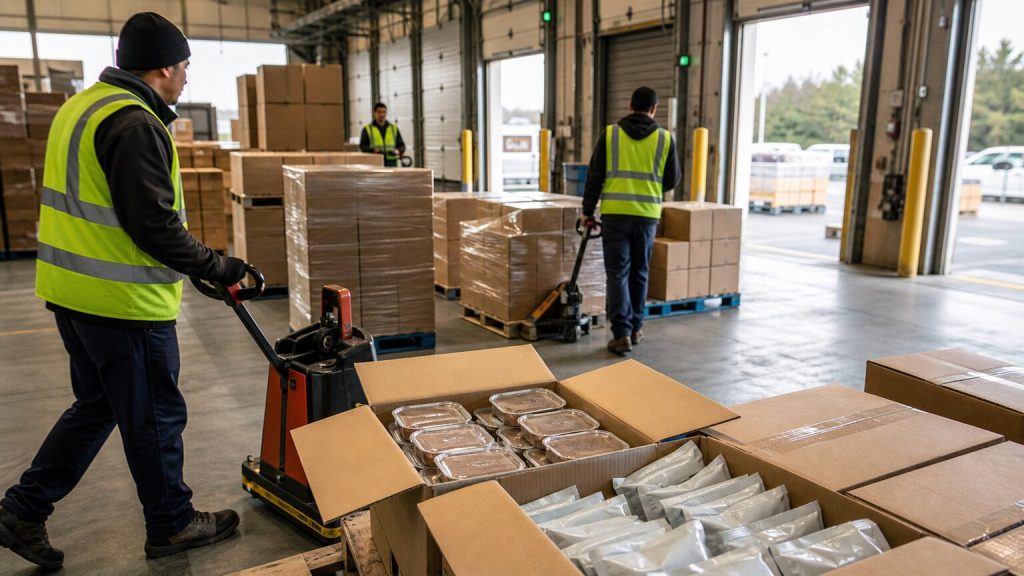
For distributors, the question is not simply where the closest warehouse sits. It is whether the carton configuration, pallet pattern, order profile, storage conditions, transport lanes, and product life on arrival are compatible with the channel. A club-store pallet, a specialist-retail case, a subscription dispatch, and a marketplace fulfilment order can all require different handling even when they contain the same food.
Nestlé’s March 2026 opening of a wet-food factory in Vargeao, Brazil, reinforces the regional nature of the strategy. The company says that facility will nearly double its wet-food capacity in Brazil, support export demand, and use an integrated operations model. The details are company-specific, but the broader lesson is useful: capacity decisions in wet food are often network decisions, balancing local demand, outbound service, and the cost of moving a high-water-content product.
A Better Buyer Brief for Premium Wet Food
A sourcing brief that says only “premium wet food” is too broad to produce comparable proposals. Buyers should define the commercial and operational context before asking factories to quote.
Product format: Define the intended texture, recipe position, pack type, portion size, case count, and target retail channel. A factory needs enough detail to determine whether its equipment and normal run conditions suit the request.
Quality and change control: Ask how ingredients, packaging, finished-product specifications, artwork, and meaningful process changes are approved and communicated. A reliable answer should identify owners and records, not only say that the factory has a quality team.
Packaging and transport fit: Include the target pallet configuration, expected shipment mode, retailer requirements, outer-case needs, and realistic handling risks. Packaging performance should be considered with the actual route in mind.
Launch and replenishment model: Clarify forecast horizon, order cadence, lead time, minimum order quantity, new-product ramp-up, and the process for handling a shortage or an approved substitute. Wet-food programmes often fail commercially when a sophisticated launch plan meets a basic replenishment process.
Market-specific compliance: Confirm the requirements that apply in the destination market and the roles of the brand owner, manufacturer, importer, and distributor. This article is not regulatory advice; buyers should use appropriately qualified local support for labels, ingredients, facility status, and import documentation.
What This Means for Ingredient, Packaging, and Equipment Suppliers
The investment case for premium wet food extends beyond the final brand and factory. Ingredient suppliers need to support consistent specifications, realistic lead times, and documentation that helps a manufacturer manage the product responsibly. Packaging suppliers need to understand the product format, process exposure, line conditions, and freight route, rather than sell material as a stand-alone commodity. Equipment and service partners need to plan commissioning, maintenance, parts, training, and response pathways early enough to avoid becoming the bottleneck in a long-capacity project.
For all three groups, the value is in reducing uncertainty for the manufacturer and buyer. A strong supplier can make the investment more usable by explaining constraints early, presenting viable alternatives when a material or component is unavailable, and maintaining a disciplined change-notice process. Those capabilities matter just as much to an emerging private-label range as they do to a major multinational plant.
The product-development side should remain equally rigorous. In our guide to functional pet food ingredients, we argued that ingredient stories need evidence, processing awareness, and claim discipline. Wet-food premiumisation does not remove those requirements; it adds format, packaging, and logistics decisions around them.
Do Not Read a Major Factory Investment as a Shortcut
Large capacity announcements can create a tempting assumption that all premium wet-food business is easy to scale. The opposite is often true. A large new plant may signal confidence in a category, but it also shows the cost of making high-volume, consistent, well-distributed wet food reliable over time.
Smaller brands do not need to replicate a multinational factory project. They do need to decide which elements of the operating model they can control and which must be verified through partners. That may mean choosing a co-manufacturer with the right format capability rather than the broadest catalogue, simplifying a launch range, selecting a packaging format with more predictable supply, or launching first in channels that match the practical replenishment model.
Our View
Premium wet pet food is becoming a test of manufacturing and logistics discipline. The category’s growth potential is real, but the commercial outcome depends on whether the product experience can survive the move from development to production, from factory to warehouse, and from retailer shelf to the pet owner’s home.
For overseas buyers and distributors, the useful response is not to chase every premium texture or single-serve trend. It is to build a more complete brief: product, pack, process, route, service, and change control. For manufacturers and suppliers, the opportunity is to show that their capabilities connect across those steps. The company that can do that is offering more than wet food capacity. It is offering a dependable route to market.
Sources and Reading
Nestle Purina: CHF 520 million Mantova wet pet food plant and logistics platform, July 2026
Nestle Purina: Vargeao wet pet food factory in Brazil, March 2026
Chinese industry commentary used as the editorial lead, Sohu
Follow Pet Industry Insights on Facebook for more global pet-industry analysis.