
Small pet and exotic pet products are no longer only a side shelf behind the dog and cat aisle. For overseas buyers, distributors, importers, and private-label operators, the category is becoming a more serious test of assortment depth, species-specific product knowledge, and channel education.
The signal is visible in several markets. A recent Chinese pet-industry report from Chongyejia on Sohu highlighted strong 618 activity for imported bird food and rabbit food, while also pointing to growing attention around small pet health. In the U.S., APPA’s 2025 Bird, Small Animal & Horse Report notes that six million U.S. households own birds and six million own small animals, with Gen Z becoming a stronger force in these ownership categories. The broader pet industry is still anchored by dogs and cats, but specialty companion animals are creating product gaps that broad assortments often miss.
For B2B readers, the opportunity is not simply “sell more cute products.” The stronger opportunity is to build species-specific, repeatable, quality-controlled category systems: bird nutrition, rabbit and guinea pig hay and pellets, small-animal bedding, habitat accessories, chew products, water bottles, enrichment, hygiene, and specialist retail education.
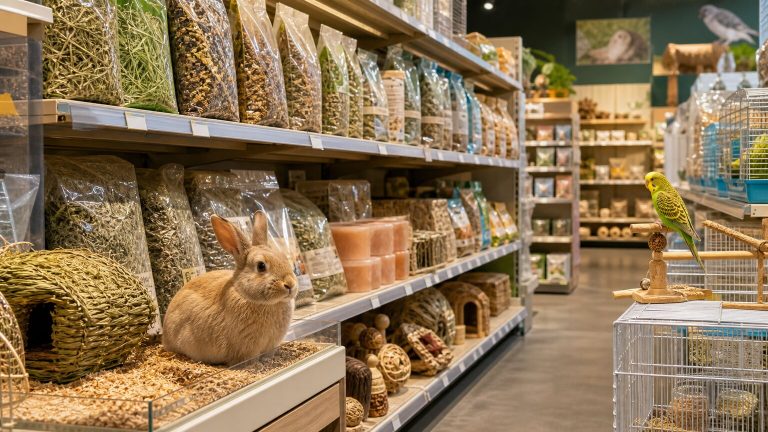
Why the category is getting more serious
Dog and cat categories are large, but they are also crowded. In many markets, import brands face strong domestic competition, high media costs, retailer margin pressure, and less consumer willingness to pay only because a product is foreign. Small pet and exotic pet categories are different. They are narrower, more fragmented, and more education-driven.
That creates space for brands and distributors with real product knowledge. A rabbit food line cannot be positioned like a generic small-animal feed. A bird seed mix is not interchangeable across species and life stages. Reptile habitats, heat products, substrates, and supplements carry their own safety and husbandry requirements. Guinea pig products must account for fiber, vitamin C positioning, chewing behavior, and cage hygiene. These details are exactly where specialist suppliers can separate themselves from commodity sellers.
The trend also fits a broader shift in pet spending. APPA reports $158 billion in U.S. pet industry spending in 2025 actual sales for the 2024 market, including $34.4 billion for supplies, live animals, and OTC medicine. Even when a small pet owner spends less than a dog owner in absolute terms, the category can still generate frequent replenishment through food, hay, bedding, litter, chews, supplements, and habitat consumables.
For buyers, the question is whether the assortment is built as a real category or treated as leftover shelf space.
The product map is wider than food
Small pet and exotic pet sourcing should start with a product map, not a single hero SKU.
Nutrition is the most visible entry point. Buyers may evaluate rabbit pellets, guinea pig food, hamster mixes, bird seed blends, softbill bird diets, mineral supplements, dried herbs, treats, hay, and functional add-ons. But the category does not stop there. Habitat products include cages, hutches, hideouts, tunnels, perches, platforms, wheels, bowls, water bottles, feeders, bedding, litter, liners, temperature-control accessories, reptile substrates, terrarium decor, lighting, and cleaning products.
This matters because the best margin structure may not sit in one product. Food builds repeat purchase. Bedding and hay build volume. Habitat accessories build basket size. Enrichment products support merchandising. Hygiene products create routine. Starter kits can help new owners, but refill and replacement products usually decide whether the category works long term.
There is also a natural connection to enrichment. The logic we discussed in pet enrichment feeding products applies strongly here: products need to match species behavior, not just look appealing on a shelf. A chew toy, tunnel, hay feeder, perch, or foraging product should be evaluated by how it fits real animal behavior, cleaning, durability, and safe use.
Species-specific positioning is the main difference
Small pet products can fail when suppliers use the same formula, package, or claim across multiple animals. Buyers should be careful with broad labels such as “for small animals” when the product actually needs species-specific positioning.
Rabbits, guinea pigs, hamsters, chinchillas, gerbils, parrots, parakeets, reptiles, and aquatic species have different needs. Even within one group, the buyer may need separate SKUs by life stage, activity, breed size, fiber level, chewing behavior, or habitat type.
This is why specialist brands often do better than generalist commodity products in small pet categories. The product has to teach the channel what it is for. Packaging, shelf tags, ecommerce pages, training sheets, and distributor catalogs should make the species fit clear without creating unsupported medical or functional claims.
For private-label buyers, this is a practical warning. A low-cost supplier may be able to produce a pellet, pouch, cage, or bedding product, but that does not automatically mean the supplier can support species-specific formulation logic, claim review, label compliance, and customer education.
China is an important signal, but not the whole market
The Sohu source article is useful because it points to China as a live testing ground for imported small-pet products. It described strong 618 performance for imported bird food and rabbit food and cited brands such as Brown’s, Burgess, Versele-Laga, and Supreme as examples of international players active in the category.
That does not mean every overseas brand should copy a China-first strategy. It means buyers should study the structure behind the signal. Small-pet growth is often online-led, content-led, and education-led. The user journey may start with a social post, short video, specialist community, exotic pet store, breeder, vet, or ecommerce search rather than a supermarket aisle.
The U.S. International Trade Administration has also noted that China’s pet product demand includes safety, quality, ease of use, and affordability, while premium food, healthcare products, and smart pet devices show market opportunity. For small pet suppliers, those same themes apply in a more specialized form: buyers need credible quality, clear use instructions, realistic price bands, and product formats that can be explained online.
This makes small pet and exotic pet products relevant to the broader China pet supplies market trend we covered earlier in China pet supplies category upgrades. The market is moving from basic ownership growth toward higher-value, more segmented category spending.

What distributors should evaluate before adding the category
Distributors should not add small pet products only because the category is underdeveloped. Underdeveloped categories require more work.
The first issue is knowledge. Sales teams need to understand why rabbit hay quality matters, why guinea pig nutrition is different, why bird food segmentation matters, why bedding dust levels can drive complaints, why cage bar spacing and small-part safety matter, and why reptile products may involve temperature, UVB, humidity, and substrate risk. Without that knowledge, the category becomes a slow-moving shelf of confusing SKUs.
The second issue is inventory logic. Small pet assortments can become too fragmented if every species, size, flavor, bedding type, and accessory format is stocked immediately. A better approach is to build core lanes first: food and hay, bedding and litter, habitat essentials, enrichment, hygiene, and selected starter kits. Then expand based on reorder data and channel feedback.
The third issue is supplier depth. A buyer should ask whether the supplier can support consistent raw materials, stable pellet quality, hay grading, dust control, moisture management, chew safety, cage hardware consistency, refill compatibility, and carton strength. For imported products, shelf life, customs documentation, ingredient rules, and label localization also matter.
This is not a category where a distributor wins by listing hundreds of random SKUs. The stronger model is a smaller but better explained assortment.
Packaging and claims need tighter control
Small pet and exotic pet products often use language that can create risk: natural, functional, digestive support, immune support, dental support, calming, probiotic, high fiber, low dust, safe chew, species-specific, vet recommended, complete diet, and enrichment.
Some claims may be appropriate, but they need support. Buyers should review ingredient documentation, nutrition analysis, safety data, test reports, and target-market labeling rules. If the product is a feed, supplement, OTC-type item, or health-adjacent product, the compliance path can be more complex than a simple accessory.
Packaging also needs to work harder than in more familiar pet categories. Many customers do not know the difference between alfalfa and timothy hay, seed blends and pellets, bedding and litter, enrichment and treat products, or a cage accessory and a chew item. The package should help the channel explain the product without making unsupported health promises.
For ecommerce, clear images and structured product information are critical. Size, species, life stage, material, feeding guidance, habitat compatibility, package count, refill fit, and cleaning instructions should be easy to understand. Poor information leads to returns, misuse, and weak reviews.
Quality control should match the animal and use case
Small pet QC should not be reduced to visual inspection.
For food, hay, treats, and bedding, buyers should review moisture, odor, dust, contamination control, foreign matter, packaging seal, shelf life, and consistency between batches. For pellets and mixes, particle size and separation can matter because animals may selectively eat some components. For hay, cutting, color, dryness, fiber quality, and compression affect both perception and use.
For habitat accessories, buyers should check material safety, sharp edges, small parts, chew resistance, coating, attachment strength, cage fit, cleaning access, and packaging damage. For water bottles and feeders, leak testing, nozzle function, clip strength, and refill convenience should be checked across production batches.
For reptile and exotic animal products, buyers should be even more careful. Heat, lighting, humidity, substrate, and enclosure products can create animal welfare and safety issues if they are poorly specified or marketed beyond their real capability.
This is where the category becomes similar to pet food storage and feeding hygiene products. The product may look simple, but daily use exposes small failures quickly.

Channel strategy should be education-led
Small pet and exotic pet products are not always impulse categories. Many purchases require confidence. A buyer may need to know whether a product fits a rabbit, guinea pig, hamster, parakeet, cockatiel, reptile, or other animal. Retail staff may need training. Ecommerce pages may need comparison tables. Distributors may need starter assortments by species.
Pet specialty stores can use the category to create expertise. Ecommerce sellers can build bundles around species and life stage. Importers can test smaller assortments with specialist retailers before scaling. Private-label brands can begin with repeat-consumable categories before moving into hardware-heavy habitat products.
The important point is that channel education is not extra decoration. It is part of the product. A small pet line with weak education may look fine in a catalog but fail in sell-through. A smaller line with clearer species logic, better packaging, and better training can perform more reliably.
Where the best buyer opportunities may sit
The strongest opportunities are likely in products that combine repeat purchase with knowledge barriers.
Food, hay, bedding, litter, and hygiene products create replenishment. Enrichment, chew products, and habitat accessories create basket expansion. Starter kits create entry points, but they must be designed carefully to avoid low-quality bundled items that damage trust.
Premium imports may work when they bring formulation credibility, species-specific design, or brand trust. Domestic or private-label products may work when they deliver reliable basics at better price points. The choice depends on the market. A distributor does not need to choose only one lane. A good assortment can include premium specialist products, reliable mid-market consumables, and carefully selected entry-level accessories.
What buyers should avoid is a generic “small animal” wall with no logic. The category needs structure: species, routine, refill, safety, claim, and channel education.
Our view
Small pet and exotic pet supplies are becoming a specialty growth lane, not because they will replace dog and cat products, but because they expose unmet category needs. The market is fragmented, education-heavy, and more technical than it first appears.
For overseas buyers and pet industry operators, the best opportunities will come from disciplined assortment building. Start with species-specific nutrition and repeat consumables. Add habitat and enrichment products only where the supplier can support safety, durability, and clear instructions. Treat packaging and claims as part of the product, not as a final marketing layer.
Our view is that this category rewards buyers who take it seriously. Small pets may occupy less physical space than dogs and cats, but their product systems are not small. The businesses that understand that difference will be better positioned as specialist pet ownership continues to mature.
References
Chongyejia on Sohu: imported small pet products and China’s 618 category signals
APPA 2025 Bird, Small Animal & Horse Report announcement
APPA pet industry trends and statistics
International Trade Administration: China pet products market intelligence