
Pet cooling products used to feel like a narrow summer add-on: a mat for hot floors, a collapsible bowl for walks, a bandana for warm afternoons. That framing is becoming too small for the category.
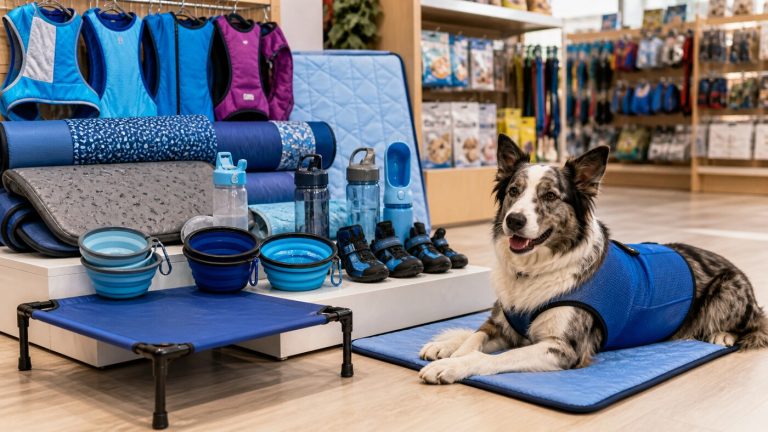
As hot-weather safety becomes a more visible pet-care concern, cooling and hydration products are moving toward a larger role in the seasonal pet supplies aisle. Cooling mats, breathable vests, portable water bottles, travel bowls, shade accessories, car ventilation helpers, paw-protection boots, and quick-dry outdoor textiles all address the same consumer problem: owners want practical ways to reduce heat stress during daily routines.
For overseas buyers, this is not just a summer novelty category. It is a product system shaped by climate, retail timing, material performance, pet acceptance, safety language, packaging, and inventory planning.
Why heat management is becoming a retail signal
Veterinary and animal-welfare guidance is clear about the basics. The American Veterinary Medical Association advises owners to give pets unlimited access to fresh water and shade when outside, and to ask veterinarians how to recognize heat stress. The ASPCA similarly emphasizes fresh water, shade, avoiding over-exercise, and keeping pets indoors when it is extremely hot.
Those recommendations are not product claims by themselves, but they help explain why the category is gaining attention. Heat safety is not an abstract wellness idea. It connects to everyday owner behavior: walking a dog, driving with a pet, visiting a park, waiting outside a cafe, traveling, using a patio, or managing indoor comfort during hot weather.
The World Health Organization also notes that heatwaves and prolonged excess heat conditions are increasing in frequency, duration, intensity, and magnitude due to climate change. Pet retailers do not need to turn that into alarmist messaging. But buyers should recognize that extreme heat is no longer a rare seasonal edge case in many markets. It is becoming a predictable merchandising moment.
This creates a category opportunity with a higher trust requirement than ordinary summer accessories. A colorful mat that leaks gel, a water bottle that drips, a vest that traps heat, or booties that fall off can quickly damage consumer confidence.
The category is broader than cooling mats
Cooling mats are often the most visible product, but they are only one part of the system. Buyers should map the category around use occasions rather than only product names.
Home cooling products include gel mats, pressure-activated mats, breathable raised beds, indoor-outdoor textile pads, and washable covers. These products compete on comfort, cooling duration, material safety, leakage resistance, chew resistance, odor control, and cleaning convenience.
Walking and travel products include portable dog water bottles, collapsible silicone bowls, clip-on bowls, hydration packs, lightweight cooling towels, and travel-friendly food-and-water containers. Their value depends on leak-proof design, one-handed use, bottle capacity, portability, and ease of cleaning.
Wearable products include cooling vests, bandanas, hats, harness add-ons, reflective textiles, and paw-protection booties. Here the buyer has to evaluate fit, breathability, weight, wet-use behavior, drying speed, adjustability, and whether the product creates discomfort during movement.
Car and outdoor products can include shade panels, crate fans, sun-blocking covers, travel mats, and ventilation accessories. These products need extra caution in wording because they should not imply that a product makes a hot car safe for unattended pets. The product can support comfort in appropriate use, but it cannot replace responsible supervision.
The stronger assortment strategy is not to list everything. It is to build a clear routine: cool rest, safe walk, portable water, protected paws, and travel support.
Product performance must match real conditions
Pet cooling products are easy to oversell because the consumer problem is emotional. Nobody wants to see a pet struggle in heat. That makes claim discipline important.
For mats, buyers should ask how cooling is achieved. Is the product gel-based, water-filled, phase-change material, breathable textile, or raised airflow construction? How long does the cooling effect last under normal indoor use? What happens after repeated compression? Can the mat be folded without damaging the seal? Is the material safe if scratched or chewed? Is the cover washable? Does the surface become slippery?
For cooling vests and bandanas, the question is not simply whether they feel cool when wet. The product needs to manage evaporation, airflow, fit, weight, and movement. A vest that looks useful on a product page can become uncomfortable if it is too heavy, traps heat, or rubs around the chest and shoulders.
For hydration products, leakage and usability determine repeat purchase. A portable bottle must not leak in a bag, must dispense water cleanly, and should allow unused water to return safely if that is part of the design. A collapsible bowl should stand without tipping, resist odor, fold cleanly, and dry quickly.
This is why cooling and hydration products should be tested like real pet products, not like generic plastic or textile accessories.

Safety language is part of the product
Hot-weather products sit close to safety concerns, so packaging language needs care. Retailers can explain hydration, shade, supervised use, comfort, portability, and warm-weather routines. They should avoid implying that a product prevents heatstroke, makes extreme heat safe, or replaces veterinary advice.
The AVMA and ASPCA both stress owner behavior: water, shade, avoiding over-exercise, recognizing overheating signs, and managing exposure. Product content should support those behaviors. For example, a portable water bottle can be positioned around frequent water access during walks. A cooling mat can be positioned as a resting surface in appropriate conditions. Paw booties can be explained around hot pavement awareness, fit, and supervised use.
For buyers selling across markets, translation and platform content matter. A compliant box is not enough if the ecommerce listing, influencer script, comparison chart, or social ad makes stronger health claims than the product can support. This connects directly with our article on EU GPSR and pet product compliance: traceability, instructions, safety information, and responsible presentation are part of the product, not afterthoughts.
Materials and construction drive review quality
The cooling and hydration category depends heavily on materials. A buyer can source similar-looking products from many factories, but the difference shows up after use.
For cooling mats, seam strength, gel containment, surface texture, puncture resistance, odor, folding memory, and cleaning behavior should be checked before purchase orders scale. If the product is intended for dogs that scratch or circle before lying down, abrasion testing matters. If the mat is sold for travel crates, size accuracy and folding durability matter.
For breathable beds and pads, mesh tension, frame stability, fabric UV behavior, and corrosion resistance become important. A raised bed used outdoors is not the same as an indoor cushion. The wrong hardware or fabric can turn a promising seasonal SKU into a return problem.
For bottles and bowls, silicone grade, odor, hinge durability, cap tolerance, leak resistance, and dishwasher guidance influence reviews. A small leak can be enough to kill repeat purchase because owners often carry these products in bags, cars, and strollers.
For vests and booties, size grading is a major sourcing issue. Dog body shapes vary widely. If the size chart is weak, returns will rise even if the product is well made. Adjustable straps, soft edges, breathable panels, and clear measurement instructions matter.

Seasonality changes the buying math
Cooling and hydration products are seasonal, but seasonality should not be treated as a weakness. It changes the buying math.
Buyers need earlier planning than for evergreen accessories. Retailers often need inventory before the first heat wave, not after search volume peaks. A late shipment can miss the sales window. At the same time, over-ordering can create markdown risk when weather changes or summer ends.
This makes SKU discipline important. A distributor may be better served by a focused set of strong formats than a wide line of lightly differentiated summer items. For example, a practical assortment could combine one reliable cooling mat, one portable water bottle, one collapsible bowl set, one lightweight vest, and one paw-protection product. The point is to cover occasions without overcomplicating inventory.
The lesson is similar to our analysis of cat litter as a supply chain category. Product success is not only about demand. Weight, packaging, damage rate, repeat use, and consumer trust all shape profitability.
Channel strategy should follow the use occasion
Different cooling products belong in different channels.
Cooling mats and raised beds work well in pet specialty, ecommerce, and seasonal supermarket displays because the product benefit is visible. Portable bottles and bowls can be sold near walking, travel, leash, and outdoor accessories. Vests and booties need stronger fit guidance and may perform better where size charts, product videos, and reviews can support conversion.
Bundles can be useful when they match a real routine. A summer walk kit might include a portable bottle, collapsible bowl, cooling towel, and waste-bag holder. A travel kit might pair a mat with a bowl and crate accessory. A retail endcap can group hydration, shade, and paw protection instead of scattering products across unrelated aisles.
This also links with our article on dog camping beds and outdoor pet gear. Outdoor pet products are becoming more occasion-driven. The strongest products are not just “for dogs outside”; they fit specific use cases, weather conditions, and owner behavior.
What buyers should ask suppliers
A buyer should start with real-use questions:
How does the product cool, and for how long under normal use? What temperature or environment assumptions are behind that statement? What materials touch the pet? What happens if the product is scratched, chewed, folded, washed, or left in a warm vehicle? What testing supports leak resistance, seam strength, abrasion, UV exposure, and colorfastness? Are instructions clear enough for consumers who may overestimate what the product can do?
For wearable products, buyers should request size grading logic, fit samples across breeds, and return-rate assumptions. For bottles and bowls, buyers should request leak testing and cleaning instructions. For mats and textiles, buyers should request material safety documentation and packaging-drop testing.
This is not overengineering. It is how buyers avoid turning a seasonal opportunity into customer-service cost.
Our view
Pet cooling and hydration products are becoming a more serious seasonal category because they sit at the intersection of safety awareness, climate reality, outdoor lifestyles, and repeat summer routines. The category has strong demand logic, but it also carries trust risk when products overpromise.
For global buyers, the better strategy is to build a focused assortment around real moments: resting, walking, traveling, drinking, and paw protection. The weaker strategy is to chase every cooling-looking SKU without testing the mechanism, materials, instructions, and claims.
Our view is that the next stage of this category will reward products that are boring in the right ways: reliable seams, clear instructions, leak-proof parts, breathable materials, realistic claims, and packaging that helps owners use the product responsibly. In a hot-weather category, trust is the product feature that makes the rest of the assortment work.