
Pet medicine is becoming a more serious competitive field, but the real change is not only the launch of new drugs. The larger signal is that veterinary medicine companies are trying to organize products around clinical scenarios: transport stress, clinic visits, vomiting management, senior disease, recovery support, chronic care, and the professional workflow of pet hospitals.
That is the useful takeaway from two recent Chinese pet-industry reports about Shandong Sinder Technology. A Sohu pet-industry article framed the company’s new pet medicine launches as a shift from single-product competition toward portfolio competition. A companion Sohu report described the same move through two clinical needs: stress in cats during transport or veterinary visits, and nausea or vomiting management in dogs and cats.
For overseas buyers, distributors, private-label pet health teams, clinic suppliers, and animal-health operators, the story is not about copying one company’s products. It is about understanding how pet health categories are becoming more regulated, more veterinary-led, and more dependent on product systems rather than isolated SKUs.
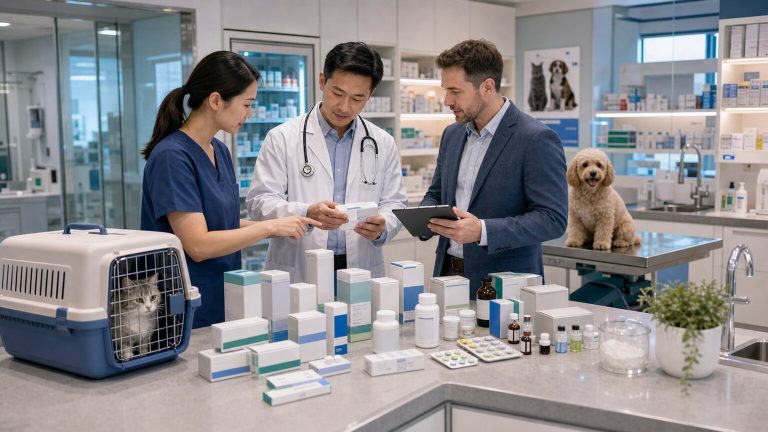
From Single SKU To Clinical Scenario
Many pet categories can still be built around a single hero product: a better leash, a stronger bowl, a more absorbent pad, a more attractive toy, or a novel treat format. Pet medicine does not work that way for long.
In a veterinary setting, one product is rarely enough to define a channel relationship. Clinics need product choices by species, weight, age, diagnosis, contraindication, route of administration, storage condition, prescription status, owner compliance, and follow-up workflow. A distributor also needs stock discipline, expiry control, complaint handling, documentation, training materials, and clear rules for what sales teams can and cannot say.
That is why the “portfolio” idea matters. A medicine company can win attention with one approved product, but it earns professional trust through a broader system: therapeutic focus, batch consistency, clinical education, responsible label language, traceability, and enough product depth to support repeat clinical scenarios.
This is different from the retail logic we discussed in our article on pet pharmacies as an emerging pet health channel. Pharmacy-style retail is about channel format, product classification, and traceability. Veterinary medicine portfolios go one step deeper: they must fit diagnosis-led use, professional decision-making, and local animal-drug rules.
Why Stress And Vomiting Are Business Signals
The two reported Sinder products are useful examples because they do not point only to rare specialist medicine. They point to practical clinical situations that pet hospitals encounter repeatedly.
The first reported product, a pregabalin oral solution branded in the Sohu report as Xinanlin, is positioned around cat stress associated with transport and veterinary visits. The second, a maropitant citrate injection branded as Xinfu’an in the same reports, is positioned around nausea and vomiting management in dogs and cats. The Sohu companion article also notes an important caution from the company: vomiting can be a secondary symptom of serious underlying disease, so symptomatic control does not replace diagnosis or treatment of the cause.
For the industry, that caution is exactly the point. These are not casual wellness products. They sit inside a professional workflow. Cat stress can affect the ability to transport the animal, complete an examination, collect accurate observations, or reduce owner anxiety. Vomiting management can support treatment, recovery, and clinical comfort, but it also requires careful evaluation because vomiting may indicate more serious disease.
In other words, the commercial opportunity is not simply “sell a drug.” It is “support a repeatable veterinary scenario in a way clinics can trust.” That is a much higher bar.
The Cat Clinic Workflow Is Becoming A Product Market
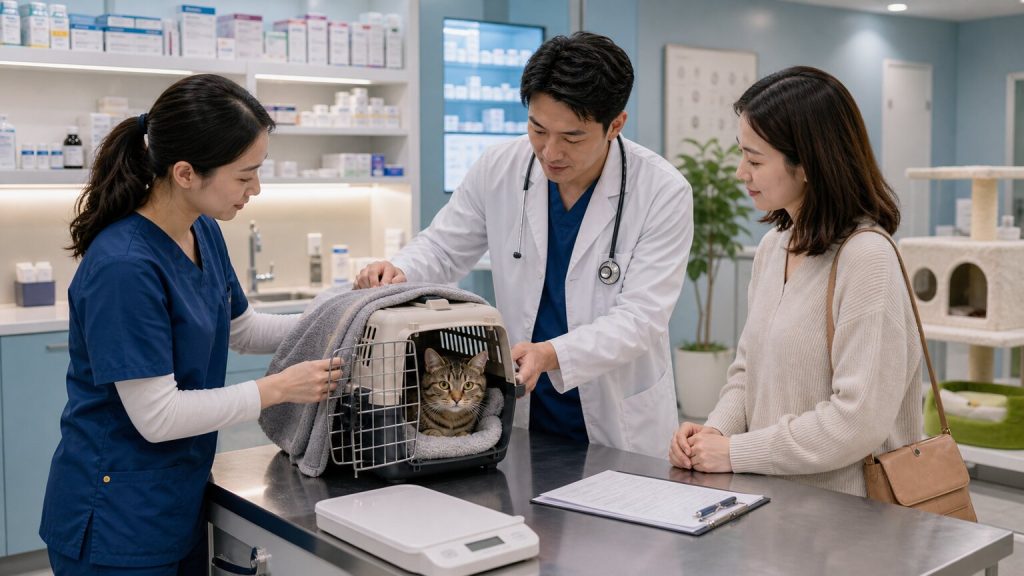
Cat stress during transport and veterinary visits is a good example of how pet health demand is moving from disease-only treatment into the management of the whole care journey.
A cat may experience stress before it even reaches the clinic. The owner brings out the carrier, the animal hides or resists, the trip creates noise and motion, and the clinic introduces unfamiliar smells, people, and animals. If the cat is highly stressed, the examination becomes harder. The owner may delay future visits. The clinic may need more staff time. The animal may be less cooperative for routine checks, diagnostics, or follow-up.
For pet product companies, this creates a broader market than one prescription medicine. It also creates demand for better carriers, quiet carrier covers, low-stress clinic furniture, species-separated waiting areas, soft bedding, handling tools, owner education content, appointment scheduling design, and clinic retail items that help owners prepare before a visit.
The connection with products is practical. A cat carrier or calming textile is not equivalent to medicine, and it should not be marketed as if it can treat a condition. But it may still be part of the same low-stress workflow. This is where buyers should understand the difference between medical claims, behavioral support, comfort products, and veterinary-directed treatment.
Vomiting Management Shows The Same Pattern
Vomiting is also a useful market signal because it sits between emergency concern, chronic disease management, owner anxiety, and clinic workflow.
A pet owner may see vomiting as a single visible symptom. A veterinarian has to decide whether it is a short-term issue, medication-related, diet-related, gastrointestinal, metabolic, obstructive, infectious, toxic, or part of another disease process. That distinction affects whether a product is appropriate, whether additional diagnostics are needed, and how the owner should monitor recovery.
For distributors and health-product buyers, this creates two lessons.
First, medical products need professional context. A veterinary medicine used in vomiting management cannot be merchandised like an ordinary digestive supplement. It needs correct classification, prescription handling where required, label control, veterinary training, and adverse-event discipline.
Second, the surrounding support categories can still grow. Recovery feeding tools, fluid support accessories, protective pads, disinfecting products, transport equipment, post-treatment owner instructions, and clinic communication materials can all become part of the commercial ecosystem around a clinical scenario. These products do not replace medicine, but they can help clinics and owners manage the full journey.
What Global Buyers Should Take From China
China’s companion-animal medicine market is still developing, but the direction is familiar to buyers who watch mature veterinary markets: pet owners spend more, clinics become more specialized, chronic and senior-pet conditions receive more attention, and animal-health companies try to build deeper product lines.
The Sohu reports describe Sinder as having more than 30 pet health products and serving more than 10,000 pet hospitals, while also moving from senior internal medicine into more frequent clinical scenarios. Those figures should be treated as company/source-reported industry information, not as independent market measurement. Still, the strategic direction is credible: pet medicine suppliers want to be relevant across multiple veterinary needs, not dependent on one product launch.
This connects with our earlier analysis of dog longevity drugs and the pet health market. As pet owners accept more medical spending around aging, chronic disease, and quality of life, the companies that can operate responsibly in regulated categories will have a different competitive profile from ordinary pet product sellers.
For overseas readers, the important question is not whether a Chinese medicine product can be sold in another market. In most cases, animal drugs require local approval, registration, veterinary oversight, and country-specific labeling before they can be marketed. The more useful question is how this kind of portfolio thinking changes category strategy.
Medicine Is Not Supplement, And Supplement Is Not Medicine
One risk in fast-growing pet health markets is the blurring of claims. Buyers often see products marketed with medical-sounding language even when they are supplements, treats, grooming products, devices, or general wellness items. That can create legal, reputational, and channel risk.
The U.S. FDA’s page on animal drug regulation explains that animal drugs are regulated under federal law and that intended use matters when a product is meant to diagnose, cure, mitigate, treat, or prevent disease in animals. Other markets use different legal structures, but the practical lesson is widely applicable: claim language determines risk.
For B2B buyers, the line must be drawn clearly. A veterinary drug needs registration and professional use controls. A supplement needs ingredient, label, and claims discipline. A device or diagnostic tool may need its own regulatory review. A comfort product should not imply disease treatment unless the product has the required approvals.
This is especially important for global sourcing. A factory may be able to manufacture a product format, but the buyer is responsible for whether the final product can legally be sold with its proposed claims in the target market. Product capability and regulatory permission are not the same thing.
Distribution Discipline Becomes A Competitive Advantage
Pet medicine portfolios also change the role of distributors.
An accessory distributor can often compete on assortment, price, delivery speed, and retailer relationships. A pet medicine or clinic-health distributor needs more controls. Batch numbers, expiry dates, storage conditions, temperature records where applicable, complaint handling, recall procedures, training materials, prescription boundaries, and customer segmentation all become part of the offer.
That does not mean every pet distributor should enter prescription animal medicine. Many should not. But even distributors that focus on pet health-adjacent categories need to understand how professional channels think. The more a product is linked to health, recovery, stress, pain, skin, digestion, dental care, senior pets, or chronic management, the more the buyer must prepare for professional questions.
This is the same direction we described in our article on functional pet food ingredients and evidence for buyers. Evidence, documentation, label limits, and quality systems are becoming part of category competition, not afterthoughts.

The New Competitive Stack
The Sohu reports frame the Chinese market as moving from “single-product breakout” to “matrix competition.” In global B2B terms, that means competition is becoming a stack.
The first layer is research and registration. Companies need product development capability, safety and efficacy work, quality systems, and the ability to navigate veterinary drug approval processes.
The second layer is manufacturing and supply. Clinics and distributors care about stable quality, reliable batches, expiry control, sufficient supply, and packaging that supports professional use.
The third layer is clinical education. Veterinary teams need to understand which animals, symptoms, scenarios, precautions, and follow-up instructions fit the product. Weak training can limit adoption even when a product is technically available.
The fourth layer is channel service. A company that serves pet hospitals needs field support, documentation, complaint response, and account management. A company that sells through pharmacy-style retail or distributor networks needs even clearer segmentation and product governance.
The fifth layer is portfolio logic. Products should not be random additions. A strong portfolio helps clinics solve related problems across species, age groups, disease areas, and care stages.
What Buyers Should Ask Before Entering Pet Health
For overseas pet industry operators, the practical takeaway is to ask harder questions before entering any health-adjacent category.
What is the product legally classified as in the target market? What claims will appear on the label, website, sales sheet, Amazon listing, distributor catalog, and clinic training material? Is the product supported by data, or only by marketing language? Does the supplier understand the difference between medicine, supplement, food, device, and general care product? Are batch records, stability data, expiry controls, and complaint procedures available? Who is allowed to recommend or sell the product?
Buyers should also ask whether the product fits a real clinical or owner scenario. “Pet health” is too broad to be useful. A stronger brief might focus on low-stress cat clinic visits, senior dog mobility support, post-dental recovery, chronic skin care support, medication administration, digestive episode follow-up, or pharmacy-channel traceability.
That type of scenario brief helps suppliers design products, packaging, instructions, and documentation around actual use. It also reduces the temptation to rely on vague medical language.
The Bigger Signal
Pet medicine portfolio competition is a sign that the pet industry is becoming more professional. It rewards companies that can combine R&D, regulatory discipline, manufacturing control, veterinary education, distribution systems, and practical knowledge of clinic workflows.
For global buyers, this does not mean every pet health opportunity should become a drug opportunity. It means the health side of the pet industry has a higher standard of proof, language, and channel control. The closer a product moves toward veterinary care, the more it must be handled like a professional category.
China’s pet medicine market is still only one market, and the Sinder case is one company example. But the underlying shift is broader: pet owners want more specialized care, clinics need better tools, and distributors are being pulled toward more disciplined health channels. We will continue tracking these veterinary, pharmacy, and pet-health channel changes through the site and our Pet Industry Insights Facebook page.
The companies that understand this shift will not treat pet medicine as a collection of isolated launches. They will build around scenarios, evidence, veterinary trust, and operational control.