
The next important pet-tech shift may not start with a new collar, feeder, camera, or home monitor. It may start with the smartphone owners already carry, the app ecosystem they already use, and the health data layer that large technology companies are trying to build around daily life.
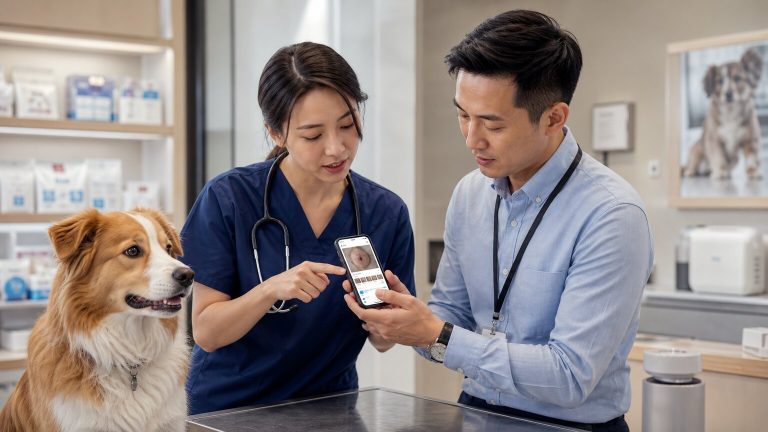
That is why Samsung’s June 2026 connected-care announcement deserves attention from pet industry operators. At VivaTech 2026, Samsung presented a pet-care solution developed with Lifet, a pet health management solution, that lets users take a photo with a mobile device and have AI analyze signs associated with certain dental problems, patellar luxation, and cataracts. Samsung’s own newsroom also states an important limitation: the AI health analysis feature is provided through Lifet and “does not replace professional veterinary diagnosis.” The Chinese pet-industry outlet Sohu framed the same move as Samsung entering the smart pet health track.
For overseas buyers, distributors, pet-tech founders, veterinary-channel operators, and insurers, the story is larger than one feature on one phone brand. It points to a more structural question: what happens when pet health screening moves from standalone pet hardware into smartphone ecosystems, smart-home platforms, and connected-care partnerships?
The Key Signal Is Ecosystem Control
Pet technology has spent years selling dedicated devices: activity trackers, GPS collars, smart feeders, pet cameras, automatic litter boxes, connected fountains, and home monitoring sensors. Those categories still matter. But a smartphone-based AI screening layer changes the center of gravity.
A phone already has a high-quality camera, local and cloud compute access, push notifications, user identity, payment tools, health or wellness apps, cloud storage, customer support channels, and a familiar interface. If a pet owner can use the same device to photograph a dog’s mouth, a cat’s eye, or a gait-related issue, the first interaction may no longer belong to a pet-device brand. It may belong to the operating-system owner, smart-home platform, or health ecosystem that controls the front door.
Samsung’s official VivaTech announcement positions the pet feature inside a broader connected-care exhibit, not as a standalone pet gadget. The same article discusses Samsung Health, SmartThings, connected devices, partnerships, and a vision of proactive health management inside and outside the home. In that context, pet health is not just another pet accessory. It is one more use case in a household health and care ecosystem.
This distinction matters for companies selling into pet specialty, ecommerce, veterinary retail, pharmacy-style channels, and private-label programs. A smart collar may be judged by hardware specs and battery life. A smartphone AI pet-health service may be judged by accuracy claims, data governance, veterinary referral pathways, platform integration, and whether clinics or insurers trust the output.
Why This Is Different From Earlier Smart Pet Hardware
Many smart pet products create useful data, but they often struggle with adoption. Consumers must buy a device, install an app, charge or maintain the product, teach the pet to accept it, and keep using the service after the novelty fades. Retailers and distributors must then support returns, warranty questions, app complaints, and compatibility issues.
Smartphone-first AI changes the adoption logic. The device is already owned. The camera is already understood. The behavior is simple: take a photo. That lowers the trial barrier.
The business challenge moves elsewhere. Instead of asking whether a consumer will buy another device, the industry must ask whether the AI output is clinically meaningful enough to influence behavior, whether the service can direct owners to appropriate next steps, and whether the claim language is disciplined enough for regulators, veterinarians, and insurers.
This is similar to a broader pet-health pattern we discussed in our article on dog longevity drugs and the pet health market. As pet owners spend more on aging, chronic care, prevention, and quality-of-life management, the commercial value shifts toward tools that help them act earlier and more confidently. AI screening fits that direction, but only if it is treated as a support layer rather than a magic diagnosis engine.
The Clinic Workflow Is The Real Test
For veterinary clinics, a photo-based AI tool can be useful in three ways. It can encourage earlier owner action, improve triage before an appointment, and create a structured record that makes the first conversation more specific.
But clinics will not welcome every consumer-facing AI alert. A tool that creates false urgency, weak documentation, or unclear liability can increase workload instead of reducing it. The most valuable model is likely to be one that uses AI to identify possible concerns, explains the limits clearly, and sends the owner toward veterinary evaluation when needed.
That means product teams should design for the clinic’s workflow, not just the owner’s screenshot. Useful integrations may include timestamped images, image-quality prompts, repeat-photo comparisons, veterinarian notes, referral booking, and clear separation between “screening signal” and “diagnosis.” The more medical the claim, the stronger the evidence and documentation burden becomes.
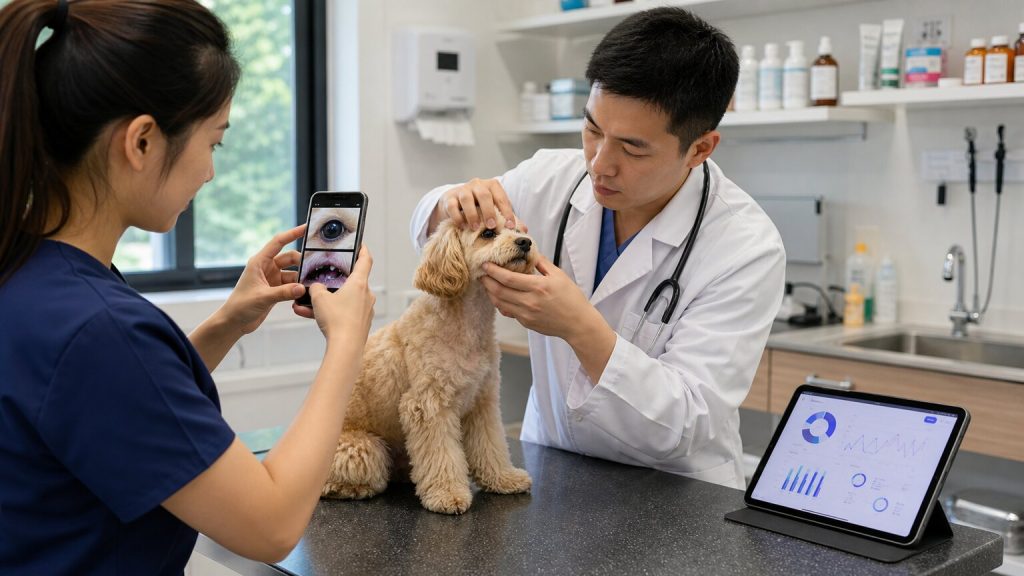
Professional channels will also care about how these services handle records. If a pet pharmacy, insurance partner, clinic network, or specialty retailer recommends an AI screening tool, it needs confidence that consumer data, pet images, and follow-up recommendations are handled responsibly.
That connects directly with the professionalization trend we covered in pet pharmacies and pet health retail. As pet health products move into more structured channels, weak claims and informal evidence become less acceptable. The same will be true for AI pet-health tools.
What Buyers And Distributors Should Watch
For overseas distributors and category buyers, smartphone-based AI pet health should not be evaluated like a basic smart feeder or camera. It sits between consumer electronics, pet wellness, veterinary support, data services, and sometimes regulated health claims.
The first question is evidence. What conditions does the system claim to screen for? What species, breeds, ages, lighting conditions, and image-quality levels were included in testing? Has performance been validated outside the company’s own demo environment? Does the system work equally well across black-coated pets, white-coated pets, short-nose breeds, older animals, and moving subjects?
The second question is claim discipline. Samsung’s official footnote is useful because it explicitly says the Lifet analysis feature does not replace professional veterinary diagnosis. That is the type of boundary buyers should expect. A supplier that markets “instant diagnosis” without clinical evidence, veterinarian review, or jurisdiction-specific claim review creates risk for the channel.
The third question is service design. If the AI flags a possible dental, eye, joint, or skin issue, what happens next? Does the app provide educational content only, suggest a clinic appointment, offer teletriage, connect with a veterinarian, or push products? Each route has different trust and compliance implications.
The fourth question is data control. Pet photos are not just cute images when they are used for health analysis. They can include household context, location signals, owner identifiers, health-related inferences, and ongoing behavior data. The U.S. FTC’s mobile health app tool reminds app developers that privacy and security are especially important for apps that collect or share health information, and that more than one law may apply. Even when pet-health data does not fall under human healthcare rules, responsible consent, retention, access, and sharing controls still matter commercially.
The fifth question is channel fit. A mass-market ecommerce seller may care most about conversion and subscription retention. A veterinary group may care about workflow, liability, and owner education. A pet insurer may care about preventive engagement and claims risk, but must avoid appearing to penalize customers through opaque scoring. A distributor may care about whether the service can be localized, supported, and explained in the market language.
Insurance And Wellness Plans Could Become Early Partners
Pet insurance and wellness-plan providers are natural observers of this shift. If AI photo screening can encourage earlier treatment for dental disease, eye issues, or mobility problems, insurers may see value in preventive engagement. It could reduce delayed care and improve customer contact outside the claims moment.
However, insurers must be careful. A tool that generates risk scores without transparent limitations could create distrust. Owners may worry that images will be used to deny coverage, adjust premiums, or categorize pets unfairly. For insurance partners, the opportunity is not simply to collect more data. It is to build a trusted preventive-care path that owners, clinics, and underwriters can all understand.
Wellness-plan operators may have an easier entry point. They can position screening as a reminder system for routine checkups, dental cleaning discussions, mobility observation, or senior-pet monitoring. In this model, AI does not replace the veterinarian. It helps owners notice when it is time to ask better questions.
What This Means For Pet-Tech Brands
Standalone pet-tech brands should not assume smartphone ecosystems will only create competition. They can also create distribution, data partnerships, and service-layer opportunities.
Hardware companies with cameras, feeders, litter boxes, and collars may need to make their data more useful inside broader care workflows. A camera that only streams video is one thing. A camera that can feed structured events into a pet-health, behavior, or clinic-triage system is more defensible. A smart feeder that only dispenses food is one thing. A feeder that supports weight-management adherence, medication routines, or senior-pet monitoring may have a stronger role in a connected-care stack.
But the bar will rise. If large platforms own the front-end app experience, hardware brands need to prove why their device adds meaningful sensing, accuracy, convenience, or continuity that a phone camera cannot provide. The answer may be better longitudinal data, passive monitoring, 24-hour observation, environmental signals, or vet-grade measurement quality.
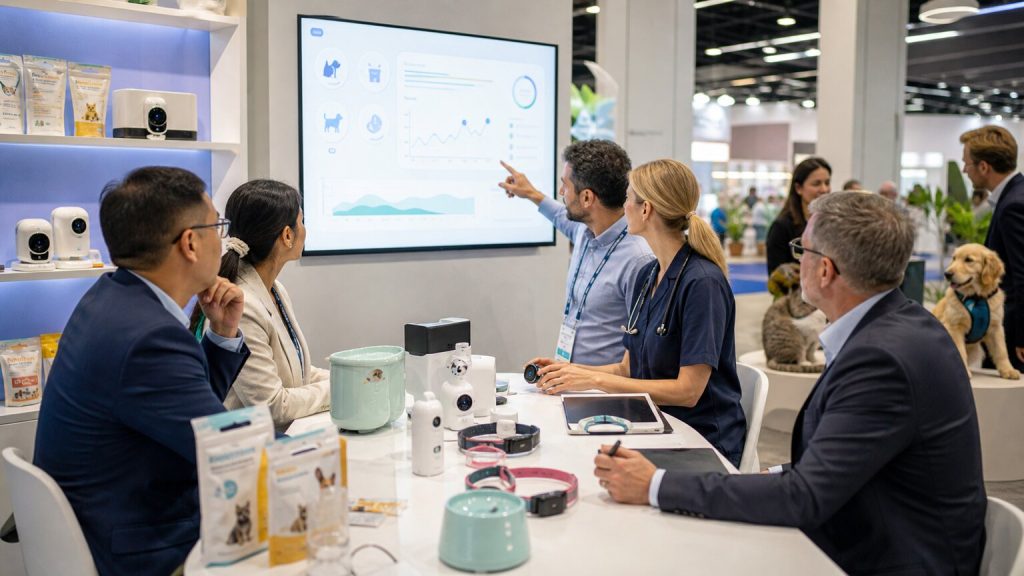
This also affects sourcing and private-label strategy. Generic smart devices with weak apps may become harder to defend. Buyers will look for suppliers that can support firmware updates, secure APIs, cloud reliability, data export, multilingual apps, and after-sales documentation. A product that looks good on a trade-show shelf but cannot participate in a connected service model may have a shorter lifecycle.
Regulatory And Trust Questions Will Shape The Category
AI pet health sits in a sensitive space because it uses medical-adjacent language. In the United States, the FDA explains that animal devices can fall under regulatory oversight when they are intended for diagnosis, cure, mitigation, treatment, or prevention of disease in animals, even though premarket approval is generally not required for animal devices. The practical message for pet-tech companies is simple: do not treat claim language as marketing decoration.
For global markets, the exact rules differ, but the commercial principle is consistent. The more a product implies disease detection, diagnosis, treatment guidance, or risk scoring, the more buyers will ask for evidence, legal review, veterinary involvement, adverse-event handling, and clear owner communication.
Trust will also depend on model transparency. Companies do not need to expose every algorithmic detail, but they should be able to explain training data scope, intended use, known limitations, confidence thresholds, human review options, and what happens when the system is uncertain. A conservative “please consult a veterinarian” output may be less exciting than a bold diagnosis claim, but it is often better for long-term category credibility.
The Buyer Takeaway
The Samsung-Lifet example is a useful signal because it shows pet health becoming part of a larger connected-care and smart-home story. It does not mean every pet owner will soon use AI to screen their pet at home, and it does not eliminate the need for veterinarians. It does suggest that the first layer of pet-health observation may increasingly happen through mobile cameras, platform apps, and partner ecosystems.
For buyers and industry operators, the strongest opportunities will likely sit in three places.
First, there will be demand for products and services that help owners capture better health signals at home without exaggerating what those signals mean.
Second, there will be room for clinic-friendly workflows that turn owner observations into useful triage, appointment preparation, and preventive-care conversations.
Third, there will be pressure on suppliers to build smarter, safer, better-documented connected products that can survive data, privacy, and claim scrutiny.
The pet industry has already learned that “smart” is not enough. In the next phase, the winners will be the companies that can combine usable AI, veterinary trust, responsible data handling, and real channel value.