
Pet supply-chain conferences are easy to dismiss as event news. For buyers, distributors, private-label teams, and pet product manufacturers, however, the agenda can be more useful than the event itself. It shows where the industry feels pressure: which categories need better products, which costs are becoming hard to absorb, which channels are changing order patterns, and which parts of the supply chain need more trust.
That is why the latest agenda preview for China’s fourth Pet Supply Chain Conference is worth reading as a market signal rather than a simple conference announcement. A Sohu pet-industry report says the 2026 event will be held in Qingdao, after previous editions in Tai’an, Linyi, and Luohe. The report frames Qingdao as a major pet food and export hub, and says the conference will look at 618 shopping-festival data, first-half channel performance, product innovation, cost pain points, compliance, testing, packaging, warehousing, delivery, and new sales terminals.
For overseas readers, the important point is not whether they attend the event. The important point is what this kind of agenda tells us about 2026 pet product demand. The industry is moving from broad growth stories to more specific operating questions: which products can become repeatable SKUs, which suppliers can support faster development, which packaging formats can survive logistics pressure, and which claims can hold up under regulatory and consumer scrutiny.

Why Supply Chain Agendas Matter Now
The pet industry still has a strong growth narrative. APPA’s industry trends and statistics page continues to position pet spending as a large, multi-category market across food, supplies, services, and veterinary care. In China and other fast-developing pet markets, the same broad pattern is visible: more pet-owning households, stronger emotional spending, and more product categories competing for attention.
But growth alone does not solve operating problems. In fact, it often exposes them.
When a category grows quickly, SKUs multiply. Brands launch faster. Channels demand exclusive packs, lower landed cost, shorter lead times, and more marketing content. Factories are asked to do more than manufacture. They are expected to support formulation, packaging engineering, compliance documentation, sample iteration, category data, and sometimes even channel strategy.
This is where supply-chain conferences become useful. They gather the questions that are difficult to answer inside a single company. A brand wants to know whether a factory can create better products, not just quote a lower price. A factory wants to know what brands and channels are actually buying, not just what they say in a product brief. A distributor wants products that can move through stores, ecommerce, live commerce, supermarkets, and specialty channels without creating unsellable inventory.
That is not conference noise. It is a demand map.
Signal One: Channel Data Is Becoming A Product Development Input
The Sohu report says the upcoming conference will start from 618 promotional results and first-half channel data. That detail matters. It suggests product decisions are being pulled closer to real channel performance rather than relying only on broad consumer surveys or founder intuition.
For sourcing teams, this is a useful shift. Channel data can reveal different demand patterns from category headlines. A pet food brand may see that premium freeze-dried products attract attention but face repeat-purchase friction at certain price points. A cat litter supplier may discover that packaging size and delivery damage matter as much as material performance. A pet toy buyer may see that viral designs create traffic but not stable reorder volume. A grooming brand may find that store staff education influences conversion more than a new fragrance.
The lesson is simple: “pet food,” “pet supplies,” and “pet care” are too broad to guide 2026 decisions. Buyers need to ask which channel, which use case, which consumer routine, which pet type, which price band, and which replenishment rhythm.
This connects with our earlier analysis of China pet supplies category upgrades. The market is not only expanding; it is becoming more segmented. That makes supplier selection more technical. A good supplier is no longer only the one with capacity. It is the one that can help translate channel demand into a product format that can be manufactured, packed, shipped, displayed, explained, and reordered.
Signal Two: Cost Control Is Moving Upstream
Cost pressure is not new in pet products. What is changing is where buyers are trying to solve it.
In the past, cost control often meant asking suppliers for a lower unit price. That still happens, but it is a weak strategy when raw materials, freight, labor, packaging, marketing fees, and channel commissions all move at the same time. The more useful work now happens upstream: formula design, material substitution, pack count, package structure, carton strength, SKU simplification, mold sharing, production yield, defect reduction, and forecast discipline.
For pet food and treats, cost control can involve protein source, inclusion level, processing format, moisture control, pack size, shelf-life target, and testing frequency. For pet supplies, it may involve plastic grade, textile weight, hardware selection, sewing construction, electronics module choice, battery specification, outer carton design, and whether a product can use common components across multiple SKUs.
This does not mean buyers should push suppliers into cheap products. The better goal is value engineering: remove cost that the customer does not notice, but protect the features that drive trust, safety, comfort, durability, or repeat purchase.
Suppliers that can discuss cost at this level will be more useful to overseas buyers than suppliers that only respond with a discount. A buyer should be able to ask: what are the cost drivers, which ones are flexible, which ones are risky to reduce, and what trade-offs will show up in quality, packaging, compliance, or returns?
Signal Three: Packaging Is Becoming A Control Point
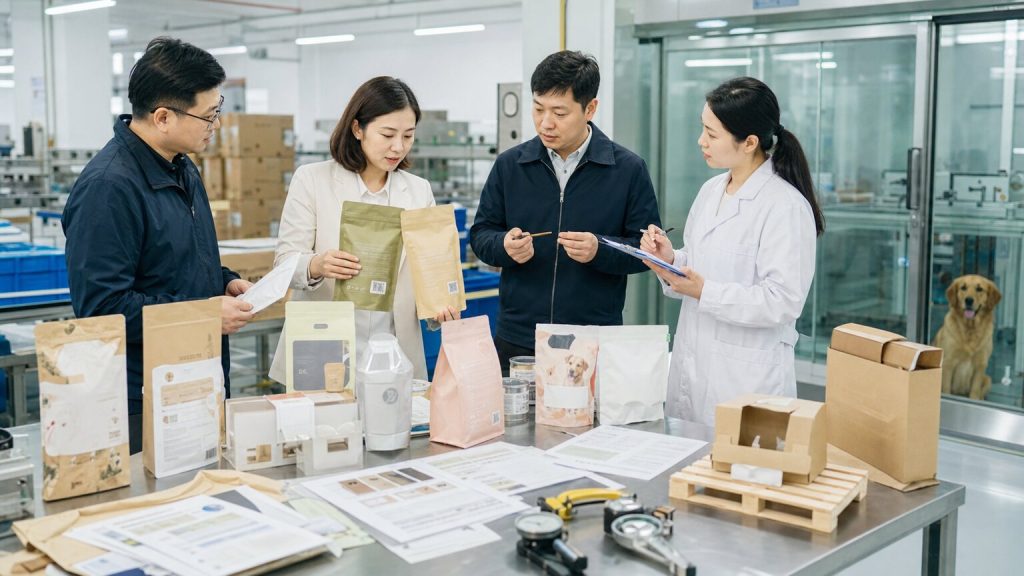
Packaging appears in many pet product discussions as a branding issue. In procurement, it is also a supply-chain control point.
Pet products create packaging challenges because they are often bulky, heavy, scented, fragile, liquid, powder-based, moisture-sensitive, or easily damaged in last-mile delivery. Cat litter strains carton strength. Wet food needs seal integrity. Treats need barrier performance. Grooming liquids need leak resistance. Smart pet devices need protection against impact and battery-related shipping rules. Beds, carriers, and textiles need compression decisions that do not damage the user experience.
The Sohu report mentions testing, packaging, warehousing, and delivery as last-mile supply-chain challenges for pet entrepreneurs. That combination is important. Packaging cannot be reviewed only by the design team. It should be reviewed by procurement, QA, logistics, ecommerce operations, and customer service.
For overseas buyers, packaging questions should be specific. Has the supplier tested drop performance for the export carton and ecommerce parcel? Does the product need moisture barrier, odor control, tamper evidence, resealability, child-resistant closure, or leak testing? Can the packaging survive container loading, warehouse handling, courier sorting, and final doorstep delivery? Are retail shelf dimensions and online parcel dimensions pulling the product in different directions?
The answer may change the product itself. A brand may need a smaller pack size, stronger carton, different pouch film, fewer fragile accessories, a more modular component layout, or an instruction sheet that reduces returns. In 2026, packaging strategy will increasingly separate products that look good in a sample room from products that survive the real channel.
Signal Four: Compliance And Claims Are Becoming More Visible
The conference preview also points to compliance, product quality, and marketing challenges. That is not surprising. As pet categories become more competitive, brands often reach for stronger claims: healthier, safer, smarter, cleaner, more natural, more functional, more scientific, more sustainable.
Those claims may help sell a product, but they also create risk. Pet owners are emotionally invested. Retailers are more cautious. Regulators are paying more attention. Competitors can challenge vague language. A product that grows quickly can also attract more scrutiny.
Pet food is the clearest example. The U.S. FDA’s pet food information explains that pet food must be safe, produced under applicable requirements, and labeled properly. The FDA also provides guidance on animal food labeling and pet food claims. Even when a buyer is not selling in the U.S., the principle travels well: claims need evidence, labels need discipline, and supplier documentation needs to match the product story.
This is why our article on pet food lighthouse factory quality and traceability focused on manufacturing systems, data, and traceability rather than factory scale alone. For buyers, the question is not only “can this supplier make the product?” It is “can this supplier help defend the product if a customer, retailer, platform, or regulator asks hard questions?”
Signal Five: Category Innovation Must Be Manufacturable
Every pet market wants innovation. The hard part is turning innovation into stable SKUs.
The Sohu report says the conference will include discussion of “super single products” and real demand insights that may not be fully visible in data. This is a useful reminder. Data can show what sold. It does not always explain why a household changed behavior, why a pet accepted or rejected a product, or why a shopper trusted one claim over another.
Still, product innovation cannot stop at insight. A strong concept needs manufacturability. Can the factory repeat the same quality at scale? Can the product pass testing? Can the packaging be sourced consistently? Can the supplier manage seasonal demand? Can the product be adapted for different markets without creating too many SKUs? Can customer service explain it simply?
This is especially relevant for smart pet products, functional treats, freeze-dried foods, odor-control hygiene products, sustainable packaging, small-pet supplies, and channel-specific bundles. These categories often look attractive because they tell a strong story. They also require stronger coordination between R&D, sourcing, packaging, QA, and channel teams.
The best 2026 product briefs will be narrower than many buyers expect. Instead of asking for “a new pet product,” a buyer might ask for a cat hygiene product for apartment households with a specific odor-control claim, a certain pack size, ecommerce-safe packaging, repeat-purchase economics, and documentation that supports the claim. That is the difference between a trend idea and a sellable SKU.
What Overseas Buyers Should Ask Suppliers
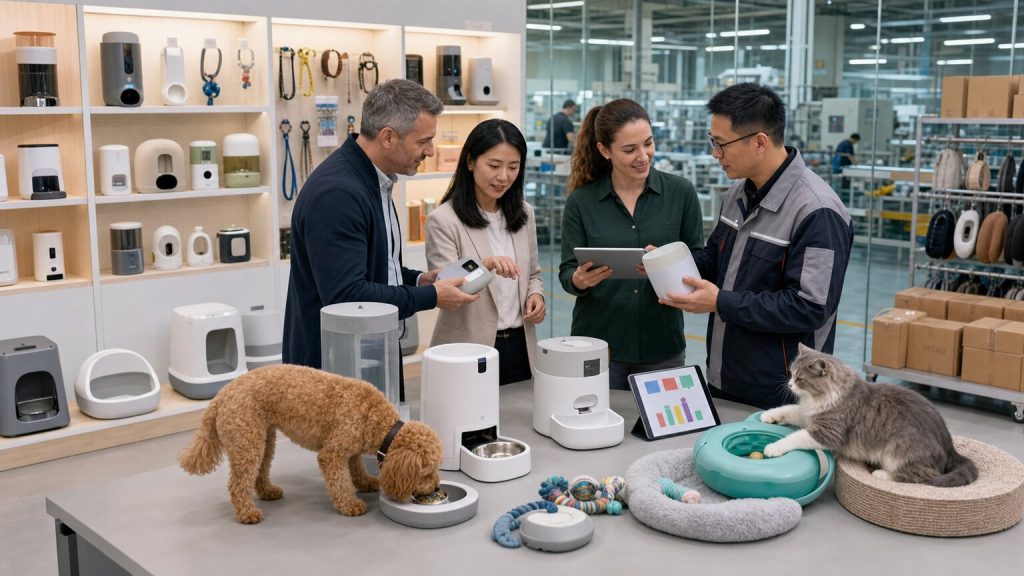
For overseas distributors, retailers, importers, and private-label teams, the supply-chain conference signal can be turned into practical supplier questions.
Start with channel fit. Which channels does the supplier understand: pet specialty retail, supermarkets, ecommerce platforms, live commerce, subscription, veterinary channels, grooming stores, club stores, or cross-border marketplaces? A supplier that understands the channel can often make better recommendations on pack size, shelf impact, instructions, carton design, and reorder planning.
Then ask about category evidence. What consumer problem does the product solve? What data or field feedback supports it? Is the product a traffic item, margin item, replenishment item, bundle item, or brand-building item? A supplier does not need to own all the data, but it should understand the logic behind the product.
Next, ask about cost drivers. Which components or materials create the biggest cost pressure? What can be modified without weakening the product? What minimum order quantities are truly required by the material, mold, formula, or packaging supplier, and what is only a sales preference?
Finally, ask about documentation. For pet food, treats, supplements, hygiene products, smart devices, and safety-related accessories, buyers should request the relevant test reports, production records, ingredient or material documentation, labeling review process, complaint handling procedure, and traceability method. The exact documents vary by product and market, but the mindset should be consistent.
There is a useful parallel with our article on pet distributor grooming education as a channel strategy. Channel capability is becoming part of the product. A supplier or distributor that can help customers understand, sell, and use the product has a stronger role than one that only moves boxes.
Qingdao As A Signal, Not Just A Location
The source article places heavy emphasis on Qingdao’s role in China’s pet industry, especially pet food manufacturing and exports. It cites figures including more than 14,000 pet-related enterprises in the city, around RMB 5 billion in annual pet food output value, and close to RMB 2 billion in exports. Those numbers should be treated as source-reported industry figures, but the strategic point is clear: pet supply chains are clustering around cities that combine manufacturing, port access, export experience, technical talent, and regional supplier networks.
For global buyers, cluster logic matters. A strong cluster can support faster sample development, more component options, better packaging access, shorter supplier coordination loops, and more experienced export service. It can also create intense competition, which may help with speed and price but can pressure margins.
The buyer’s job is to separate cluster advantage from individual supplier capability. Being located in a strong industrial region does not automatically make a factory strong. It does, however, give buyers a reason to evaluate the surrounding ecosystem: ingredient suppliers, packaging converters, testing labs, logistics providers, equipment vendors, and experienced export operators.
The 2026 Takeaway
The next phase of pet product demand will not be defined only by bigger market size. It will be defined by better execution.
Supply-chain conversations are moving toward real channel data, cost engineering, packaging resilience, compliance discipline, and manufacturable innovation. That is a healthier conversation than simple trend chasing. It also raises the bar for both sides of the table.
Buyers will need clearer briefs, better category logic, and more realistic expectations about cost and documentation. Suppliers will need stronger product development support, better transparency, and the ability to explain trade-offs before a problem appears in the market.
The best opportunities in 2026 may not come from chasing every hot category. They may come from understanding one real demand point deeply enough to build a product that works across factory, package, channel, consumer, and repeat order. That is what a serious pet supply chain should be built to deliver.